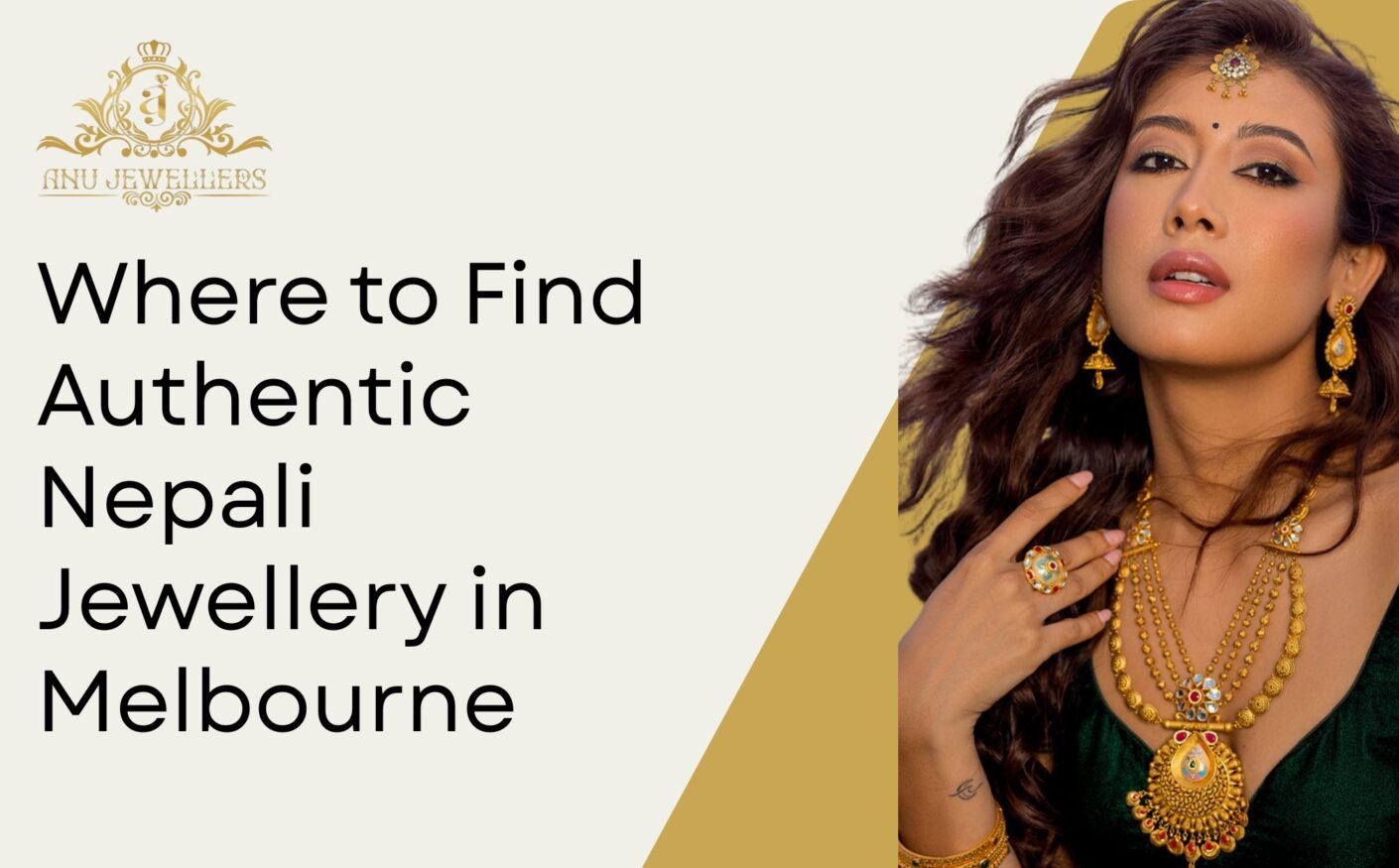
Nepal has one of the richest jewellery traditions in South Asia, a living legacy shaped by ancient Newari craftsmanship, Buddhist and Hindu symbolism, Himalayan silver work, and centuries of trade along the subcontinent’s northern corridors. From the intricate filigree bangles of the Kathmandu Valley to the bold silver Dhungri earrings worn by Gurung and Tamang women, Nepali jewellery tells stories of culture, faith, and identity that span generations.
Melbourne is home to a growing Nepali community, one of Australia’s fastest-expanding South Asian diasporas, and with it comes an increasing demand for authentic Nepali jewellery. Whether you are a bride searching for a traditional Nepali wedding set, a member of the community wanting to reconnect with your cultural roots, or simply someone drawn to the distinctive beauty of Himalayan craftsmanship, knowing where to find genuine Nepali jewellery in Melbourne matters.
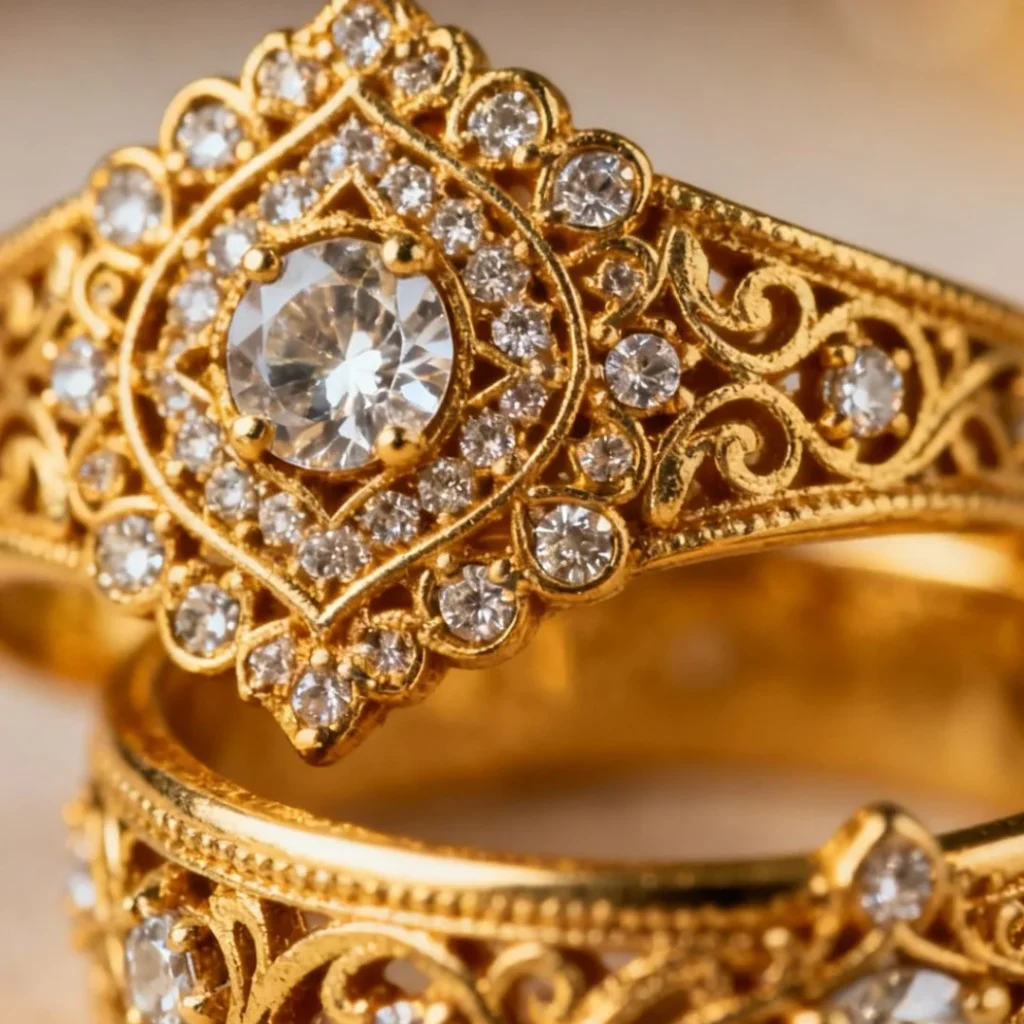
At Anu Jewellers in Craigieburn, we serve Melbourne’s broader South Asian community, including our valued Nepali customers, with a curated collection of traditional and contemporary Indian and Nepali-style gold jewellery. In this guide, we share everything you need to know about Nepali jewellery, where to find it in Melbourne, and what to look for when buying.
The Rich Tradition of Nepali Jewellery
Nepali jewellery is unlike any other in South Asia. It draws from at least three distinct cultural streams, the ancient Newari goldsmithing tradition of the Kathmandu Valley, the silver and bead traditions of the hill and mountain communities, and the influence of Tibetan Buddhist jewellery with its emphasis on turquoise, coral, and sacred symbols.
What makes Nepali jewellery particularly distinctive is its dual devotional and decorative purpose. Many pieces are not simply ornamental, they carry religious meaning, astrological significance, or serve as protective talismans. A Nepali bride adorned in her wedding jewellery is wearing centuries of cultural memory and spiritual intention.
Newari Goldsmithing – The Heartbeat of Nepali Jewellery
The Newar community of the Kathmandu Valley are Nepal’s master goldsmiths. For over a thousand years, Newari artisans have produced some of the most technically refined jewellery in Asia, characterised by repoussé work (hammered relief designs), granulation (tiny gold beads fused to a surface), filigree (delicate wirework), and stone inlay using precious and semi-precious gems.
Silver Jewellery of the Hill Communities
Communities such as the Gurung, Magar, Tamang, Rai, and Limbu have rich traditions of silver jewellery, often incorporating locally sourced materials, glass beads, and coins. These pieces tend to be bolder and more sculptural than Kathmandu Valley goldwork, heavy silver necklaces, wide cuff bracelets, and statement earrings that reflect the wearer’s community identity and status.
Tibetan-Influenced Buddhist Jewellery
Nepal’s northern communities and many Kathmandu Valley residents wear jewellery deeply influenced by Tibetan Buddhist tradition. Turquoise, coral, amber, and dzi beads are central to this aesthetic, often combined with silver or gold in prayer bead necklaces (malas), gau boxes (protective amulet cases), and elaborate headdresses for ceremonial use.
Iconic Pieces of Nepali Jewellery to Know
Before shopping for Nepali jewellery in Melbourne, it helps to know the key pieces and their cultural significance:
Tayo: A traditional Nepali necklace made of gold or gold-plated beads, often combined with glass or semi-precious stone beads. The Tayo is central to Nepali bridal jewellery and is worn as a symbol of marital status and prosperity.
Dhungri: Distinctive hanging earrings, often in gold or silver, featuring elaborate pendants. The Dhungri is one of the most recognisable pieces of Nepali traditional jewellery and varies significantly in design across ethnic communities.
Sirbandi / Tika Patti: A forehead ornament worn by Nepali brides, similar in function to the Indian Maang Tikka but distinct in its design, often broader and more architecturally elaborate, reflecting Newari goldsmithing traditions.
Chura (Nepali Bangles): Red and gold bangles worn by Nepali brides, symbolising good fortune and marital happiness. The Nepali Chura differs from its Punjabi counterpart in colour palette and design motifs.
Naugedi / Naugedi Haar: A nine-strand gold necklace of immense cultural and religious significance in Nepali Hindu tradition. ‘Nau’ means nine, each strand represents a distinct symbolic and auspicious meaning.
Tilhari: A distinctive elongated gold bead necklace worn by married Hindu Nepali women, similar in cultural function to the Indian Mangalsutra. The Tilhari is one of the most sacred pieces in Nepali jewellery tradition.
Gajra / Pote Necklace: A colourful beaded necklace, particularly the green glass Pote, worn by married Nepali women as a marker of wedded status. Often combined with gold pendants or gold beads.
Sankha: Conch-shell bangles, traditionally worn by married women in certain Nepali Hindu communities, carrying deep religious symbolism associated with the goddess Lakshmi.
Gau Box / Ghau: A Tibetan-style protective amulet box, often set in silver or gold with turquoise and coral inlay, containing sacred texts or relics. Worn as a pendant, the Gau is central to Nepali Buddhist jewellery tradition.
Where to Find Nepali Jewellery in Melbourne
Melbourne’s Nepali community has grown rapidly over the past decade, with significant populations in suburbs including Craigieburn, Roxburgh Park, Tarneit, Hoppers Crossing, Dandenong, and the inner-northern suburbs. Here is where to look for authentic Nepali jewellery across the city:
Craigieburn and Melbourne’s Northern Suburbs
Craigieburn has become one of Melbourne’s most important hubs for South Asian communities, including a large and growing Nepali population. Specialist Indian and Nepali jewellers in this area, including Anu Jewellers, serve this community with traditional gold jewellery, bridal sets, and culturally significant pieces. The northern corridor (Roxburgh Park, Broadmeadows, Mickleham, Epping) is a productive area to explore for South Asian jewellery stores.
Dandenong South-East Melbourne’s Cultural Hub
Dandenong remains one of Melbourne’s most culturally diverse suburbs and is home to a concentration of Indian and Nepali businesses. Several stores in the Dandenong area stock traditional South Asian jewellery that appeals to Nepali buyers, particularly gold necklaces, earrings, and bridal sets that align with Nepali jewellery traditions.
Tarneit and Hoppers Crossing – Melbourne’s Western Growth Corridor
Melbourne’s western growth suburbs have seen an extraordinary increase in South Asian residents, with a notable Nepali community establishing itself in Tarneit, Hoppers Crossing, and surrounding areas. Indian gold jewellery stores in this corridor increasingly serve Nepali clientele seeking traditional bridal and ceremonial jewellery.
CBD and Inner Suburbs-Cultural Festivals and Pop-Up Markets
Melbourne’s CBD and inner suburbs regularly host Nepali cultural festivals, Dashain and Tihar celebrations, and multicultural market events where Nepali artisans and vendors sell handcrafted jewellery. The Nepali Society of Victoria and other community organisations often publicise these events. Checking community Facebook groups and event listings is a productive way to find these opportunities.
Online – Nepali Diaspora Sellers and Australian Importers
A number of Melbourne-based and Australia-wide online sellers specialise in Nepali jewellery, importing directly from Kathmandu artisans. These sellers often operate through Instagram, Facebook Marketplace, and Etsy. While online purchasing carries the usual caveats around quality assessment, buying from verified community sellers with strong reviews can be a reliable option for those outside Melbourne’s South Asian jewellery corridors.
What to Look for When Buying Nepali Jewellery in Melbourne
Authentic Nepali jewellery is distinguished by craftsmanship, material quality, and cultural integrity. Here is what to check:
Gold Purity and Hallmarking
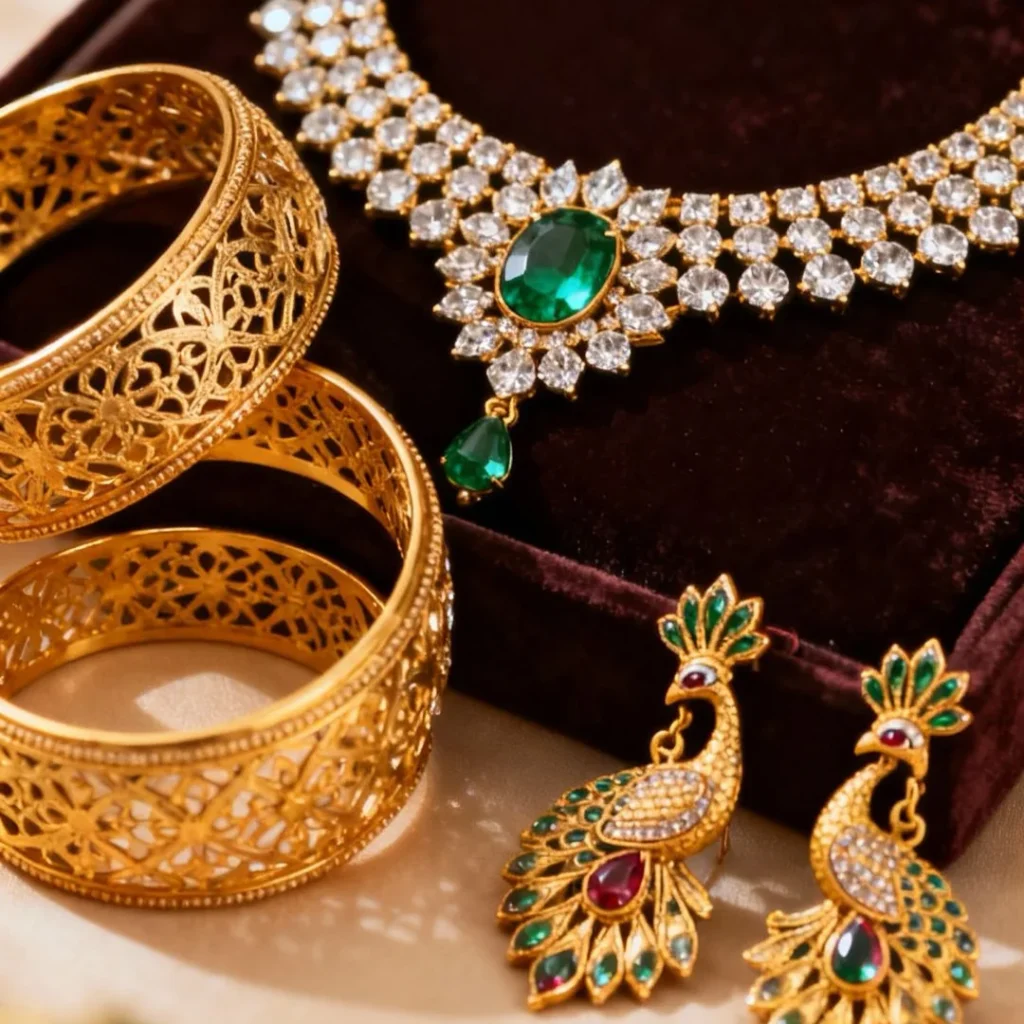
Traditional Nepali gold jewellery is typically made in 22K or 24K gold, reflecting the same high-purity standard found across South Asia. When purchasing gold Nepali jewellery in Melbourne, always ask for hallmark documentation certifying the gold purity. A reputable jeweller will provide this without hesitation.
Silver Quality
Nepali silver jewellery should be made from sterling silver (92.5% pure, marked 925) or high-purity fine silver. Be wary of pieces described as ‘silver’ that are actually silver-plated base metal, these will tarnish, discolour, and deteriorate quickly. Genuine Nepali silver work has a characteristic weight and patina that distinguishes it from plated imitations.
Handcraft vs Machine-Made
One of the hallmarks of authentic Nepali jewellery is handcraftsmanship. Repoussé work, hand-twisted filigree, and individually set stones have subtle variations and a depth of detail that machine-made pieces simply cannot replicate. Look closely at the surface texture and construction, handmade pieces will show the character marks of the artisan’s hand.
Gemstone Authenticity
Turquoise, coral, lapis lazuli, and garnet are among the most commonly used stones in Nepali jewellery. Authentic turquoise has natural matrix veining and subtle colour variation, uniform bright blue stones are almost certainly dyed howlite or plastic. For high-value pieces, request gemstone certification or ask the seller to confirm whether stones are natural, treated, or synthetic.
Cultural Provenance
Where possible, buy from sellers with a genuine connection to Nepal, whether Nepali community members selling inherited or handcrafted pieces, established importers with direct artisan relationships, or jewellers with demonstrated knowledge of Nepali jewellery traditions. A seller who can speak to the origin and meaning of a piece is far more likely to be offering something authentic.
Authentic Nepali Jewellery vs Imitation: At a Glance
| Feature | Authentic Nepali Jewellery | Imitation / Mass-Produced |
| Gold / Silver Purity | 22K–24K gold or 925 silver | Gold-plated or silver-plated base metal |
| Craftsmanship | Handmade repoussé, filigree, stone inlay | Machine-stamped, uniform finish |
| Gemstones | Natural turquoise, coral, garnet | Dyed howlite, glass, or plastic |
| Cultural origin | Kathmandu Valley or hill communities | Generic ‘ethnic’ styling |
| Resale and heirloom value | High – appreciates over time | Negligible |
| Artisan connection | Direct from Nepali craftspeople | Mass factory production |
Nepali Bridal Jewellery – A Special Guide for Melbourne Brides
A Nepali wedding is one of the most richly adorned occasions in South Asian culture. Depending on the bride’s ethnic community and regional background, the bridal jewellery set will vary, but certain pieces are near-universal across Nepali Hindu wedding traditions.
The Essential Nepali Bridal Jewellery Set
Tilhari: The most sacred piece, an elongated gold bead necklace placed around the bride’s neck by the groom during the wedding ceremony. The Tilhari is to Nepali brides what the Mangalsutra is to Indian brides.
Pote Necklace / Tayo: Green glass bead necklace (Pote) and gold bead necklace (Tayo) worn together as markers of marriage. These are often layered for a full bridal effect.
Naugedi Haar: The nine-strand gold necklace, worn for its auspicious significance and extraordinary visual impact.
Sirbandi / Tika Patti: The bridal forehead ornament, intricately crafted in gold and often featuring Newari-style repoussé work.
Dhungri Earrings: Statement gold earrings with elaborate hanging pendants, often set with semi-precious stones or featuring traditional Nepali motifs.
Chura (Red Bangles): Red and gold bangles worn by the bride, symbolising auspiciousness and marital happiness.
Pauju / Paujeb: Gold or silver anklets worn by the bride, completing the full-body jewellery ensemble.
Mundri / Rings: Gold rings on multiple fingers, often with religious significance and traditional design motifs.
For Melbourne-based Nepali brides, sourcing a complete traditional bridal set requires planning, ideally beginning 4 to 6 months before the wedding. Many pieces may need to be imported from Nepal or custom-crafted by specialist jewellers. At Anu Jewellers Craigieburn, we work with Nepali brides to source and customise bridal jewellery that honours tradition while meeting the practical requirements of a Melbourne wedding.
Tips for Shopping for Nepali Jewellery in Melbourne
Connect with the Nepali community first: Melbourne’s Nepali community is warm, well-networked, and generous with recommendations. Groups such as the Nepali Society of Victoria, Dashain Melbourne committees, and Nepali student associations can point you toward trusted sellers.
Visit during Dashain and Tihar season: The weeks leading up to Nepal’s two largest festivals, Dashain (September/October) and Tihar (October/November), see an influx of Nepali jewellery in Melbourne as community members import pieces from Nepal. This is the best time to find authentic jewellery at community events and markets.
Ask about the piece’s origin: A trustworthy seller will know where their jewellery comes from. Ask whether it was made in Kathmandu, which community’s tradition it represents, and whether it was handcrafted.
Consider Indian jewellery stores for gold bridal pieces: Many traditional Nepali bridal pieces, particularly gold necklaces, earrings, and bangles, are very similar in construction to Indian gold jewellery. Reputable Indian gold jewellers in Melbourne, including Anu Jewellers, can often source or adapt pieces that serve Nepali bridal traditions beautifully.
Budget realistically for authentic pieces: Genuine handcrafted Nepali jewellery, particularly 22K gold bridal pieces or sterling silver repoussé work, is a meaningful investment. Be wary of pieces that seem unusually inexpensive, as low prices typically indicate low-quality materials or mass production.
Request certificates and receipts: Always obtain documentation for gold jewellery purchases, including hallmark certification, a detailed receipt, and any available provenance information.
How Anu Jewellers Serves Melbourne’s Nepali Community
At Anu Jewellers in Craigieburn, we recognise that Melbourne’s South Asian community is beautifully diverse, encompassing Indian, Punjabi, Nepali, Sri Lankan, Bangladeshi, and many other cultural traditions. Our commitment is to serve every member of this community with the respect, expertise, and cultural understanding their jewellery deserves.
For our Nepali customers, we offer:
22K and 24K certified gold jewellery: Including necklaces, earrings, bangles, and bridal sets that align with Nepali gold jewellery traditions.
Bridal consultations: We work with Nepali brides and their families to understand their specific traditions and source or adapt pieces that honour those traditions faithfully.
Custom jewellery: For pieces with specific cultural requirements, particular motifs, dimensions, or stone settings, we offer custom design and sourcing services.
Transparent pricing: All gold jewellery is priced transparently based on current gold rates plus making charges. No hidden costs, no pressure.
Multilingual service: Our team communicates warmly with customers from across South Asia, and we understand the cultural significance behind every purchase.
Convenient Craigieburn location: Easily accessible from Melbourne’s northern suburbs where much of Melbourne’s Nepali community resides including Roxburgh Park, Broadmeadows, Mickleham, and Epping.
Final Thoughts
Nepali jewellery is a treasure of Himalayan craftsmanship, rich in symbolism, steeped in tradition, and crafted with a skill that has been refined over a thousand years. For Melbourne’s Nepali community, finding authentic pieces that honour this heritage is both a cultural priority and a deeply personal act of connection to home.
Whether you are preparing for a Nepali wedding, shopping for festival jewellery ahead of Dashain, or simply seeking a piece of genuine Himalayan artistry, Melbourne has options, if you know where to look and what to ask for.
At Anu Jewellers in Craigieburn, we are proud to serve Melbourne’s Nepali community with the same care and expertise we bring to every customer. Visit us to explore our collection, discuss your bridal jewellery requirements, or simply to speak with a team that understands and values your cultural tradition.