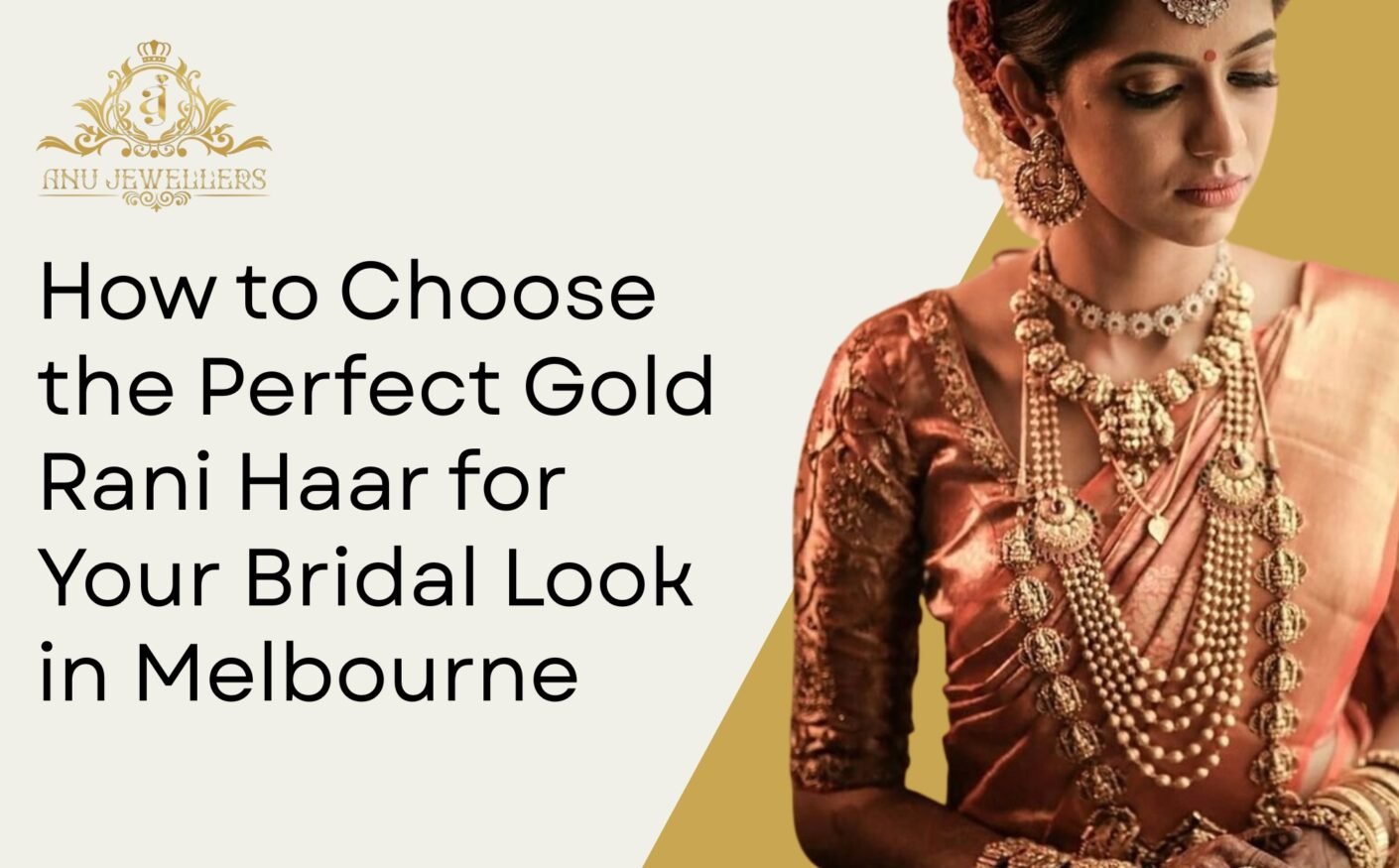
The Rani Haar is more than a necklace, it is the centrepiece of Indian bridal jewellery. Steeped in royal Mughal tradition and beloved across Punjab, Rajasthan, and beyond, the Gold Rani Haar has graced the necks of queens, maharanis, and brides for centuries. Today, it remains one of the most sought-after pieces of Indian bridal jewellery, and for good reason.
For brides in Melbourne, choosing the perfect Rani Haar can feel overwhelming. With so many styles, gold purities, gemstone combinations, and price points available, how do you find the one that truly complements your bridal look?
To choose the perfect Gold Rani Haar for your bridal look, focus on 22K hallmark gold purity, necklace length based on your blouse neckline, gemstone compatibility with your outfit, overall bridal set coordination, and comfort for all-day wear.
At Anu Jewellers in Craigieburn, we work with brides every season across our Punjabi Bridal Jewellery Collection and certified 22K Gold Jewellery range to help them select Rani Haars that honour tradition while reflecting their personal style. This guide shares everything you need to know before making one of the most important jewellery decisions of your life.
What Is a Rani Haar?
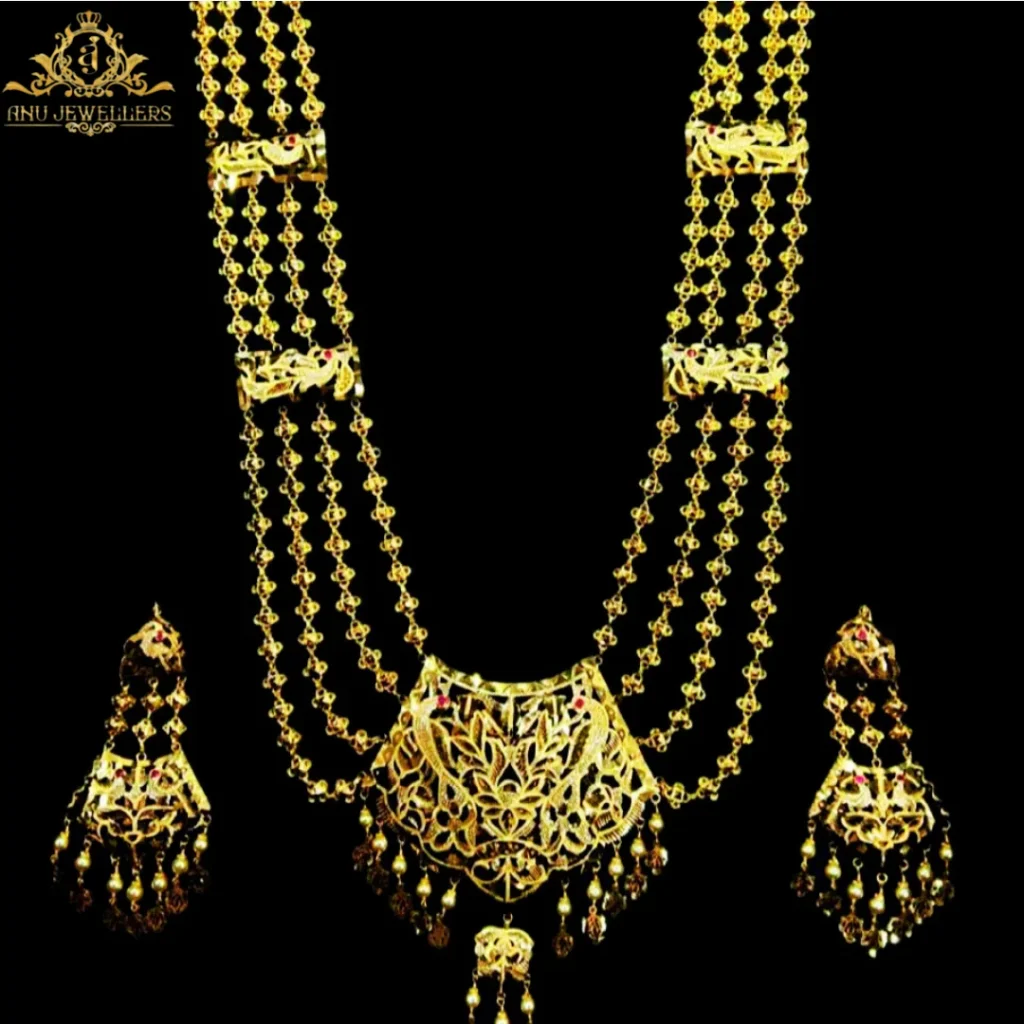
The word ‘Rani’ means queen in Hindi and Punjabi, and the Rani Haar lives up to its name. It is a long, layered gold necklace, typically falling below the chest or to the waist, characterised by elaborate craftsmanship, intricate patterns, and often adorned with gemstones, pearls, or enamelled motifs.
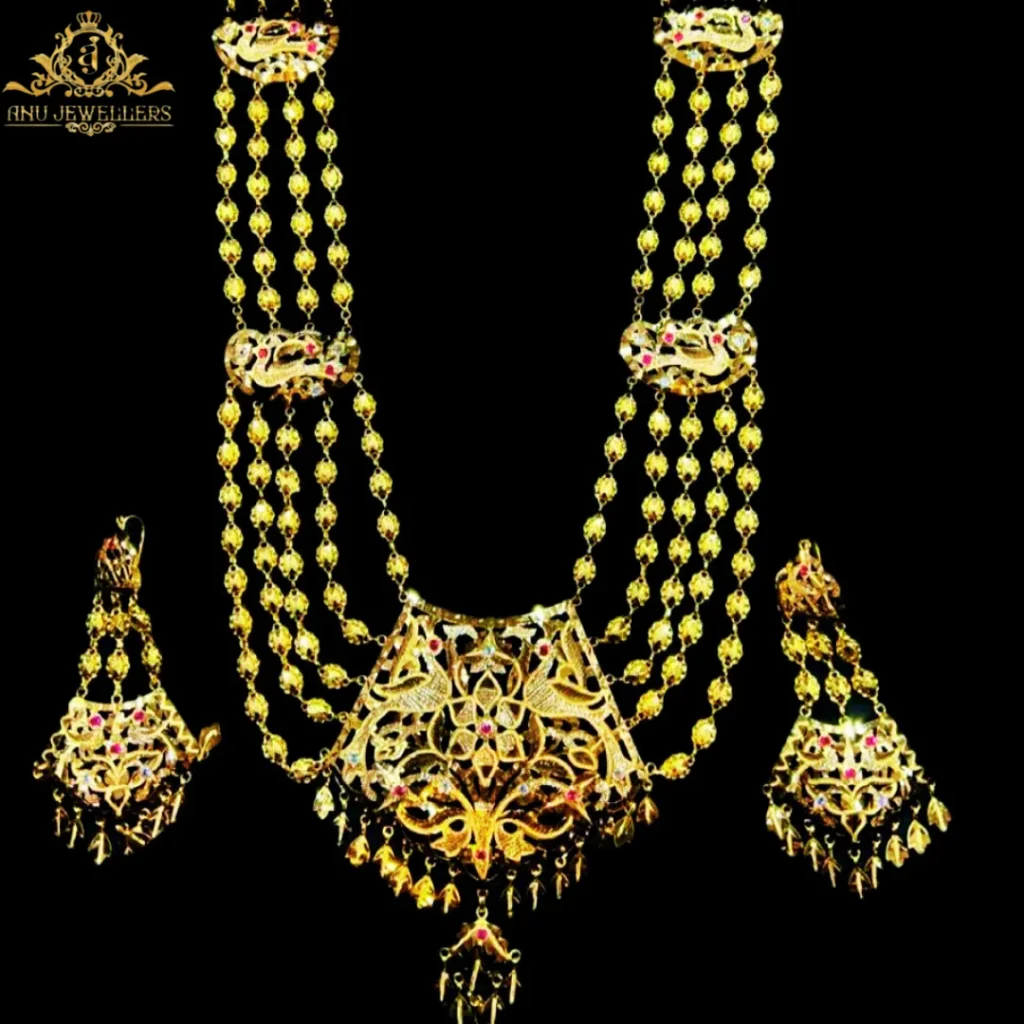
Unlike shorter gold chains or chokers, the Rani Haar makes a grand statement. It is traditionally worn as the centrepiece of a bridal jewellery set, commanding attention and anchoring every other piece of bridal jewellery around it.
Historically worn by royalty, the Rani Haar was a marker of wealth, lineage, and cultural pride. In modern Indian weddings, including those celebrated by Melbourne’s vibrant Punjabi and South Asian communities, it continues to carry deep symbolic and emotional significance.
Popular Rani Haar Styles to Know
Not all Rani Haars are alike. Understanding the key styles will help you identify which design best suits your bridal outfit, skin tone, and personal taste.
Kundan Rani Haar
One of the most iconic styles, the Kundan Rani Haar features precious or semi-precious gemstones set in 24K gold foil, a technique originating in the Rajputana courts. The result is a jewel-saturated, richly detailed necklace that pairs beautifully with a red or ivory lehenga. The Meenakari reverse, vibrantly enamelled back panels, adds a hidden layer of artistry that true connoisseurs appreciate.
Polki Rani Haar
Polki refers to uncut, natural diamonds set in gold. A Polki Rani Haar has a raw, organic brilliance that differs from the high shine of brilliant-cut diamonds. It carries a heirloom quality and is often chosen by brides who want something that looks both timeless and distinctive. Polki pieces are higher in investment but unmatched in prestige.
Temple Jewellery Rani Haar
Inspired by the ornate carvings of South Indian temples, temple jewellery Rani Haars feature deities, lotus flowers, and peacock motifs crafted in 22K gold. These pieces have a bold, sculptural quality and look magnificent with silk sarees and traditional bridal looks.
Pearl and Gold Rani Haar
For brides seeking elegance over opulence, a pearl and gold Rani Haar offers a softer alternative. Strings of freshwater or South Sea pearls interlinked with gold motifs create a graceful, flowing necklace that complements both traditional and fusion bridal outfits.
Layered Gold Haar
A contemporary take on the classic Rani Haar, layered gold Haars feature multiple strands of gold chains, discs, or beads cascading at different lengths. Lighter in weight than their Kundan or Polki counterparts, they suit modern brides who want the look of a Rani Haar with a more wearable feel.
Understanding Gold Purity for Your Rani Haar
Gold purity is one of the most important factors when purchasing a Rani Haar. In Indian jewellery tradition, two karats are most commonly used:
| Gold Type | Purity | Best For |
| 22K Gold | 91.6% pure gold | Traditional bridal Rani Haars; best balance of durability and colour |
| 24K Gold | 99.9% pure gold | Kundan settings; the gold foil used in gem mounting |
| 18K Gold | 75% pure gold | Contemporary or lightweight designs; better for everyday wear |
At Anu Jewellers, we specialise in certified 22K gold Rani Haars, which are the gold standard for Indian bridal jewellery. Always request hallmark certification when purchasing, this guarantees the purity you are paying for.
Note: Gold purity alone does not determine quality. Structural thickness, clasp strength, and balance are equally important in long bridal necklaces.
Matching Your Rani Haar to Your Bridal Outfit
A Rani Haar should feel like a natural extension of your bridal look, not an afterthought. Here is how to coordinate with some of the most popular bridal outfit choices:
Red Bridal Lehenga
Red is the most traditional Punjabi bridal colour and pairs beautifully with a Kundan or Polki Rani Haar. The deep reds and greens of Kundan gemstones echo the richness of the bridal red, creating a harmonious and regal effect. A gold-heavy Rani Haar with ruby or emerald accents is a timeless choice.
Ivory or Cream Lehenga
Ivory and cream bridal outfits have become increasingly popular among modern brides. For these softer palettes, a pearl Rani Haar or a lightly embellished gold Haar provides contrast without overpowering the look. Uncut diamond or Polki pieces also shine beautifully against lighter fabrics.
Pink or Pastel Lehenga
Pink and pastel bridal outfits call for jewellery that adds warmth without clashing. A layered gold Rani Haar with pearl drops or a Kundan set featuring pink tourmaline or rose quartz accents works wonderfully with blush, dusty rose, and mint tones.
Bridal Saree
For brides wearing a silk Kanjeevaram or Banarasi saree, a temple jewellery Rani Haar is the most historically resonant choice. Its bold motifs and heavy gold construction complement the intricate weave of traditional sarees magnificently.
Fusion or Contemporary Bridal Wear
For brides stepping outside tradition, perhaps wearing a sharara, a structured gown, or an Indo-Western outfit, a sleek layered gold Haar or a minimalist Rani Haar with a single statement pendant strikes the perfect balance between heritage and modern style.
Choosing the Right Length and Weight
A Rani Haar’s length and weight are just as important as its design. Here is what to consider:
Chest-length Rani Haar (18–22 inches): Ideal for high-neck or heavily embroidered blouses, as it sits above the embroidery and remains clearly visible.
Waist-length Rani Haar (24–32 inches): A dramatic choice for deep-neck blouses or plain silk blouses that benefit from a strong jewellery statement.
Multi-strand Layered Haar: Combines the impact of multiple necklaces in one piece, working beautifully across a range of necklines.
Weight Considerations: A heavier Rani Haar (50g and above) carries a feeling of luxury but may require a supporting chain or hook at the back to distribute the weight comfortably across a full wedding day.
Custom Length: Many experienced jewellers, including Anu Jewellers in Craigieburn, can adjust or custom-craft Rani Haars to suit your specific height and blouse neckline, always worth asking about.
Gemstone Choices in a Gold Rani Haar
Gemstones define the personality of a Rani Haar. Each stone carries its own symbolism, colour story, and price point:
Ruby (Manik)
The stone of love, passion, and prosperity. Deep red rubies are a traditional and auspicious choice for Punjabi brides and pair magnificently with 22K gold.
Emerald (Panna)
Emeralds bring a lush green contrast to gold and are particularly popular in Kundan settings. They signify growth, harmony, and new beginnings, ideal symbolism for a wedding.
Pearl (Moti)
Pearls symbolise purity and new beginnings. They soften the heaviness of gold, making them an excellent choice for brides who want elegance without excess.
Polki Diamond
Uncut and raw, Polki diamonds have a warm, antique glow that suits heritage-inspired bridal looks. Unlike brilliant-cut diamonds, their lustre is subtler and richer.
Blue Sapphire (Neelam)
For brides wanting something unexpected, deep blue sapphires set in gold create a striking, unconventional Rani Haar. Increasingly chosen by modern brides seeking individuality within tradition.
Budgeting for Your Gold Rani Haar in Melbourne
A Gold Rani Haar is a significant investment, and pricing depends on several factors:
Gold Weight: The primary cost driver. Rani Haars typically range from 30g to 150g+ depending on the design. The heavier the piece, the higher the gold cost.
Making Charges: The craftsmanship cost added on top of the gold rate. For intricate Kundan or Polki pieces, making charges can be 20–40% of the gold value. Always request a transparent breakdown.
Gemstone Quality: Natural rubies, emeralds, and Polki diamonds command significantly higher prices than synthetic stones. Confirm with your jeweller whether stones are natural or simulated.
Import vs Local Sourcing: Pieces directly imported from skilled artisans in Jaipur, Amritsar, or Hyderabad often offer superior craftsmanship. Ask your jeweller about the origin of their pieces.
Custom vs Ready-Made: Custom Rani Haars allow you to specify length, stone preference, and design details, but require 2–4 months lead time and typically cost more than ready-made inventory.
At Anu Jewellers Craigieburn, we offer transparent gold-rate pricing, certified hallmarking, and flexible lay-by options so Melbourne families can invest in authentic bridal jewellery without financial stress.
7 Expert Tips for Choosing the Perfect Rani Haar
1. Try before you decide: Always try the Rani Haar over your blouse neckline if possible. Length that looks perfect on a flat display may sit differently on the body.
2. Consider your height: Taller brides can carry longer, heavier Haars with ease. Petite brides may find a chest-length layered Haar more proportionate and flattering.
3. Coordinate with your Maang Tikka and earrings: Your Rani Haar should feel part of a family of jewellery, not compete with it. Ensure the metalwork and stone colours echo across your full bridal set.
4. Think about the second-day wear: Many brides want jewellery they can wear at the reception or Sangeet as well. Consider whether your Rani Haar is versatile enough or if you need a separate piece for each event.
5. Book your bridal consultation early: For custom pieces, begin discussions at least 4–6 months before your wedding. Good jewellers have limited capacity during peak wedding season.
6. Ask about comfort features: Long Rani Haars can be heavy. Ask whether the piece includes a back hook or hidden clasp to distribute weight across the shoulders.
7. Request hallmark certification: Never purchase a Rani Haar without certified documentation of gold purity. This protects both your investment and your peace of mind.
Caring for Your Gold Rani Haar After the Wedding
Your Rani Haar is not just a piece of jewellery for one day, it is a family heirloom in the making. Here is how to preserve it for generations:
◆ Store your Rani Haar in a separate, soft-lined jewellery box or cloth pouch to prevent scratching and tangling.
◆ Keep Kundan and Meenakari pieces away from water, perfume, and harsh chemicals, these can loosen gemstone settings or damage enamel.
◆ Clean with a soft, dry cloth after wearing. For deeper cleaning, consult your jeweller rather than using commercial cleaners.
◆ Have the piece professionally inspected every 2 years to check for loose stone settings, clasp integrity, and general condition.
◆ Consider insuring high-value pieces, particularly those with Polki diamonds or natural gemstones.
Final Thoughts
Choosing the perfect Gold Rani Haar is one of the most meaningful decisions a bride makes in her wedding journey. It is the piece that will anchor your entire bridal look, photograph beautifully for a lifetime of memories, and one day be passed down to the next generation of women in your family.
Take your time. Try on different styles. Ask about craftsmanship, purity, and provenance. And when you find the one that makes your heart sing, you will know.
At Anu Jewellers in Craigieburn, we are proud to guide Melbourne brides through this journey with expertise, care, and a collection of certified 22K gold Rani Haars crafted by master artisans. Book your bridal consultation today and let us help you find your perfect Rani Haar.