
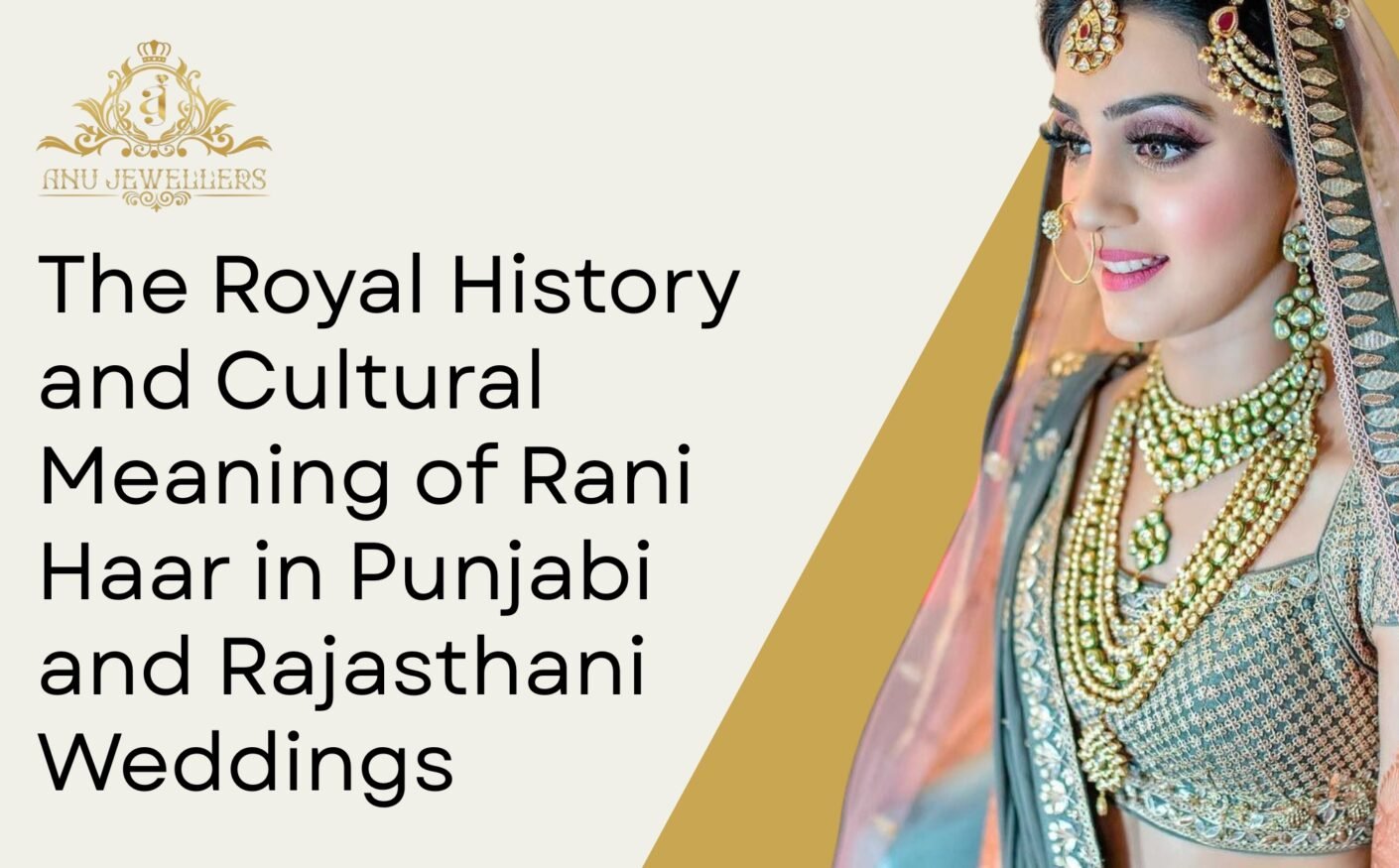
Jewellery has always held deep cultural and emotional significance in South Asian traditions. Among the most iconic bridal ornaments is the Rani Haar necklace, a majestic piece known for its regal appearance and historical heritage. The name itself translates to “Queen’s Necklace,” symbolizing royalty, elegance, and timeless beauty.
For centuries, this elaborate necklace has been an important element of Indian bridal jewellery, particularly in Punjabi and Rajasthani wedding traditions. Its long, layered design makes it one of the most striking pieces in a bridal jewellery set. While fashion trends evolve, the cultural meaning of the Rani Haar remains deeply rooted in heritage and symbolism.
The Rani Haar necklace remains one of the most iconic pieces in Indian bridal jewellery, especially in Punjabi bridal jewellery and Rajasthani bridal jewellery traditions. In this guide, we explore its royal origins, symbolism, and continuing role in modern weddings.
Origins of the Rani Haar in Royal India
The Rani Haar traces its history to the royal courts of ancient and medieval India. During the Mughal and Rajput eras, jewellery was not merely decorative, it represented power, prestige, and artistry.
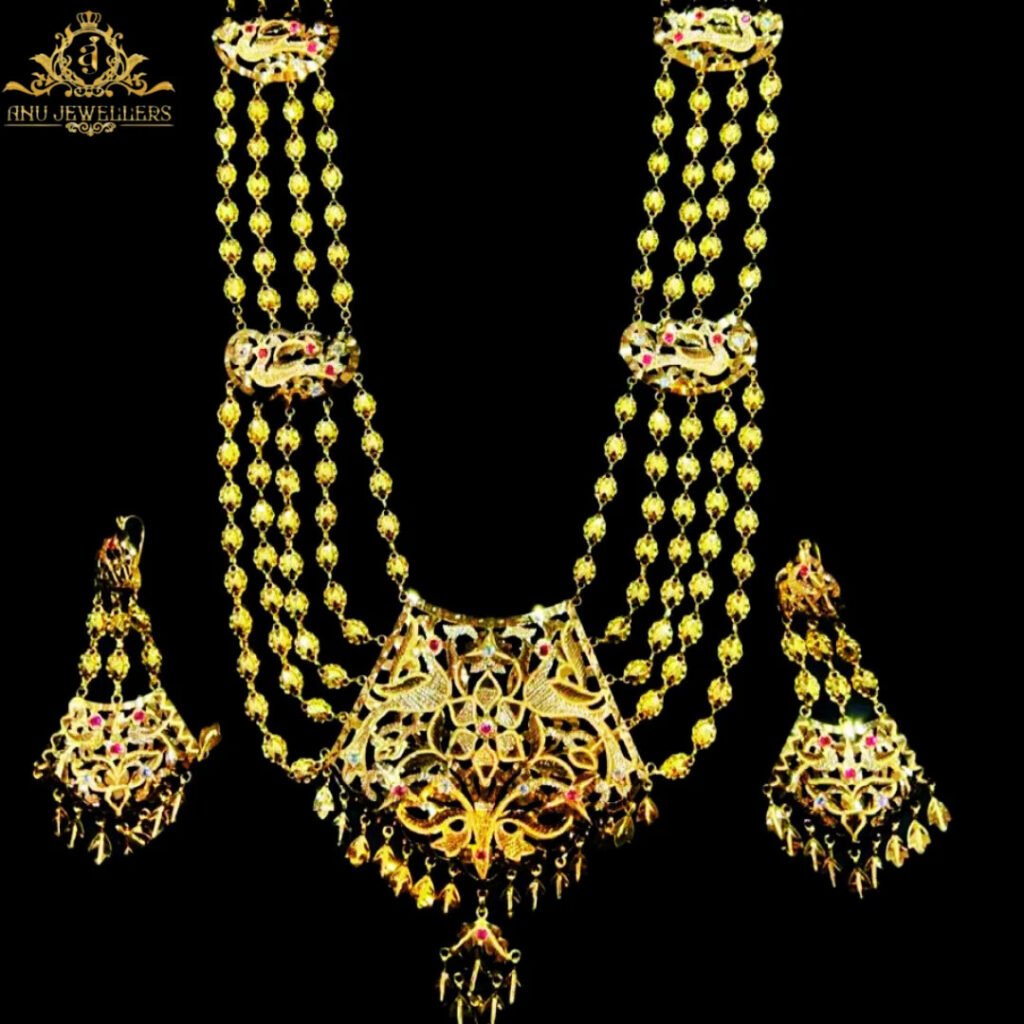
Royal families commissioned master craftsmen to create intricate necklaces using gold and precious gemstones. These designs showcased remarkable craftsmanship and cultural motifs. The Rani Haar necklace became particularly popular among queens and noblewomen because of its distinctive long length and luxurious appearance.
Unlike shorter necklaces, the Rani Haar was designed to fall below the chest, allowing it to be layered over other pieces of jewellery. This layered effect created a regal aesthetic that reflected royal elegance.
Many historic designs incorporated traditional techniques such as Kundan jewellery, where gemstones are set into gold using a delicate foil technique. This method allowed artisans to create detailed patterns inspired by nature, architecture, and spirituality.
These royal jewellery traditions eventually influenced bridal fashion across India. Today, the Rani Haar continues to symbolize luxury and heritage within traditional gold jewellery collections.
Symbolism Behind the Rani Haar
In South Asian culture, jewellery often carries symbolic meaning beyond aesthetics. The Rani Haar represents prosperity, dignity, and marital harmony.
The long design of the necklace symbolizes abundance and continuity. In many communities, gold jewellery is believed to bring blessings and prosperity to the bride’s new life.
Historically, the size and intricacy of a necklace also represented a family’s social status. Larger and more detailed designs indicated wealth and prestige. Even today, brides often choose elaborate Rani Haar designs to celebrate important life milestones.
Gold itself holds deep cultural significance. It is associated with purity, stability, and long term value. For this reason, many brides prefer gold wedding jewellery that can be cherished for generations.
Because of its symbolic meaning, the Rani Haar often becomes one of the most treasured pieces in a bridal jewellery collection.
The Role of Rani Haar in Punjabi Weddings
Punjabi weddings are celebrated with grandeur, vibrant colors, and elaborate traditions. Jewellery plays a crucial role in completing the bridal look, and the Rani Haar is often one of the most important pieces.
In many Punjabi bridal ensembles, the bridal necklace set includes multiple layers. A shorter choker or necklace sits near the neckline, while the Rani Haar necklace extends further down to create a luxurious layered effect.
This layered style enhances the richness of the bridal outfit, especially when paired with intricately embroidered lehengas. The necklace adds depth and elegance to the overall appearance.
Designs commonly feature floral patterns, temple inspired motifs, and gemstone accents that reflect the heritage of Punjabi bridal jewellery. The Rani Haar also complements other traditional ornaments such as jhumkas, bangles, and the maang tikka.
Beyond its visual appeal, the Rani Haar symbolizes prosperity and grace for the bride. Many families treat it as an heirloom piece that can be passed down through generations.
The Importance of Rani Haar in Rajasthani Weddings
Rajasthan is renowned for its royal heritage and exquisite jewellery craftsmanship. In Rajasthani weddings, the Rani Haar carries deep cultural significance and reflects centuries of artistic tradition.
Jewellery designs from this region are known for their bold structure and elaborate detailing. Many Rani Haar necklaces feature large pendants, gemstone embellishments, and intricate patterns inspired by royal aesthetics.
Traditional craftsmanship techniques such as Polki jewellery and Kundan jewellery are frequently used to create these ornate designs. Polki jewellery uses uncut diamonds that add a distinctive antique charm to the necklace.
Rajasthani brides often layer multiple necklaces, including chokers and longer chains, to achieve a regal appearance. Within this layered jewellery arrangement, the Rani Haar necklace serves as the centerpiece.
Many families also treasure heirloom jewellery pieces that have been preserved for decades. Wearing a Rani Haar that belonged to a previous generation adds emotional significance to the wedding ceremony.
Evolution of Rani Haar Designs in Modern Weddings
Although the Rani Haar has ancient roots, its design has evolved to suit contemporary bridal preferences.
Modern jewellery designers experiment with textures, patterns, and gemstone combinations to create updated interpretations of this classic piece. Some brides prefer minimalist styles that offer elegance without excessive weight, while others embrace elaborate designs inspired by royal jewellery.
One of the most noticeable changes is the shift toward versatility. Today’s brides often choose jewellery that can be worn beyond the wedding day. Lightweight versions of the Rani Haar necklace allow brides to wear the piece at festivals and formal occasions.
Another emerging trend is the combination of traditional gold with diamonds or colored gemstones. This approach blends heritage with modern aesthetics, making the necklace suitable for both classic and contemporary bridal styles.
As bridal fashion evolves, the Rani Haar continues to adapt while preserving its cultural significance.
Styling the Rani Haar for Bridal Elegance
Styling a Rani Haar requires attention to balance and proportion. Because the necklace is long and visually prominent, it should complement the rest of the jewellery rather than overpower it.
One popular styling technique is layering the Rani Haar with a shorter choker or necklace. This combination adds dimension to the bridal jewellery set while highlighting the elegance of the bridal necklace.
The neckline of the bridal outfit also plays an important role. Deep necklines allow the Rani Haar to stand out as the focal point of the jewellery ensemble. Higher necklines often pair better with slightly shorter variations of the necklace.
Color coordination is another key factor. Gold Rani Haar designs complement traditional bridal colors such as red, maroon, and ivory. Brides may also match their earrings, bangles, and maang tikka with the necklace design to create a cohesive look.
When styled correctly, the Rani Haar transforms the bridal appearance into a regal and memorable statement.
Preserving Traditional Jewellery Heritage
The enduring popularity of the Rani Haar reflects the deep cultural roots of South Asian jewellery traditions. Despite modern design trends, many families continue to value jewellery that preserves historical craftsmanship.
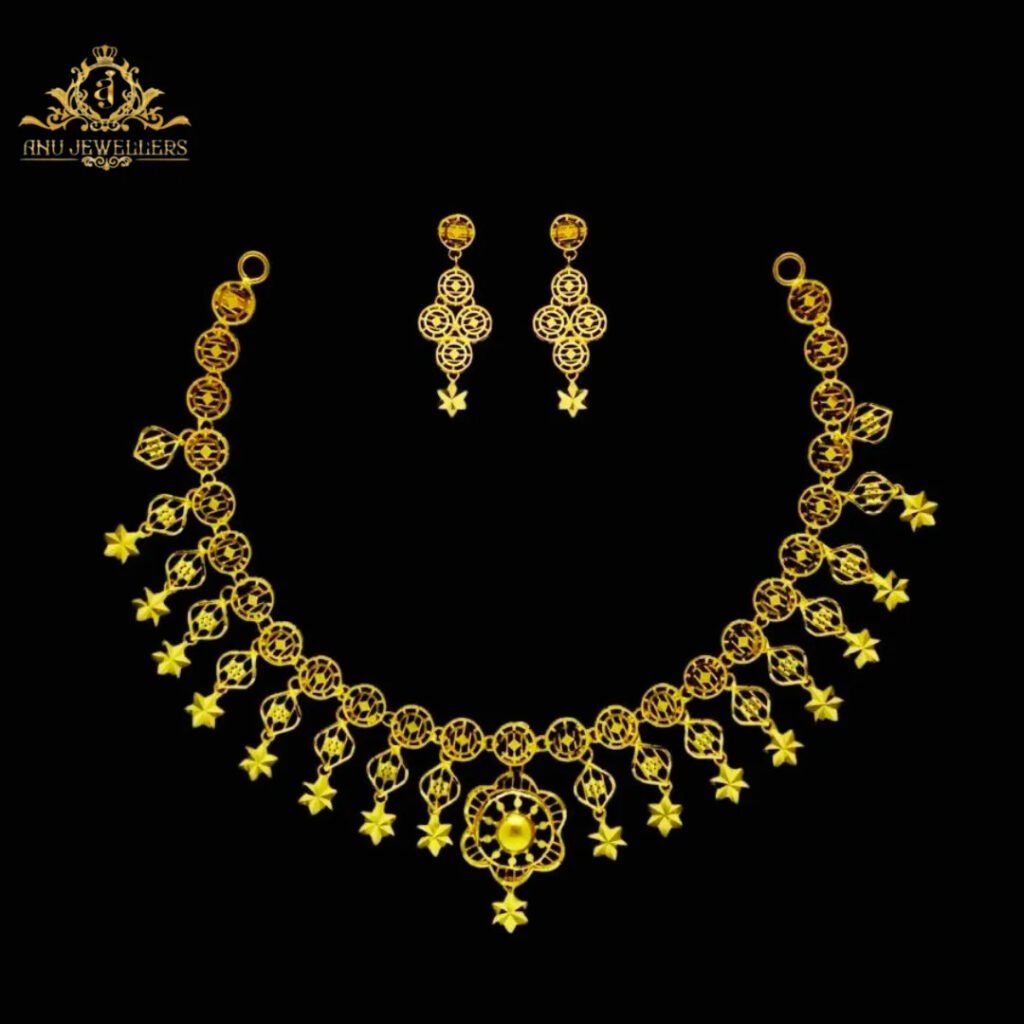
Artisans spend years mastering techniques used to create traditional gold jewellery. From detailed engraving to gemstone setting, every element of a Rani Haar requires precision and artistic skill.
Preserving these traditions ensures that future generations can appreciate the beauty and heritage behind classic bridal ornaments.
At Anu Jewellers, we celebrate the artistry and heritage of traditional jewellery designs. Our collections honor cultural traditions while incorporating modern craftsmanship for today’s brides.
Choosing a Rani Haar for Your Wedding
When selecting a Rani Haar, brides often consider several important factors.
Design is usually the first consideration. Some brides prefer elaborate styles with gemstones, while others choose simpler designs that emphasize elegance.
Gold purity is another essential factor. High quality gold ensures durability and long term value. Many brides look for hallmarked jewellery to guarantee authenticity.
Comfort also plays a significant role. Since wedding ceremonies can last several hours, brides should choose jewellery that feels secure and comfortable.
Finally, emotional value should not be overlooked. Whether it is a newly crafted necklace or a family heirloom, the Rani Haar necklace often becomes one of the most meaningful pieces in a bridal jewellery collection.
Conclusion
The Rani Haar remains one of the most iconic symbols of bridal elegance in South Asian weddings. From its origins in royal courts to its place in modern bridal fashion, this magnificent necklace represents centuries of tradition and cultural pride.
In Punjabi and Rajasthani weddings, the Rani Haar symbolizes heritage, prosperity, and the enduring beauty of cultural traditions. Brides who wear this regal necklace continue a legacy that connects past generations with the present.If you are searching for elegant Rani Haar necklaces or traditional Indian bridal jewellery, visit Anu Jewellers in Melbourne to explore beautifully crafted designs inspired by royal heritage. Our collection celebrates timeless craftsmanship while offering modern styles perfect for weddings and cultural celebrations.