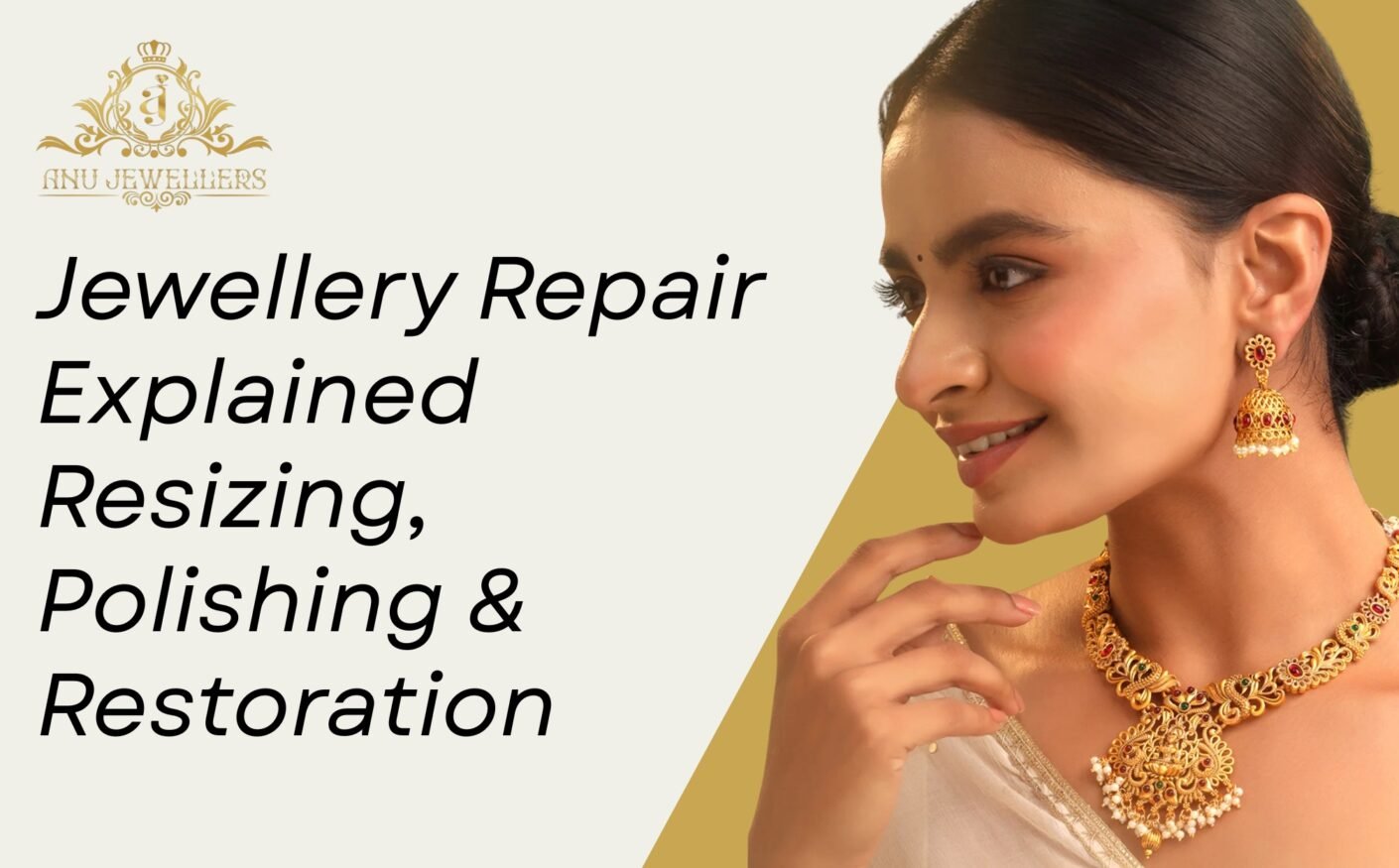
Jewellery can carry sentimental, cultural and financial value, which makes proper care important. A wedding ring, family heirloom, gold chain or diamond piece may experience wear over time, but damage does not always mean it needs to be replaced.
Jewellery repair can address a range of issues, including resizing, broken chains, damaged clasps, loose stones, worn settings, scratches and changes in shape. The appropriate repair depends on the jewellery’s metal, construction, gemstones, condition and extent of damage.
This guide explains how jewellery repair works, common jewellery problems, ring resizing, cleaning and polishing, restoration, repair costs and aftercare. If your jewellery needs professional assessment, visit Anu Jewellers’ Jewellery Repairs service page.
What Is Jewellery Repair?
Jewellery repair involves restoring or maintaining a piece so that it can continue to be worn and enjoyed where repair is suitable.
Common jewellery repair requirements include:
Ring resizing
Broken chain repair
Clasp repair
Bangle repair and reshaping
Earring repairs
Loose stone assessment
Stone resetting
Prong repair
Jewellery cleaning
Polishing
Jewellery restoration
The correct repair method depends on the individual piece. A jeweller should assess the jewellery before confirming whether a particular repair is appropriate.
What Causes Jewellery to Need Repair?
Jewellery can develop problems for many reasons. Everyday wear is one of the most common.
Potential causes include:
Repeated friction and contact
Accidental impact
Pulling or catching on clothing
Weakened chain links
Worn clasps or prongs
Changes in ring size
Improper storage
Exposure to chemicals
Previous repairs
Long-term wear
Regularly checking frequently worn jewellery can help identify problems before they become more serious.
Common Jewellery Problems That May Need Repair
Broken Chains and Clasps
Chains and clasps can weaken through repeated use or accidental pulling.
Depending on the design and location of the damage, repair may involve repairing a link, strengthening a section or replacing a suitable clasp.
Loose Diamonds and Gemstones
A diamond or gemstone that moves, rattles or appears loose should be assessed promptly.
Continued wear may increase the risk of further damage or stone loss. The setting, prongs and surrounding structure should be checked to determine the appropriate repair.
For customers interested in new diamond designs, explore our Diamond Jewellery collection.
Worn or Damaged Ring Settings
Ring settings can become worn through everyday use. Prongs may weaken and settings can become damaged after impact.
An inspection can help determine whether the setting requires repair, strengthening or another form of attention.
Scratched or Dull Jewellery
Jewellery can accumulate dirt, oils and surface marks over time.
Professional cleaning and polishing may improve the appearance of suitable pieces. The appropriate treatment depends on the metal, gemstones, finish and condition.
Bent Bangles
Bangles can lose their shape following an impact or through repeated wear.
Depending on their construction and condition, a professional jeweller may be able to assess whether reshaping or another repair is suitable.
Damaged Earrings
Earrings can experience issues such as:
Broken posts
Damaged clasps
Loose fittings
Bent components
Loose stones
Missing backs
The appropriate repair depends on the individual design and damage.
How Does Jewellery Repair Work?
The repair process varies depending on the jewellery, but a professional assessment generally follows several stages.
1. Jewellery Inspection
The jewellery is examined to identify visible damage and potential underlying issues.
This may include checking:
Metal condition
Stone security
Prongs
Settings
Clasps
Links
Ring size
Previous repairs
Structural condition
2. Repair Assessment
The required repair can then be discussed based on the condition of the jewellery.
Possible work may include resizing, soldering, resetting, reshaping, cleaning, polishing or restoration.
3. Repair Work
Once the appropriate repair has been confirmed, the jewellery can be worked on using a method suitable for its materials and construction.
4. Cleaning and Finishing
Where appropriate, the piece may be cleaned or finished after the repair.
Cleaning methods should be selected according to the jewellery and gemstones. Some delicate, antique or particular gemstone pieces may require gentler treatment rather than ultrasonic cleaning.
5. Final Inspection
The repaired piece should be checked after the work has been completed before it is returned to its owner.
How Does Ring Resizing Work?
Ring resizing involves adjusting the size of a ring to improve its fit.
The suitability of resizing depends on factors such as:
Ring design
Metal type
Band construction
Stone placement
Setting style
Amount of size adjustment
Existing condition
Many rings can be resized, but not every ring can be resized in the same way.
Intricate designs, certain stone settings and some specialised ring constructions may require additional assessment.
If you need professional resizing, visit our Jewellery Repairs service page.
If you’re considering a new ring, explore our Gold Rings collection.
Jewellery Cleaning and Polishing: What’s the Difference?
Cleaning primarily removes dirt, oils and accumulated residue from jewellery.
Polishing can address appropriate surface marks and improve the appearance of some jewellery.
However, polishing should be carried out carefully. Repeated or excessive polishing can affect surface detail, edges or decorative features on some pieces.
The best approach depends on the jewellery’s metal, finish, stones and condition.
Can Diamonds and Gemstones Be Reset?
In some cases, stones can be reset when the existing setting requires attention or when a piece is being redesigned.
Before resetting a stone, the jeweller should assess:
Stone condition
Setting condition
Prongs
Mounting
Surrounding metal
Overall construction
A loose stone should be assessed before continued wear.
What Is Jewellery Restoration?
Jewellery restoration generally involves more extensive work to return an older, damaged or worn piece to a suitable condition while preserving its character where practical.
Restoration may involve:
Repairing damaged sections
Replacing suitable components
Reshaping
Stone resetting
Cleaning
Polishing
Addressing worn settings
Restoration is particularly relevant to inherited and sentimental jewellery.
Not every damaged piece can be returned to its original condition, so an assessment should be completed before restoration work is agreed.
Jewellery Repair vs Jewellery Restoration
Although the terms are related, they can describe different levels of work.
Jewellery repair usually addresses a specific problem, such as a broken chain, damaged clasp, loose stone or ring that requires resizing.
Jewellery restoration can involve broader work on an older, heavily worn or damaged piece, with greater attention to preserving its original appearance and character.
The appropriate approach depends on the individual jewellery.
For personalised jewellery created around a new concept or existing design, explore Custom Jewellery Melbourne.
Is Jewellery Repair Better Than Replacing Jewellery?
There is no universal answer.
Repair may be worth considering when:
The jewellery has sentimental value
It is a family heirloom
The design has personal significance
The piece has cultural importance
The jewellery can be safely repaired
You want to continue wearing the original piece
Replacement may be more appropriate when damage is extensive or repair is unsuitable.
A professional assessment can help you understand your options before making a decision.
How Much Does Jewellery Repair Cost?
Jewellery repair costs vary because every repair is different.
Factors that may influence the cost include:
Type of jewellery
Metal
Extent of damage
Construction
Stone settings
Replacement components
Complexity of the work
Restoration requirements
For this reason, an individual assessment is more useful than relying on a generic online repair price.
For current repair services, visit Jewellery Repairs.
When Should You Stop Wearing Damaged Jewellery?
It is generally sensible to stop wearing a piece if continuing to wear it could worsen the damage or increase the risk of losing a stone or part.
Examples include:
A visibly loose diamond
A broken chain
A damaged clasp
A badly bent ring
A loose gemstone
A severely worn prong
A sharp or uncomfortable edge
Jewellery that has changed shape significantly
Keep the jewellery safely stored until it can be professionally assessed.
How to Care for Jewellery After Repair
Proper aftercare can help reduce unnecessary wear.
Store Jewellery Separately
Use individual pouches or a soft-lined jewellery box where appropriate to reduce scratching and tangling.
Avoid Harsh Chemicals
Perfume, chlorine, cleaning chemicals and other substances may affect some metals, finishes and gemstones.
Remove Jewellery During Heavy Activities
Consider removing delicate jewellery during:
Sports
Gym workouts
Gardening
Heavy manual work
Activities where jewellery may catch or be struck
Clean Jewellery Appropriately
Cleaning requirements vary between metals and gemstones. Follow suitable care instructions rather than using a general household cleaning product on every piece.
Check Settings and Clasps
Periodically check for loose stones, worn prongs, weak clasps, broken links and changes in fit.
How Often Should Jewellery Be Checked?
There is no single inspection schedule for every piece.
Jewellery that is worn frequently or contains delicate settings may benefit from periodic professional assessment.
Consider having jewellery checked if:
A stone feels loose
A clasp becomes difficult to use
A ring changes shape
You notice unusual movement
The jewellery has been damaged
You are preparing important jewellery for a wedding or major occasion
Caring for Traditional and Heirloom Jewellery
Traditional Indian and South Asian jewellery can carry significant family and cultural meaning.
Gold necklaces, bangles, earrings, bridal jewellery and inherited pieces may feature detailed designs that owners want to preserve.
Repair or restoration should therefore consider both the condition of the jewellery and the importance of preserving its character.
If you’re interested in traditional jewellery, explore our Indian Jewellery collection.
Why Choose Anu Jewellers for Jewellery Repairs?
Anu Jewellers provides jewellery services from its physical showroom in Craigieburn, Victoria, alongside gold jewellery, diamond jewellery, bridal jewellery and traditional Indian jewellery.
Founded by Henry Sedha, Anu Jewellers brings a family background in Indian goldsmithing together with personalised jewellery guidance.
Each repair should be assessed according to the jewellery’s condition, materials, construction and damage. This allows suitable repair options to be discussed before work begins.
Where gold purity verification is relevant, Anu Jewellers uses XRF testing as part of its jewellery services. Specific testing and documentation depend on the individual piece.
For repair enquiries, customers can visit the showroom or contact Anu Jewellers directly.
Need Professional Jewellery Repair?
If you have a damaged, poorly fitting or worn piece of jewellery, professional assessment can help you understand whether repair, restoration or replacement is the most suitable option.
Explore our Jewellery Repairs service page for information about ring resizing, chain repairs, stone resetting, bangle repairs, cleaning, polishing and restoration.
Anu Jewellers
Shop 6/3 Highlander Drive
Craigieburn VIC 3064
Australia
Phone: +61 431 429 687
Email: info@anujewellers.com.au
Visit the Craigieburn showroom to discuss your jewellery repair requirements.
Frequently Asked Questions
Can all jewellery be repaired?
No. Repairability depends on the metal, construction, gemstones, condition, extent of damage and previous repairs. A professional inspection can determine whether repair or restoration is suitable.
How do I know if my jewellery needs repair?
Signs can include loose stones, weakened clasps, broken links, bent sections, worn prongs, changes in ring fit or unusual movement.
Can every ring be resized?
No. Many rings can be resized, but intricate designs, certain stone settings and specialised constructions may require additional assessment.
How long does jewellery repair take?
The timeframe depends on the type and complexity of the work. Simple cleaning or minor repairs may take less time than resizing, stone work or restoration.
Can a broken gold chain be repaired?
Many broken gold chains can be assessed for repair. The appropriate method depends on the chain’s construction, metal and location of the damage.
Can loose diamonds or gemstones be secured?
A jeweller can inspect the stone and its setting to determine whether tightening, resetting or another repair is appropriate.
Should I repair an heirloom instead of replacing it?
If a piece has sentimental, cultural or family importance, restoration may be worth considering. A professional assessment can help you understand its condition and available options.
How should I care for jewellery after repair?
Store jewellery carefully, avoid harsh chemicals, remove delicate pieces during heavy activities and have the jewellery checked if you notice loose stones, weak clasps, damage or changes in fit.
Where can I get jewellery repairs in Melbourne?
Anu Jewellers provides jewellery repair services from its Craigieburn showroom. For commercial repair services, ring resizing and other repair requirements, visit our Jewellery Repairs Page