By writer: Anu and Henry
By Anu Jewellers Team, Melbourne gold, diamond and Indian jewellery specialists
Published: 8 September 2026
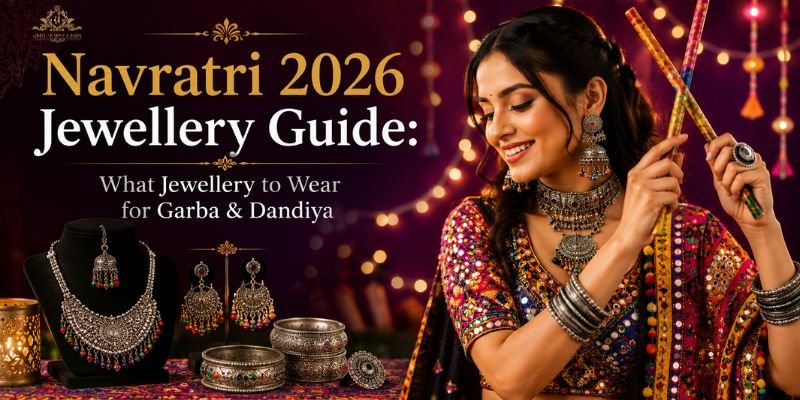
Navratri 2026 jewellery should balance festive style with movement, comfort and tradition. For Garba and Dandiya, choose secure earrings, lightweight necklaces, well-fitted bangles and coordinated colours. For Melbourne celebrations, plan each look around the outfit, dance style and length of the evening.
Navratri is one of those festivals where jewellery is part of the experience. The colours change, outfits change, music changes and, for many families, the jewellery changes with them.
In Melbourne, Navratri celebrations can range from community Garba nights and Dandiya events to temple visits, family gatherings and smaller celebrations at home. That makes a practical jewellery plan more useful than simply choosing the most elaborate set.
For 2026, Sharad Navratri begins in Melbourne on Sunday, 11 October. The nine nights run through Monday, 19 October, followed by Vijayadashami/Dussehra on Tuesday, 20 October. The exact colour sequence below follows the Melbourne calendar.
Table of Contents
- What Jewellery Should You Wear for Navratri 2026?
- What Jewellery Works Best for Garba and Dandiya?
- How Should You Match Jewellery to the Nine Navratri Colours?
- Which Bangles and Bracelets Should You Wear?
- Which Earrings Work Best for Long Garba Nights?
- How Should You Style Necklaces, Chokers and Pendants?
- How Can You Balance Traditional Jewellery With Modern Styling?
- How Do You Keep Jewellery Comfortable and Secure While Dancing?
- What Should You Check Before Buying Navratri Jewellery?
- When Should You Choose Custom or Professional Jewellery Help?
- Frequently Asked Questions
What Jewellery Should You Wear for Navratri 2026?
The best Navratri jewellery combines festive colour, cultural character and comfortable movement. For Garba and Dandiya, prioritise secure earrings, manageable necklace weight and bangles that move naturally without catching clothing, while reserving heavier statement pieces for shorter celebrations.
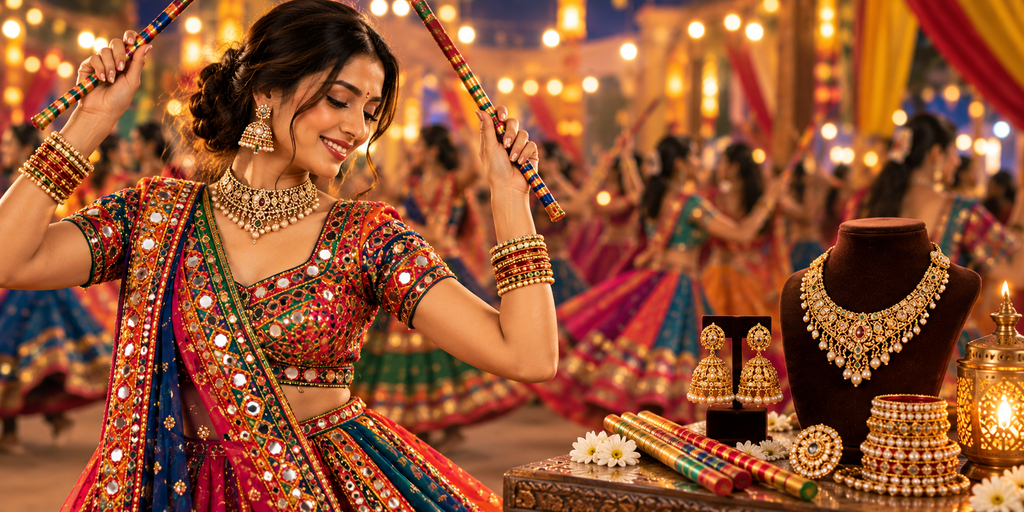
A traditional outfit already carries plenty of visual detail. Mirror work, embroidery, sequins, threadwork and bright fabrics can all compete with jewellery, so the strongest look usually has one clear focal point.
A simple way to choose is to decide what you want people to notice first:
| If Your Outfit Has… | Make the Jewellery… | Good Choice |
| Heavy mirror work | More refined | Gold studs, slim jhumkas or one pendant |
| Plain or lightly decorated fabric | More expressive | Statement necklace, chandbalis or layered pieces |
| Heavy embroidery | Balanced | Medium earrings and a simple bangle stack |
| Bright multicolour detailing | Coordinated | Gold with one or two matching stone colours |
| Minimal Indo-Western styling | Contemporary | Geometric earrings, cuff or fine bracelet |
| Traditional chaniya choli | Festive and layered | Jhumkas, bangles and a choker or necklace |
The goal isn’t to wear the most jewellery possible. It’s to create a combination that looks intentional when you’re standing still and still feels comfortable once the dancing starts.
What Jewellery Works Best for Garba and Dandiya?
Garba jewellery should be lightweight, secure and expressive enough to complement traditional clothing without interfering with movement. Choose pieces that stay close to the body, use reliable fastenings and avoid excessive swinging, especially during energetic Dandiya routines.
Garba involves repeated arm and body movement, while Dandiya adds the movement of sticks and interaction with other dancers. Jewellery therefore needs to survive more movement than an ordinary dinner or family gathering.
Best Pieces for Garba
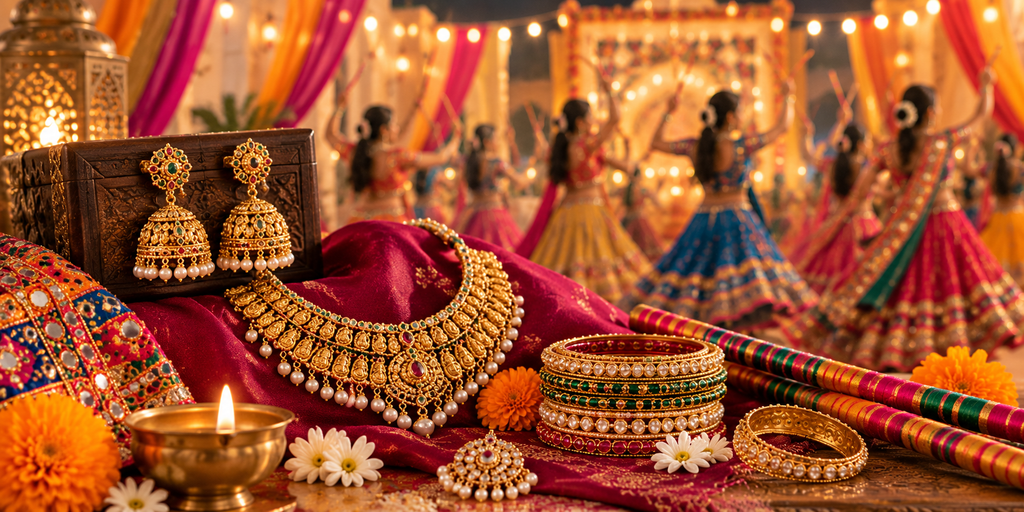
Jhumkas: Traditional bell-shaped earrings add movement and work particularly well with chaniya choli and lehenga outfits.
Chandbalis: Their crescent shape provides a strong statement without requiring an oversized necklace.
Bangles: A few well-fitted bangles can add colour, sound and movement while keeping the wrist styling traditional.
Short chokers: These frame the neckline without creating a long necklace that moves excessively while dancing.
Small pendants: A single pendant works particularly well when the outfit already has substantial embroidery.
Lightweight bracelets: These suit people who prefer a modern festive look without wearing a large bangle stack.
Best Pieces for Dandiya
Dandiya requires extra attention to wrist and hand movement.
Avoid very loose bracelets that can slide down the hand. Also be cautious with extremely long earrings, large hanging charms and necklaces that can swing forward when you move.
A useful approach is to make the earrings or necklace the statement piece and keep the wrist jewellery controlled.
For example, a colourful chaniya choli with a statement choker and medium jhumkas may look complete without a large stack of heavy bangles.
That balance becomes particularly important at Melbourne community events, where dancing can continue for several hours.
The current 2026 fashion coverage also points towards colourful bangles, statement earrings, chokers, layered necklaces and lightweight festive pieces for Garba and Dandiya.
How Should You Match Jewellery to the Nine Navratri Colours?
The nine Navratri colours provide a useful styling framework for 2026. In Melbourne, the nine-night sequence runs from orange on 11 October through peacock green on 19 October, allowing jewellery to complement each outfit without requiring an entirely new set every night.
The important point is to distinguish the 2026 colour sequence from colour charts published for previous years. The weekday-based sequence changes from year to year, so older Navratri articles should not be copied into a 2026 wardrobe plan.
Navratri 2026 Jewellery by Day
| Day | Date | Colour | Jewellery Direction |
| Day 1 | Sunday, 11 October | Orange | Yellow-gold earrings, warm-toned stones or a simple gold necklace |
| Day 2 | Monday, 12 October | White | Pearls, white stones, silver-toned jewellery or delicate gold |
| Day 3 | Tuesday, 13 October | Red | Gold jhumkas, red-stone accents, kundan-inspired pieces |
| Day 4 | Wednesday, 14 October | Royal Blue | Gold with blue accents, statement earrings or contrasting silver |
| Day 5 | Thursday, 15 October | Yellow | Gold jewellery, warm stones or refined bangles |
| Day 6 | Friday, 16 October | Green | Green gemstone accents, gold earrings or layered pieces |
| Day 7 | Saturday, 17 October | Grey | Oxidised silver, white stones or contrasting yellow gold |
| Day 8 | Sunday, 18 October | Purple | Statement earrings, purple gemstone accents or a dressy necklace |
| Day 9 | Monday, 19 October | Peacock Green | Multicolour stones, gold, layered jewellery or a statement set |
The colour chart above follows the Melbourne Shardiya Navratri calendar.
Day 1 – Orange
Orange already has warmth and visual energy, so yellow gold is an easy pairing. Try medium jhumkas, a simple necklace or a few slim bangles.
If the outfit contains mirror work or heavy embroidery, keep the jewellery cleaner so the overall look doesn’t become crowded.
Day 2 – White
White gives you more freedom. Pearls, white stones, silver-toned jewellery and polished gold can all create different effects.
For a daytime puja, delicate earrings or a small pendant may be enough. For an evening event, a more detailed necklace can provide contrast.
Day 3 – Red
Red can carry strong traditional styling. Gold jhumkas, red gemstone details and kundan-inspired jewellery can reinforce the richness of the outfit.
If the lehenga or chaniya choli already contains heavy red embroidery, choose one major jewellery feature rather than layering everything.
Day 4 – Royal Blue
Royal blue creates a strong background for contrast. Gold can add warmth, while silver-toned jewellery creates a cooler modern effect.
A blue stone accent can connect the jewellery and outfit without requiring an exact colour match.
Day 5 – Yellow
Yellow and gold create a naturally warm combination. A plain gold necklace, gold earrings or traditional bangles can keep the look cohesive.
For mustard or deeper yellow, antique-inspired gold finishes can create more contrast than bright polished pieces.
Day 6 – Green
Green works beautifully with gemstone accents. Emerald-inspired tones, green enamel details or a simple gold piece can all complement the outfit.
If the clothing has multiple shades of green, use neutral gold rather than trying to match every shade.
Day 7 – Grey
Grey is an excellent base for contrast. Oxidised silver creates an earthy, contemporary effect, while yellow gold produces a brighter visual difference.
For a modern Indo-Western outfit, try a statement cuff or geometric earrings rather than a complete traditional set.
Day 8 – Purple
Purple supports a more dramatic evening look. Statement earrings, a detailed necklace or a gemstone accent can work particularly well.
If you are attending a major Garba night, choose one standout piece and keep the remaining jewellery lighter.
Day 9 – Peacock Green
Peacock green naturally supports multicolour jewellery. Blue, green, white and red stone accents can echo the complexity of the outfit.
This is a good night to bring out a favourite statement piece, especially if you have kept the earlier looks relatively simple.
Which Bangles and Bracelets Should You Wear?
Bangles are one of the most natural jewellery choices for Navratri because they add colour, movement and a traditional Indian silhouette. For dancing, choose a secure size and manageable weight, then build the stack around one or two colours from the outfit.
Current Navratri styling guides consistently feature colourful bangles and stackable designs as key festive accessories.
Build a Balanced Bangle Stack
A bangle stack does not need to contain dozens of pieces.
Try:
- one or two gold bangles as the foundation;
- several colourful glass or enamel bangles;
- one wider statement bangle;
- a slim bracelet to break up the stack.
If the outfit is already heavily decorated, reduce the number of bangles. If the outfit is simple, a stronger wrist stack can become the focal point.
Why Gold Works Across Multiple Nights
Gold is particularly useful when you’re planning jewellery for all nine nights because it works with a wide range of colours.
Rather than buying a separate metal for every outfit, a classic pair of gold bangles can act as the consistent element while coloured bangles or gemstones change around them.
Check the Fit Before Dancing
- Choose the correct internal size: a closed bangle should pass comfortably over the hand and sit securely once worn.
- Check the stack height: leave enough wrist movement so the bangles do not press against each other constantly.
- Test your full outfit: wear the bangles with sleeves, dupatta and other accessories before the event.
- Remove damaged pieces: sharp edges, cracks or loose decorative elements can catch fabric and skin.
For Dandiya, pay particular attention to loose bangles that can move down towards the hand when you swing your arms.
Which Earrings Work Best for Long Garba Nights?
The best earrings for long Garba nights are secure enough to stay in place and light enough to remain comfortable. Jhumkas, chandbalis, studs and medium drops all work, but very long or heavy earrings can become tiring during extended dancing.
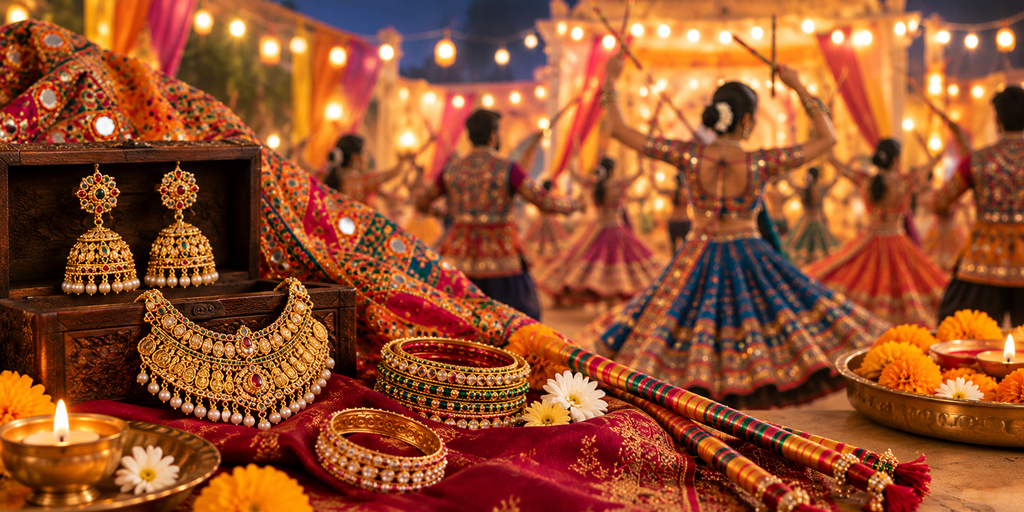
Jhumkas
Jhumkas are a natural choice for traditional Garba styling. Their bell-shaped silhouette adds movement and works with many Indian outfits.
For a long evening, choose a size that complements your face and outfit without pulling heavily on the earlobe.
Chandbalis
Chandbalis provide a broader crescent shape and can create a strong statement without requiring a large necklace.
They pair particularly well with outfits featuring open necklines or simpler upper-body detailing.
Studs
Do not underestimate studs. If the outfit is elaborate, diamond or gold studs can give the look enough polish without adding another moving element.
They are also practical when the evening includes lots of dancing.
Drop Earrings
Medium drops can work beautifully when the necklace is simple. Avoid choosing a very long drop simply because it looks dramatic in a static photograph.
Move your head and shoulders before buying. If the earring swings into the hair, catches the dupatta or pulls noticeably, it may become annoying after an hour.
Anu Jewellers’ diamond earrings collection includes studs, drops and statement designs that can be considered for festive and special-occasion styling.
How Should You Style Necklaces, Chokers and Pendants?
Choose a Navratri necklace according to the neckline and decoration of the outfit. Chokers suit open necklines and traditional chaniya choli styling, while pendants and longer necklaces work better when the outfit has more space around the chest.
Chokers
Chokers create an immediate festive effect and work especially well with traditional outfits.
They are a strong choice when:
- the neckline is open;
- the blouse has simple detailing;
- the earrings are medium-sized;
- the dupatta does not sit tightly around the neck.
Avoid pairing an extremely detailed choker with oversized earrings and a heavy layered necklace unless the outfit can carry that amount of visual weight.
Long Necklaces
Long necklaces can elongate the appearance of the outfit and work particularly well with simpler chaniya choli designs.
If the outfit has a heavily embroidered blouse, a long necklace may become unnecessary.
Pendants
A pendant is the easiest option when you want festive jewellery that can be reused beyond Navratri.
A simple gold pendant can work with traditional clothing during the festival and with Western clothing afterwards, making it a practical addition to your jewellery collection.
Layered Necklaces
Layering can look excellent for Garba, but use different lengths rather than stacking pieces at exactly the same position.
For example:
Short choker + medium necklace + longer pendant
This creates visual separation and prevents the pieces from looking like one large mass.
How Can You Balance Traditional Jewellery With Modern Styling?
Modern Navratri styling works best when traditional jewellery is paired with contemporary proportions rather than replacing cultural character entirely. You can combine gold with geometric pieces, traditional jhumkas with minimal bracelets or a classic bangle with an Indo-Western outfit.
Navratri jewellery trends for 2026 show both traditional and modern directions, including oxidised pieces, handmade jewellery, statement earrings, layered necklaces and minimal bracelets.
Traditional With Contemporary
Try:
- gold jhumkas + plain Indo-Western outfit;
- traditional bangle + modern cuff;
- chaniya choli + minimalist pendant;
- classic gold earrings + contemporary bracelet;
- traditional necklace + clean hairstyle and minimal additional jewellery.
The idea is contrast.
Gold and Oxidised Jewellery
Yellow gold provides warmth and a classic Indian jewellery feel. Oxidised silver creates a darker, more rustic effect.
They can be combined, but do it deliberately.
For example, a plain gold bangle can sit beside an oxidised cuff if the rest of the outfit connects the two styles. Mixing five unrelated finishes can make the jewellery look accidental.
Diamond Jewellery for Navratri
Diamonds can work beautifully for people who prefer a polished, understated look rather than a heavily traditional set.
Small diamond studs, a delicate diamond pendant or a slim diamond bangle can add sparkle without overwhelming the outfit.
Anu Jewellers’ diamond jewellery collection can be considered when you want a piece that works beyond the festival as well.
How Do You Keep Jewellery Comfortable and Secure While Dancing?
Comfort matters more during Garba and Dandiya than during ordinary festive wear because repeated movement can expose loose clasps, heavy earrings, sliding bangles and swinging necklaces to more stress than usual.
Before leaving for the event, complete this quick movement test.
The Five-Movement Test
- Raise both arms above your head: check whether bracelets, bangles or sleeves interfere with one another.
- Rotate both wrists: make sure bangles and bracelets do not slide into uncomfortable positions.
- Turn your head from side to side: check that earrings do not catch hair or clothing.
- Twist and bend at the waist: make sure necklaces and pendants remain in place.
- Practise a few dance movements: identify anything that repeatedly hits, pulls, catches or swings excessively.
Protect Your Jewellery During the Event
Avoid wearing jewellery during activities where it can be struck or pulled unexpectedly.
Keep a small soft jewellery pouch in your bag if you expect to remove pieces later in the evening. Do not put valuable jewellery loose into a handbag, where chains and earrings can scratch one another or become tangled.
Also consider Melbourne’s spring conditions. An outdoor event may involve a cooler evening, while an indoor venue can become warm and crowded. Pieces that sit heavily against the neck or wrist may become uncomfortable over several hours.
What Should You Check Before Buying Navratri Jewellery?
Before buying Navratri jewellery, check the metal or material, size, fastening, weight, finish and intended use. For valuable gold or diamond pieces, also confirm purity information, documentation and aftercare so the jewellery remains useful beyond the festival.
Check the Occasion
Ask whether you need:
- jewellery for one Garba night;
- pieces for all nine nights;
- a wedding or family celebration;
- jewellery that can become everyday wear;
- a meaningful gold purchase rather than temporary fashion jewellery.
This changes what you should spend and what construction makes sense.
Check the Weight
A heavy necklace can look impressive but become tiring during a long event. Likewise, oversized earrings may look perfect for photographs but feel uncomfortable after hours of dancing.
Try the complete combination rather than judging each piece individually.
Check the Fastenings
Inspect:
- earring backs;
- necklace clasps;
- bracelet closures;
- hinged bangle mechanisms;
- pendant connections.
A secure fastening matters more when the jewellery will experience repeated movement.
Check Gold Purity and Documentation
For gold jewellery, ask for the stated purity, weight and relevant documentation.
According to the Jewellers Association of Australia, gold purity is expressed using carat or karat measurements, with 24K representing the highest purity.
If you’re choosing a valuable gold piece for Navratri, compare the complete item rather than using the gold rate alone as your buying guide.
Check Whether the Piece Can Be Worn Again
The best festive purchase often has a second life.
A pair of gold earrings can work with a saree during Navratri and with workwear later. A plain bangle can become part of a wedding stack. A diamond pendant can move between traditional and Western outfits.
That makes versatility an important part of value.
When Should You Choose Custom or Professional Jewellery Help?
Choose professional jewellery advice when you need custom sizing, a culturally specific design, an heirloom piece, a coordinated bridal-style set or jewellery that must match something you already own.
Customisation is particularly useful when:
- standard bangle sizes do not fit;
- an existing necklace needs matching earrings;
- an heirloom gold piece should be redesigned;
- you want a specific cultural motif;
- you need jewellery for several coordinated outfits;
- a family piece needs repair before Navratri.
Anu Jewellers provides jewellery repair and restoration services from its Craigieburn showroom, including bangle repair, chain repair, stone resetting, cleaning and polishing.
For traditional Indian jewellery, the same principle applies: explain the occasion, community or family preference rather than asking only for a “Navratri set”. Different families can have very different ideas about what feels appropriate.
Which Jewellery Should You Choose for Navratri 2026?
The best Navratri 2026 jewellery is jewellery you can actually enjoy wearing. Choose one focal piece, keep the rest balanced, secure anything that moves and use the nine colours as styling inspiration rather than a rule that every accessory must follow.
For Garba, prioritise lightweight earrings, comfortable bangles and necklaces that stay close to the body. For Dandiya, pay even more attention to wrist movement and secure fastenings.
If you are building a reusable festive collection, start with versatile gold pieces and add colour through gemstones, enamel, glass bangles or contemporary accessories. That gives you more combinations without buying an entirely new jewellery set every year.
For families in Craigieburn and Melbourne’s northern suburbs, Anu Jewellers can help you compare traditional Indian jewellery, gold pieces and contemporary festive designs for Navratri, Garba, Dandiya and other celebrations.