

Table of Contents
Written by Anu Jewellers Team
Reviewed by Anu & Henry, Anu Jewellers
Summer wedding jewellery Australia should be lightweight, secure and comfortable for hours. Choose pieces that suit the dress code, neckline and venue, then consider heat, outdoor movement and care. For Australian weddings, versatile gold, pearl, diamond and gemstone pieces can all work.
Australia’s summer runs from December to February, according to the Bureau of Meteorology, while Melbourne experiences distinct seasonal changes. That makes comfort especially important when a wedding includes outdoor photographs, garden ceremonies, waterfront venues or long periods between the ceremony and reception.
For Indian and South Asian families, summer wedding jewellery can also need to work across multiple ceremonies. A bride may have different jewellery for the engagement, mehendi, haldi, wedding ceremony and reception, while family members and guests may need pieces that work with sarees, lehengas, salwar suits, sherwanis or contemporary Australian outfits.
How can you choose summer wedding jewellery Australia without over-accessorising?
Choose one focal piece, then keep supporting jewellery lighter. Summer weddings involve outdoor photos, warm venues and long celebrations, so comfort matters as much as sparkle. The best look balances the dress, hairstyle, venue and jewellery rather than making every accessory bold.
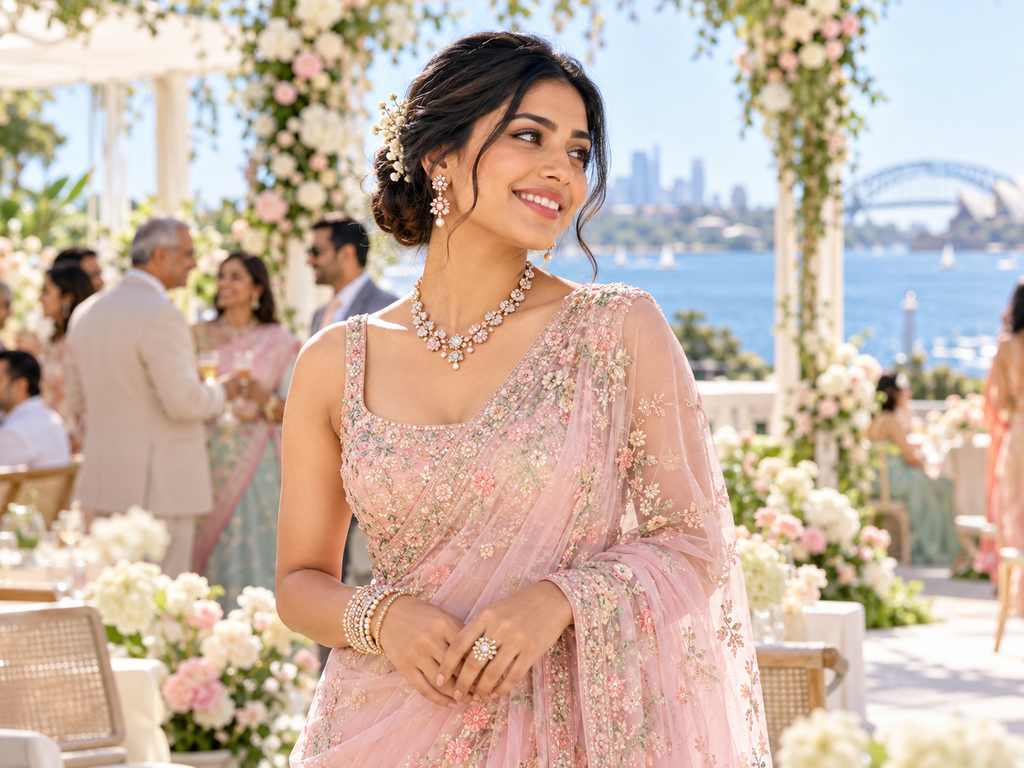
The seven ideas below cover different jewellery categories, so you can choose according to your role, outfit and wedding setting rather than trying to wear every style at once.
1. Pearl Earrings for Soft Summer Elegance
Pearl earrings are one of the easiest ways to create a polished wedding look without adding a large, heavy jewellery set.
For a bride, pearl studs or elegant drops can complement an ivory or white gown without competing with detailed embroidery. For bridesmaids, smaller pearl earrings can coordinate the bridal party while allowing each person to keep their own style.
For guests, pearl earrings can add sophistication without making the outfit look too bridal.
Pearls also work particularly well with:
- V-neck dresses;
- sarees;
- pastel lehengas;
- silk outfits;
- chiffon or lightweight fabrics;
- garden and waterfront wedding settings.
The White Collection’s Australian bridal range, for example, includes pearl earrings, crystal pieces, bracelets and necklaces, reflecting how commonly pearls are used across contemporary Australian bridal styling.
However, pearls need more care than many people realise. GIA states that pearls have a Mohs hardness of about 2.5 and can be affected by heat, perfume, cosmetics and perspiration.
That makes a pearl piece beautiful for summer, but it should be treated as a delicate jewellery choice rather than a completely carefree one.
2. Lightweight Gold Necklaces and Pendants
A fine gold necklace or delicate pendant can frame the neckline without creating the weight of a large layered set.
The neckline should guide the chain length. An open neckline may allow a pendant to become the focal point, while a heavily embroidered blouse or high neckline may look better with a shorter necklace or no necklace at all.
For an Indian or South Asian wedding, consider how the necklace interacts with the bridal outfit. A simple pendant may work beautifully for a reception outfit when the ceremony look includes a larger traditional necklace.
For a more traditional wedding, you can explore Anu Jewellers’ gold jewellery Melbourne collection, which includes 22K gold designs, necklaces, chains, bangles and bridal jewellery.
A useful styling rule is to avoid competing focal points. If the necklace is elaborate, choose simpler earrings. If the earrings are dramatic, a fine chain can provide enough balance.
3. Lightweight Gold or Diamond Bracelets
A slim bracelet can provide sparkle while leaving the neckline and face relatively uncluttered.
For a summer ceremony, choose a secure clasp and a comfortable fit. A bracelet that is too loose can repeatedly slide down the hand, while one that is too tight may become uncomfortable as the day progresses.
A tennis-style diamond bracelet can work for a formal reception, while a simple gold bracelet may be better for a daytime garden wedding.
When choosing a bracelet, consider what else will be worn on the wrist. A bride wearing several bangles may not need another large bracelet. A guest wearing a simple dress may use one bracelet as the main jewellery feature.
The goal is not to make every part of the outfit sparkle. One well-positioned piece can look more refined than several competing accessories.
4. Gold Bangles and Kadas
Gold bangles and kadas can bring traditional character to an Australian summer wedding, particularly for Indian and South Asian celebrations.
For brides, bangles may form part of a larger cultural jewellery combination. For grooms or male family members, a gold kada can provide a strong traditional element without requiring a large jewellery set.
The key summer consideration is weight.
A heavily layered wrist can become uncomfortable during a long ceremony, especially when the wearer is moving between indoor and outdoor spaces. Choose a manageable number of pieces and test the complete combination before the wedding day.
Customers looking for gold bangles Craigieburn can compare 22K and 24K designs at Anu Jewellers, including traditional, modern and custom-sized options.
For men, Anu Jewellers’ gold kadas Craigieburn collection includes traditional, Punjabi, designer and minimal kada styles.
If you’re planning a traditional summer wedding, try the full jewellery combination with the actual outfit before the event. A stack that looks balanced in a jewellery box can feel very different after several hours of movement.
5. Diamond or Gemstone Earrings
Diamond and gemstone earrings are a useful choice when the dress already provides plenty of visual detail.
A heavily embroidered lehenga, saree blouse or wedding gown may not need a large necklace. Instead, diamond studs, small drops or coloured gemstone earrings can frame the face and create a clear focal point.
For a guest, refined diamond earrings can provide enough formality without creating an overly bridal appearance.
For a bride, gemstones can also introduce colour. Sapphire, emerald, ruby or other coloured stones can coordinate with flowers, bridesmaid dresses or an outfit’s embroidery.
Michael Hill’s Australian bridal guidance similarly recommends considering the engagement ring, dress neckline, hairstyle and overall styling when selecting wedding jewellery, rather than choosing every item independently.
This approach is particularly useful for summer weddings because it allows you to create a finished look without adding unnecessary layers.
6. Coloured Gemstone Jewellery
Coloured gemstone jewellery can make a summer wedding look feel more personal without relying entirely on traditional white diamonds or pearls.
A soft blue stone can complement a pale outfit. Emerald tones can work with green, ivory or gold. Ruby or red gemstone accents can provide contrast against neutral clothing.
For Indian and South Asian wedding styling, coloured stones can also coordinate with the rich colours often found in sarees, lehengas and sherwanis.
If your outfit is already highly colourful, keep the gemstone piece smaller. If your outfit is neutral, one stronger gemstone can become the main visual feature.
Think about the photographs as well. Outdoor daylight can make coloured stones appear different from the warmer lighting used at a reception. Try the jewellery with the complete outfit before the event so you know how the colours work in both settings.
7. Men’s Gold Chains, Kadas and Coordinated Couple Jewellery
Men’s gold chains, kadas and understated rings can complete a summer wedding look without unnecessary bulk. Choose a piece that works with the neckline and outfit, then keep the remaining jewellery simple so the styling feels intentional.
For a groom, a gold chain can complement a sherwani, kurta or contemporary wedding outfit. A kada can provide a stronger traditional element, particularly for Punjabi and other South Asian wedding styling.
For wedding guests, a simple chain, kada or ring can add polish without making the outfit feel over-accessorised.
Couples can also coordinate their jewellery without wearing identical pieces. For example:
| Partner | Jewellery | Shared Detail |
| Bride | Gold earrings and bracelet | Yellow-gold finish |
| Groom | Gold chain or kada | Same gold tone |
| Bride | Diamond earrings | Diamond detail |
| Groom | Diamond or gold ring | Matching stone or metal |
| Bride | Gold bangle stack | Traditional motif |
| Groom | Gold kada | Related motif or finish |
This creates a connection between the two looks without forcing both partners into the same jewellery style.
For buyers comparing 22K gold jewellery Craigieburn, consider whether the piece will be used only for the wedding or become part of the wearer’s regular collection afterwards.
What should brides and guests consider for heat, venue and dress code?
For jewellery for summer weddings in Australia, start with the venue and dress code, then choose pieces that stay comfortable in warm weather. Daytime garden, beach, indoor and formal receptions can each support different levels of sparkle, scale and traditional styling.
Garden Weddings
Garden weddings usually provide plenty of natural light, so delicate gold, pearls, coloured gemstones and refined diamond pieces can photograph beautifully.

Avoid unnecessarily long or heavy pieces if you will be moving across grass, sitting outdoors or taking photographs for extended periods.
Beach or Waterfront Weddings
For beach weddings, prioritise secure pieces that are easy to manage around wind, sand and movement.
Small earrings, lightweight pendants and simple bracelets are often more practical than large dangling pieces.
Keep valuable jewellery away from swimming and do not leave it unattended while changing or moving between locations.
Indoor Summer Receptions
Indoor receptions give you more flexibility. If the ceremony look is restrained, you can add a stronger bracelet, necklace or pair of earrings for the evening.
Crystal, diamond and gold pieces can work particularly well under reception lighting.
Indian and South Asian Weddings
The jewellery requirements may change significantly between functions.
For example:
| Wedding Function | Jewellery Direction |
| Mehendi | Lightweight earrings, bangles or colourful gemstones |
| Haldi | Simpler, lighter pieces that suit an active daytime setting |
| Sangeet | Statement earrings, layered gold or diamond accents |
| Wedding ceremony | Traditional gold, bridal sets, bangles or culturally significant pieces |
| Reception | Refined diamond, gold or coordinated contemporary styling |
The same bride does not need to wear the same jewellery for every event. Splitting the jewellery across functions can make each outfit feel distinct while reducing the physical weight worn throughout the wedding period.
For brides planning a complete look, Anu Jewellers’ Indian bridal jewellery collection includes traditional bridal sets, necklaces, bangles, earrings, mangalsutra and other wedding pieces.
How should you care for jewellery during an Australian summer wedding?
Protect wedding jewellery from heat, chemicals, impact and unnecessary moisture, especially when it contains pearls or delicate gemstones. Put jewellery on after cosmetics and perfume, remove it before swimming or strenuous activity, and wipe pieces gently after wearing them.
GIA advises keeping jewellery away from chemicals such as perfume, hairspray and cosmetics, and notes that excessive heat can affect some gemstones and pearls.
The Jewellers Association of Australia also recommends removing jewellery during activities that could scratch, knock or damage it and keeping jewellery away from chemicals, particularly chlorine.
Summer Wedding Jewellery Care Checklist
- Apply perfume, hairspray and cosmetics first: this reduces direct contact between products and jewellery, particularly delicate pearls and gemstones.
- Put jewellery on after getting dressed: this reduces unnecessary contact with clothing, makeup and hair products while you prepare.
- Remove jewellery before swimming: chlorine and physical movement create avoidable risks for metals, gemstones, settings and fine chains.
- Keep jewellery away from direct heat: pearls and some gemstones can be affected by excessive heat or sudden temperature changes.
- Wipe pieces gently after wearing: a soft, clean cloth can remove surface residue before you store the jewellery.
- Store each delicate piece separately: individual pouches or compartments reduce scratching and tangling during travel.
- Check clasps and settings after the event: catching, looseness or a moving stone can indicate wear that should be assessed before the next occasion.
GIA specifically recommends wiping pearls with a soft cloth after wearing them and keeping them away from perfume, cosmetics and other chemicals.
How does Indian and South Asian wedding styling change the jewellery choice?
Indian and South Asian summer weddings often combine several ceremonies, outfits and jewellery traditions. Plan each look separately, prioritising lighter pieces for daytime functions and reserving heavier gold sets, kadas or bangles for ceremonies where their cultural and visual importance fits.
There is no single Indian bridal jewellery style. Preferences can differ between families, regions and communities.
A Punjabi bride may have different expectations from a South Indian bride. A Pakistani or Nepali wedding may use different jewellery combinations again. Some families prefer traditional 22K gold, while others combine gold with diamonds, pearls or contemporary designs.
The most useful approach is to identify the pieces that have cultural or family importance first.
Start With the Important Pieces
If a family heirloom necklace, traditional bangle or ceremonial piece must be worn, build the rest of the jewellery around it.
Do not start by choosing earrings, necklace and bangles independently. Lay out the complete combination and decide which item should be the focal point.
Consider 22K Gold
22K gold is particularly relevant to many Indian and South Asian jewellery traditions.
Anu Jewellers’ Melbourne collection includes 22K and 24K gold jewellery, with traditional and contemporary designs available for weddings, cultural celebrations and gifting.
The 22K gold jewellery Craigieburn collection can be useful when comparing traditional pieces with modern designs.
Balance Traditional Weight With Summer Comfort
A large bridal set may be appropriate for the main ceremony but unnecessary for the reception.
For a long summer celebration, consider removing one layer after the ceremony rather than trying to wear every piece from morning until night.
This is particularly useful when the bride has multiple outfits and wants each look to feel different.
How much should you budget for summer wedding jewellery in Australia?
Set the jewellery budget around the piece’s role, gold or gemstone content, construction and future wear. A practical piece that becomes part of your regular collection can offer more value than an expensive design that is worn only once.

When budgeting for summer wedding jewellery Australia, separate the budget into three categories:
| Budget Area | What to Consider |
| Main jewellery | The focal necklace, earrings, bangles or diamond piece |
| Supporting jewellery | Bracelet, smaller earrings, ring or additional bangles |
| Care and aftercare | Cleaning, resizing, repairs, insurance or future alterations |
For Gold Jewellery
The Jewellers Association of Australia explains that carat indicates gold purity, with 24K being the purest and lower caratages balancing purity with other properties such as durability.
When comparing 22K gold pieces, look beyond the purity number. Consider:
- total weight;
- construction;
- design thickness;
- workmanship;
- size;
- gemstone content;
- customisation;
- long-term wearability.
A lighter piece that is worn regularly may provide more practical value than a large statement item that stays in a jewellery box after the wedding.
For Diamond Jewellery
For diamond pieces, compare the stone characteristics, setting and overall design rather than choosing solely by carat weight.
A smaller, well-proportioned diamond earring may be more useful after the wedding than an oversized statement piece that only suits one outfit.
For Custom Jewellery
Custom work can cost more because the design, gold requirement, craftsmanship and finishing are specific to the piece.
Ask for the full price before approving the design, including any resizing, engraving or additional gemstone work.
When is professional styling or custom jewellery worth considering?
Professional styling is useful when bridal jewellery must coordinate with an existing heirloom, complex neckline, multiple ceremonies or custom gold pieces. A jeweller can check proportion, fit, construction and wearability before you commit to a design that may be difficult to alter.
Professional guidance is particularly useful when:
- the bride has several wedding outfits;
- an heirloom must be incorporated;
- the jewellery needs custom sizing;
- a traditional piece needs to work with a modern outfit;
- multiple family members need coordinated jewellery;
- a groom and bride want complementary pieces;
- the jewellery includes valuable diamonds or gemstones.
Anu Jewellers’ bridal jewellery Australia collection provides bridal and wedding jewellery options from its Craigieburn showroom.
For a completely individual design, the custom jewellery Melbourne service can be considered when a standard design does not meet the required size, style or cultural details.
Bring the Outfit When Possible
A jewellery consultation is more useful when the jeweller can see the neckline, sleeve detail, embroidery and overall colour of the outfit.
If the outfit cannot be brought to the showroom, take clear photographs in natural daylight.
For Indian bridal styling, also bring photographs of the complete outfit rather than only the blouse or jewellery area. This gives a better view of the relationship between the jewellery, fabric, hairstyle and overall silhouette.
What should you check before the wedding day?
Complete a final jewellery check before the wedding: confirm fit, fastenings, matching pieces, care requirements and what will be packed for the day. A simple checklist prevents last-minute changes from affecting your bridal, bridesmaid, groom or guest styling.
Seven-Day Wedding Jewellery Checklist
- Try every piece with the final outfit: check the neckline, sleeves, hairstyle and jewellery proportions before the event.
- Wear the complete combination for 30–60 minutes: identify uncomfortable weight, slipping, pinching or pieces that catch on clothing.
- Test every clasp and fastening: confirm bracelets, necklaces and earrings close securely before leaving for the venue.
- Separate delicate pieces: place pearls and other delicate jewellery in individual soft pouches rather than loose together.
- Prepare a small care pouch: include a soft jewellery cloth and the appropriate storage pouch for quick touch-ups.
- Keep valuable jewellery with a responsible person: avoid leaving the jewellery unattended in hotel rooms, cars or changing areas.
- Photograph the complete jewellery set: keep a simple record of what was worn and how the pieces were arranged, which can help when storing or checking the jewellery afterwards.
This preparation is particularly useful for multi-event Indian and South Asian weddings where jewellery may be changed several times during the wedding week.
Conclusion
The best summer wedding jewellery Australia choices balance beauty, comfort and the reality of a warm wedding day. Start with the outfit and venue, choose one focal piece, then build the remaining jewellery around it.
For Indian and South Asian weddings, traditional 22K gold, bangles and kadas can remain central while lighter pieces make daytime functions more comfortable. Pearls, diamonds and gemstones offer additional ways to create a polished look without unnecessary layers.
If you are planning a wedding in Melbourne’s northern suburbs, Anu Jewellers in Craigieburn can help you compare gold, diamond, bridal and traditional jewellery for your ceremony, reception and other wedding events.