Written by Anu Jewellers Team
Reviewed by Anu & Henry, Anu Jewellers
Indian wedding guest jewellery should match the ceremony, outfit, neckline and comfort level rather than copy a bridal look. Choose one focal piece for each function, then support it with lighter earrings, bangles, rings or a necklace that lets you move easily.
Indian weddings often involve several celebrations, and each one can have a different dress code, mood and level of formality. A jewellery look that works beautifully for a Sangeet may feel too elaborate for a daytime Haldi, while a simple Mehendi look may seem underdressed at an evening reception.
For guests in Australia, there is another practical consideration: you may be travelling between venues, attending several functions across one weekend, or balancing traditional Indian clothing with contemporary Australian styling.
How Do You Choose Indian Wedding Guest Jewellery for Different Ceremonies?
The best approach is to decide the ceremony first, then match jewellery to the outfit, neckline, time of day and expected movement. A daytime Mehendi look needs different weight and practicality from an evening reception or formal wedding ceremony.
Start with the invitation. Is it a relaxed daytime function, an energetic Sangeet, a religious ceremony or a formal reception? Then look at the outfit you will actually wear.

For example, a bright sharara with colourful embroidery can carry playful earrings and bangles at a Mehendi. A heavily embroidered silk saree may need only one strong necklace or pair of earrings.
A Simple Guest-Jewellery Decision Table
| Wedding Function | Jewellery Direction | Best Focal Point | Keep in Mind |
| Haldi | Light and practical | Small earrings | Turmeric, daytime heat and movement |
| Mehendi | Colourful and playful | Statement earrings | Fresh henna and hand movement |
| Sangeet | Glamorous but secure | Chandbalis or necklace | Dancing and long wear |
| Engagement | Refined and polished | Necklace, earrings or bangle | Family photographs |
| Wedding ceremony | Traditional and balanced | Gold or heritage necklace | Do not copy the bride’s full scale |
| Reception | Elegant and glamorous | Diamonds or statement necklace | Evening lighting |
| Welcome dinner | Versatile and polished | Pendant or earrings | Easy transition between outfits |
| Family/puja function | Traditional and restrained | Jhumkas or bangle | Respect the setting |
| Post-wedding brunch | Light and reusable | Fine earrings or bracelet | Daylight and relaxed styling |
The table is a starting framework rather than a fixed dress code. Indian wedding traditions vary between regions, communities and families, so the invitation and host expectations should always take priority.
For shoppers comparing Indian jewellery Melbourne options, it can also help to view the complete look in person rather than choosing every piece separately online.
What Jewellery Should You Wear for Each Wedding Function?
The nine best directions are lighter, function-specific looks rather than one heavy jewellery set repeated throughout the wedding. Use the following ideas as a practical starting point, then adjust the metal, stones and scale to your outfit and family traditions.
1. Haldi – Lightweight Jhumkas and a Delicate Chain
Haldi calls for light, practical jewellery because it is often a daytime celebration involving turmeric, movement and close interaction. Choose small earrings, a delicate chain or simple bangles that you would not worry about during a lively pre-wedding function.
Bright jhumkas, small hoops, floral earrings or colourful enamel designs can work beautifully with yellow, green, pink and orange outfits.
Avoid wearing your most delicate heirloom jewellery if the event involves turmeric, outdoor activity or a lot of movement.
A simple gold or fashion-jewellery combination can provide the festive effect without making you constantly worry about the piece.
2. Mehendi – Statement Earrings and Light Bangles
Mehendi jewellery can be colourful and playful, but keep your hands practical if henna is being applied. Statement earrings, a short necklace and light bangles usually create a festive look without interfering with fresh mehendi or making the outfit feel overloaded.
Chandbalis, jhumkas, colourful stone earrings and lightweight bangles are useful choices.
If both hands are being decorated, consider keeping rings and bracelets minimal until the henna has dried completely. This also makes it easier for the artist to work around the hands.
For traditional options, Anu Jewellers’ Jhumki earrings collection includes styles inspired by different Indian jewellery traditions.
3. Sangeet – Chandbalis or a Secure Statement Necklace
Sangeet jewellery should add movement and sparkle while staying secure enough for dancing. Choose statement earrings, a medium necklace or a coordinated bracelet, then test every clasp and fastening before the event so your jewellery remains comfortable throughout performances.
Chandbalis are especially useful when you want the face to remain the focal point. A choker or medium-length necklace can work when the blouse has enough open space.
Avoid extremely long dangling pieces that can catch on hair, dupattas or other guests while dancing.
A practical test is simple: put on the complete outfit and jewellery, move your arms, turn your head and dance for a few minutes before leaving home.
4. Engagement – Refined Gold or Diamond Details
An engagement or family celebration allows polished jewellery without requiring a bridal-scale set. Choose one refined focal piece, such as a necklace, earrings or bangle, and coordinate the remaining accessories with the outfit’s neckline, embroidery and colour palette.
This is a good opportunity for a slightly more sophisticated look that can be reused for anniversaries, festive dinners and future family events.
A pair of diamond earrings with a simple gold bracelet can be enough. Alternatively, a Kundan-inspired necklace can become the focal point with smaller earrings.
If you prefer diamonds, explore Anu Jewellers’ diamond jewellery collection for pieces suitable for celebrations and repeat wear.
5. Wedding Ceremony – Traditional but Guest-Appropriate
For the wedding ceremony, choose traditional jewellery with a refined scale that respects the bride’s role. Kundan-inspired pieces, classic gold earrings, a modest necklace or a coordinated bangle stack can look festive without reproducing the bride’s complete jewellery arrangement.
The main wedding ceremony is usually the point where traditional jewellery feels most natural.
Gold, Kundan-inspired, Polki-inspired and temple-style pieces can all work, depending on the outfit and family setting.
If you are wearing a heavily decorated lehenga or saree, you may need less jewellery than you initially expect.
A single necklace and matching earrings can be more elegant than a complete bridal-style combination of necklace, maang tikka, nath, passa, layered haar and multiple bangles.
6. Reception – Diamond Earrings or One Glamorous Statement
A reception usually gives guests more freedom to choose polished, glamorous jewellery, especially for an evening outfit. Diamond earrings, a statement necklace, a sleek bracelet or one bold ring can provide evening sparkle while keeping the overall look balanced.
If the reception is in a Melbourne hotel, ballroom or formal venue, polished jewellery can complement gowns, contemporary sarees and sophisticated lehengas.
For an evening reception, consider:
- diamond or diamond-look earrings;
- a structured necklace;
- a sleek bracelet;
- a cocktail ring;
- a refined choker;
- a single statement piece with otherwise minimal jewellery.
The goal is evening elegance, not bridal competition.
7. Welcome Dinner – Versatile Pendant and Earrings
For a welcome dinner, family dinner or post-wedding celebration, choose versatile jewellery you can reuse with another outfit. A medium necklace set, gold earrings or a simple bangle can transition between traditional and contemporary clothing without feeling costume-like.
A pendant is especially useful when the outfit is already detailed around the neckline.
For a Western dress, a fine gold necklace and earrings can introduce an Indian-inspired element without requiring a complete traditional set.
For a simple kurta or saree, you can increase the scale with a larger pendant or statement earrings.
8. Family or Puja Function – Traditional Jhumkas or a Small Bangle
A family or religious function calls for jewellery that feels respectful and culturally appropriate rather than purely trend-led. Jhumkas, a simple gold necklace, a small bangle or a traditional pendant can provide an elegant look without excessive sparkle or visual weight.
The exact expectations can vary between families and religious traditions.
If the function takes place in a temple, home shrine or other religious setting, ask a close family member if there are specific expectations around dress and jewellery.
Temple-inspired jewellery can be meaningful when it reflects the setting and the wearer understands the symbolism behind the design.
9. Post-Wedding Brunch – Fine Earrings and a Bracelet
A post-wedding brunch or farewell event usually suits a lighter jewellery combination that feels polished in daylight. Fine earrings, a small pendant, delicate bracelet or slim bangle can keep the look festive without carrying the visual weight of the previous evening.
This is also an excellent opportunity to repeat jewellery from another function in a different combination.
For example, wear the same earrings used at the welcome dinner with a fine bracelet instead of the original necklace.
This makes the jewellery wardrobe more useful and reduces the need to purchase a new piece for every invitation.
How Should You Match Jewellery to a Saree, Lehenga or Suit?
Your outfit should determine jewellery scale, not the other way around. Check the neckline, embroidery, sleeve detail and hairstyle first, then choose one focal area. This prevents a necklace, earrings and headpiece from competing for attention in photographs.
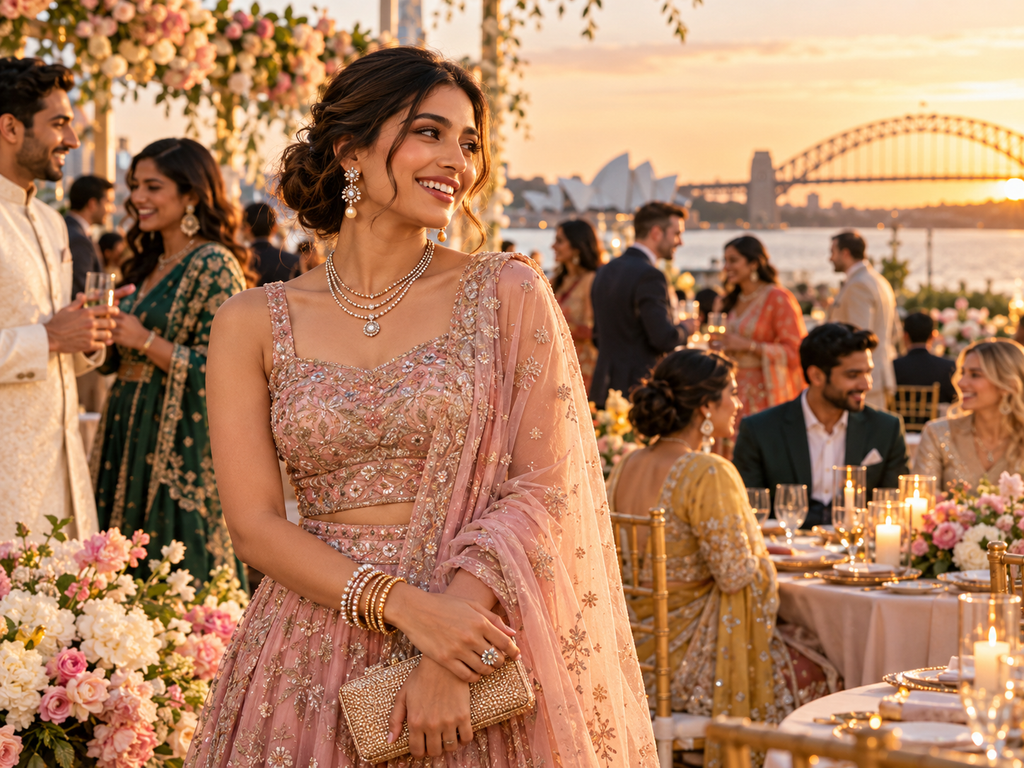
Jewellery for Sarees
A saree gives you several options because the blouse neckline and fabric usually determine the visual space available.
| Saree Style | Jewellery Starting Point |
| Plain silk saree | Statement necklace or traditional earrings |
| Heavy zari saree | Strong earrings with a simpler necklace |
| Lightweight chiffon/georgette | Chandbalis, pendant or fine necklace |
| Organza saree | Delicate diamond or pearl-inspired pieces |
| Contemporary drape | Statement earrings or sleek necklace |
The goal is coordination rather than exact matching.
If the saree has strong gold zari, yellow-gold jewellery can create continuity. If it has silver embroidery, white-metal or diamond jewellery may create a cleaner relationship.
Jewellery for Lehengas
A lehenga often gives the blouse the biggest influence over jewellery selection.
| Lehenga Neckline | Jewellery Direction |
| Deep V | Pendant, choker or shorter necklace |
| Sweetheart | Choker or structured necklace |
| High neck | Statement earrings with little or no necklace |
| Off-shoulder | Earrings or a refined necklace |
| Square neck | Short necklace or pendant |
| Heavily embroidered blouse | Earrings as the main focal point |
For a heavily embellished lehenga, avoid automatically adding a large necklace, large earrings and head jewellery together.
Jewellery for Anarkalis, Suits and Shararas
Anarkalis and suits can work particularly well with statement earrings because the neckline may already contain embroidery.
Jhumkas, chandbalis and drop earrings can elongate the face and add movement without requiring a large necklace.
A sharara can carry colourful earrings, bangles and one statement accessory, particularly for Mehendi or Sangeet.
How Do You Avoid Looking Too Bridal as a Guest?
Comfort, timing and cultural awareness matter as much as appearance. Guests may spend several hours standing, travelling, eating or dancing, so choose secure fastenings, manageable weight and culturally appropriate styling rather than jewellery that looks impressive only for a few minutes.
There is no universal rule that guests must avoid all traditional jewellery. The distinction is usually one of scale, combination and context.
Use One Clear Focal Point
Choose one:
- statement necklace;
- large chandbalis;
- traditional jhumkas;
- diamond earrings;
- bold bangle or kada;
- statement ring.
Then make the other pieces support that choice.
Be Careful With Bridal-Associated Combinations
Depending on the community, pieces such as maang tikka, matha patti, passa, nath, chura or extremely elaborate layered bridal necklaces may carry strong bridal associations.
This does not mean a guest can never wear them. Close family members and bridesmaids may have different expectations. When uncertain, ask the hosts.
Do Not Confuse Gold With Bridal
Wearing gold does not automatically make a guest look bridal.
A simple gold bangle, pair of jhumkas or fine chain can look understated. The bridal effect usually comes from combining multiple high-impact pieces at once.
Respect Regional and Family Differences
Indian wedding jewellery is not governed by one universal rule. Punjabi, Gujarati, South Indian, Bengali, Marathi, Nepali, Pakistani and other South Asian wedding traditions can use different jewellery forms and expectations.
That is why family guidance should take priority over a generic online styling rule.
Can You Build One Jewellery Capsule for Multiple Functions?
A jewellery capsule can cover several wedding functions when each piece has a different role. Build around versatile earrings, one necklace, a bracelet or bangles and one statement item, then change the combination instead of buying a new set for every event.
A Five-Piece Guest Jewellery Capsule
| Piece | Functions It Can Cover |
| Fine everyday earrings | Haldi, brunch, family dinner |
| Statement jhumkas or chandbalis | Mehendi, Sangeet, wedding |
| Fine necklace or pendant | Welcome dinner, wedding, reception |
| Slim bracelet or bangle | Mehendi, Sangeet, reception |
| One statement necklace or ring | Engagement, wedding, reception |
For example, a guest could wear statement chandbalis at Mehendi, pair them with a necklace for the wedding, and use the same earrings with a simple dress for the reception.
This approach is especially useful when travelling from interstate or overseas to Melbourne for a multi-day wedding.
How Much Should You Budget for Guest Jewellery in Australia?
Guest jewellery does not need a large budget to look considered. Set an Australian-dollar limit first, then choose whether you want to prioritise real gold, diamonds, gemstones, craftsmanship, versatility or a statement fashion piece for one specific function.

These are planning bands, not market-price claims:
| Illustrative Budget | Suitable Direction |
| Under A$300 | Fashion jewellery, silver, simple earrings or lightweight occasion pieces |
| A300–A800 | Better-quality occasion sets, silver, modest gold details or selected gemstone pieces |
| A800–A1,500 | Gold earrings, bangles, pendants or selected diamond pieces |
| A$1,500+ | Higher-weight gold, diamonds, custom pieces or heirloom-quality jewellery |
If you are buying real gold, compare the purity and weight rather than judging only by appearance.
According to the Jewellers Association of Australia, carat indicates gold purity, with 24K representing the purest gold while lower caratages balance gold content with other metals. The JAA also distinguishes fine jewellery from fashion jewellery, making the material description important when comparing prices.
Choose What You Will Rewear
A A700pairofgoldearringsthatworksforweddings,Diwali,anniversariesandfamilycelebrationsmayoffermorepracticalvaluethanaA1,000 statement piece that only works with one outfit.
Before buying, ask yourself:
- Can I wear this with at least three outfits?
- Is the weight comfortable for several hours?
- Does the metal suit my existing jewellery?
- Can the piece be repaired or adjusted?
- Will I still like the design after wedding season?
When Should You Buy or Get Jewellery Adjusted?
Buy or adjust jewellery early enough to allow fitting, repairs, exchanges or custom work. For a valuable piece, leave several weeks before the wedding rather than waiting for the final outfit fitting, especially when the design needs resizing or personalisation.
A Practical Pre-Wedding Timeline
- Choose the jewellery 3–4 weeks before the function: this gives you time to compare it with the final outfit and identify comfort or styling problems.
- Complete any resizing or adjustment at least 2 weeks before: this leaves time for a second fitting if the first adjustment is not comfortable.
- Test the complete outfit 7 days before: wear the jewellery with the blouse, neckline, hairstyle and shoes so you can identify catching, weight or proportion problems.
- Confirm return or exchange conditions before purchase: this matters particularly for customised, engraved or resized jewellery.
According to the ACCC, Australian consumer guarantees apply when a product has a relevant problem, but there is no automatic consumer guarantee remedy simply because you changed your mind. A retailer may have its own change-of-mind policy, so check the terms before buying.
If a piece needs resizing, cleaning or repair before the wedding, Anu Jewellers provides jewellery repairs in Melbourne from its Craigieburn showroom, including bangle adjustments, chain repairs, earring repairs and restoration.
What Should You Check Before Wearing Jewellery to the Wedding?
Before leaving for the function, check the clasp, earring backs, bangle fit, necklace length and comfort. Pack a small jewellery pouch and one spare fastening where practical, because a five-minute preparation check can prevent a loose or uncomfortable piece disrupting the celebration.
Wedding Guest Jewellery Checklist
- ☐ Check every earring back is secure.
- ☐ Test necklace and bracelet clasps.
- ☐ Make sure bangles do not slide excessively.
- ☐ Check that earrings do not pull uncomfortably.
- ☐ Test the jewellery with your hairstyle.
- ☐ Check that necklaces do not catch on embroidery.
- ☐ Keep jewellery away from perfume and hairspray.
- ☐ Carry a small pouch for removal during meals or travel.
- ☐ Photograph the complete look before leaving.
- ☐ Keep valuable jewellery separate when travelling between venues.
According to the Gemological Institute of America, cosmetics, perfume, household chemicals and chlorine can damage or discolour precious metals and some gemstones. GIA recommends protecting jewellery from harsh chemicals and storing pieces separately to reduce scratching and damage.
For a Melbourne wedding, this is particularly useful when you move between outdoor photography, air-conditioned venues and evening celebrations. Keep delicate jewellery protected when you are not wearing it.
Which Indian Wedding Guest Jewellery Should You Choose?
The best Indian wedding guest jewellery balances the ceremony, outfit, personal style and comfort. Choose one focal piece, support it with lighter accessories, and respect the bride’s visual role. For Melbourne guests, local showroom guidance can make sizing and styling decisions easier.
If you are looking for traditional or contemporary pieces, compare indian jewellers Craigieburn options in person, especially when you need help with sizing, weight or matching jewellery to a particular saree or lehenga.
For customers comparing indian jewellers Melbourne options, the most useful approach is to take your outfit photo or fabric swatch to the appointment.
At Anu Jewellers in Craigieburn, you can also explore Indian bridal jewellery and traditional designs when you want guest jewellery that can be reused for future weddings, festivals and family celebrations.