

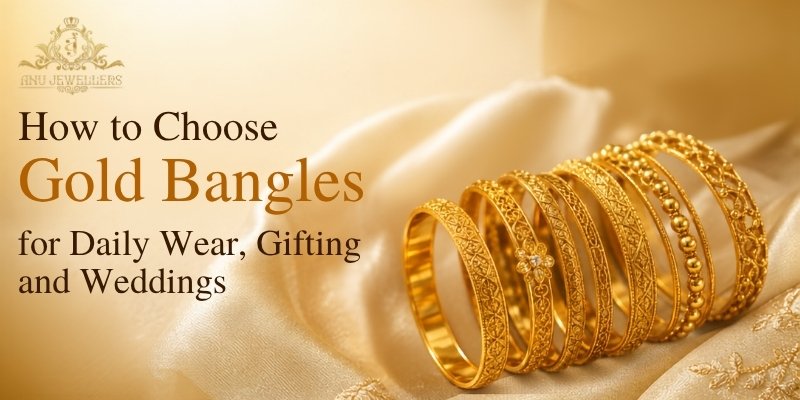
How to choose gold bangles starts with six checks: occasion, gold purity, construction, weight, size and finish. For daily wear, prioritise comfort and strength; for gifts, confirm sizing; for weddings, balance cultural meaning, outfit coordination and future wearability.
A bangle can look beautiful in a display and still be wrong for the person wearing it. A design may be too loose for daily travel, too delicate for regular stacking, too heavy for a full wedding day or impossible to resize after gifting.
This guide explains how to choose gold bangles with practical checks you can use in a showroom or during a virtual consultation. It is written for Australian buyers, including Indian and South Asian families selecting jewellery for everyday use, birthdays, anniversaries, engagements, weddings and heirloom gifting.
How to Choose Gold Bangles for Your Occasion
Choose the occasion first, then compare purity, weight, construction, fit and design. A lightweight smooth bangle may suit commuting and office wear, while an ornate pair or stack can provide the visual presence expected for a wedding or cultural celebration.
The most useful question is not “Which design is the prettiest?” It is “What will this bangle need to handle?” A piece worn twice a year has different priorities from one worn while working, driving, caring for children or using a keyboard every day.
Use this decision table before comparing individual designs:
| Buying Need | Prioritise | Be Careful With | Practical Starting Point |
| Daily wear | Smooth edges, balanced weight, secure fit, practical thickness | Sharp motifs, very loose sizing, fragile raised details | One plain or lightly textured bangle |
| Office or professional wear | Quiet movement, low profile, easy sleeve clearance | Wide stacks that strike desks or keyboards | Slim closed or hinged bangle |
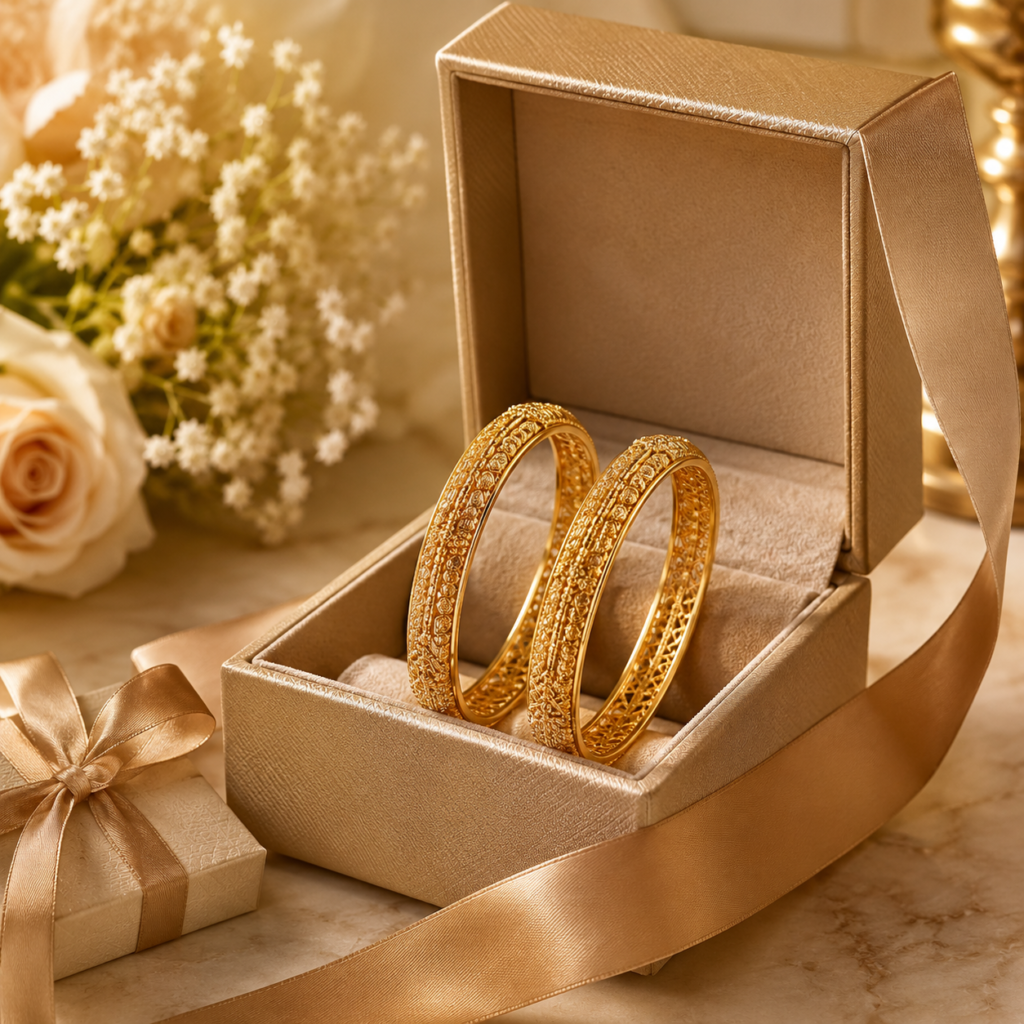
| Birthday or anniversary gift | Reliable sizing, versatile design, clear exchange or alteration options | Closed bangles when the hand size is unknown | Hinged, openable or measured design |
| Indian or South Asian wedding | Outfit coordination, cultural preference, comfort across long events | Excess weight or competing motifs | A coordinated pair, stack or statement kada |
| Heirloom purchase | Timeless design, solid construction, repairability, documentation | Trend-led shapes that cannot be altered | Classic plain, engraved or traditional form |
| Diamond or gemstone bangle | Secure settings, clasp quality, protective profile | Exposed stones and frequent impact | Hinged design fitted close to the wrist |
For a broad view of available forms, compare traditional, modern and custom gold bangles for women Melbourne buyers can view through Anu Jewellers’ Craigieburn showroom.
The Six-Check Bangle Framework
- Define the wear pattern: decide whether the bangle will be worn daily, weekly, occasionally or only for ceremonies because frequency changes the required durability.
- Choose a purity range: compare colour, gold content and practical strength instead of assuming the highest number is automatically best.
- Confirm construction: ask whether the bangle is solid, hollow, hinged, open, flexible or stone-set because construction affects weight and repairability.
- Measure before styling: establish the correct internal diameter or wrist fit before falling in love with a design that may not fit.
- Check the finish by touch: run a finger gently around edges, joins and settings because rough points can catch clothing or irritate the skin.
- Ask about long-term care: confirm resizing, polishing, repair and inspection options before treating the purchase as a lasting piece.
Which Gold Purity Is Best for Gold Bangles?
The best gold purity for bangles depends on design and wear frequency. Higher-carat gold offers richer colour and more gold content, while lower-carat alloys are generally harder. Construction, thickness and workmanship still matter as much as the purity number.
According to the Jewellers Association of Australia, carat or karat identifies gold purity, with 24K representing pure gold and lower caratages balancing purity with durability. The World Gold Council notes that 18-carat gold contains 75 per cent gold and 25 per cent other metals.
The Gemological Institute of America explains that pure gold is commonly alloyed with metals such as copper and zinc to increase hardness and create different colour tones. That means purity influences colour and working properties, but it does not tell you whether a particular bangle is well designed.
| Gold Purity | Approximate Gold Content | Typical Strength Consideration | Often Chosen For |
| 24K / 999 | About 99.9% | Very high purity and comparatively soft | Ceremonial, investment-led or highly traditional pieces where suitable |
| 22K / 916 | About 91.6% | Rich colour; design thickness and construction are important | Indian and South Asian bangles, weddings and traditional jewellery |
| 18K / 750 | 75% | More alloy content and generally greater hardness than 22K | Contemporary, diamond-set and regular-wear designs |
| 14K / 585 | About 58.5% | Higher alloy content and practical hardness | Everyday or modern jewellery where offered |
| 9K / 375 | 37.5% | High alloy content and lighter gold colour | Australian everyday jewellery and budget-conscious designs |
Do not compare two bangles by caratage alone. A thin hollow 18K bangle may dent more easily than a well-proportioned solid 22K bangle, while an exposed 22K setting may require more care than a protected 18K design.
What About 22K Gold Bangles for Daily Wear?
Yes, 22K gold bangles for daily wear can be suitable when the design has practical thickness, smooth detailing and an appropriate fit. Avoid treating “22K” as a complete durability guarantee. Ask about weight distribution, hollow sections, joins and how the surface is expected to respond to regular contact.
For buyers who want to understand stamps such as 916, 750 or 585, Anu Jewellers’ gold hallmark identification guide explains common markings and why the full item description still matters.
How Do You Find the Correct Gold Bangle Size?
Measure a closed bangle across the widest part of the hand, not only around the wrist. For hinged or openable designs, measure the wrist and check the internal dimensions. The right fit should pass comfortably without feeling likely to slip off.
Knowing how to choose bangle size is essential because a closed design must clear the knuckles before it reaches the wrist. A person can have a narrow wrist but a wider hand, so wrist circumference alone may lead to the wrong size.
Method One: Measure a Bangle That Already Fits
- Place the bangle flat on a ruler: keep it circular and do not include the metal thickness in the open space.
- Measure the internal diameter in millimetres: record the widest inside-to-inside distance because sellers may use different size labels.
- Check whether the existing piece is truly comfortable: a bangle that is tolerated is not necessarily a good reference for a new purchase.
- Share a clear photo with the measurement: this gives the jeweller a more useful reference during an online or virtual consultation.
Method Two: Measure the Widest Part of the Hand
- Bring the thumb toward the little finger: form the hand position used when sliding on a closed bangle.
- Wrap a soft tape around the widest knuckle area: keep it firm but do not compress the hand.
- Record the circumference in millimetres: precise measurements reduce confusion between regional size charts.
- Compare the result with the jeweller’s own chart: do not assume that every “2.6” or “medium” label is identical across sellers.
Method Three: Fit a Hinged or Openable Bangle
- Measure around the wrist bone: keep the tape comfortably close without pulling it tight.
- Check the internal length and width: hinged bangles are often oval and may fit differently from round designs.
- Test the clasp and safety catch: the mechanism should close fully without pinching skin.
- Rotate the bangle during the fitting: make sure a centrepiece does not continually turn under the wrist.
A correctly fitted closed bangle normally moves over the wrist but does not slide off when the hand points downward. A hinged bangle can sit closer because it opens around the wrist instead of passing over the hand.
Which Gold Bangles Are Best for Daily Wear?
Gold bangles for daily wear should feel smooth, balanced and secure during movement. Choose practical thickness, restrained detailing and a fit that does not strike desks or slip over the hand. Construction matters more than whether the bangle looks light or heavy.
A common mistake is buying the lightest possible design and assuming it will be easiest to wear. Low weight can improve comfort, but excessive thinness or hollow construction may make a large bangle more vulnerable to dents and distortion.
Solid vs Hollow Gold Bangles
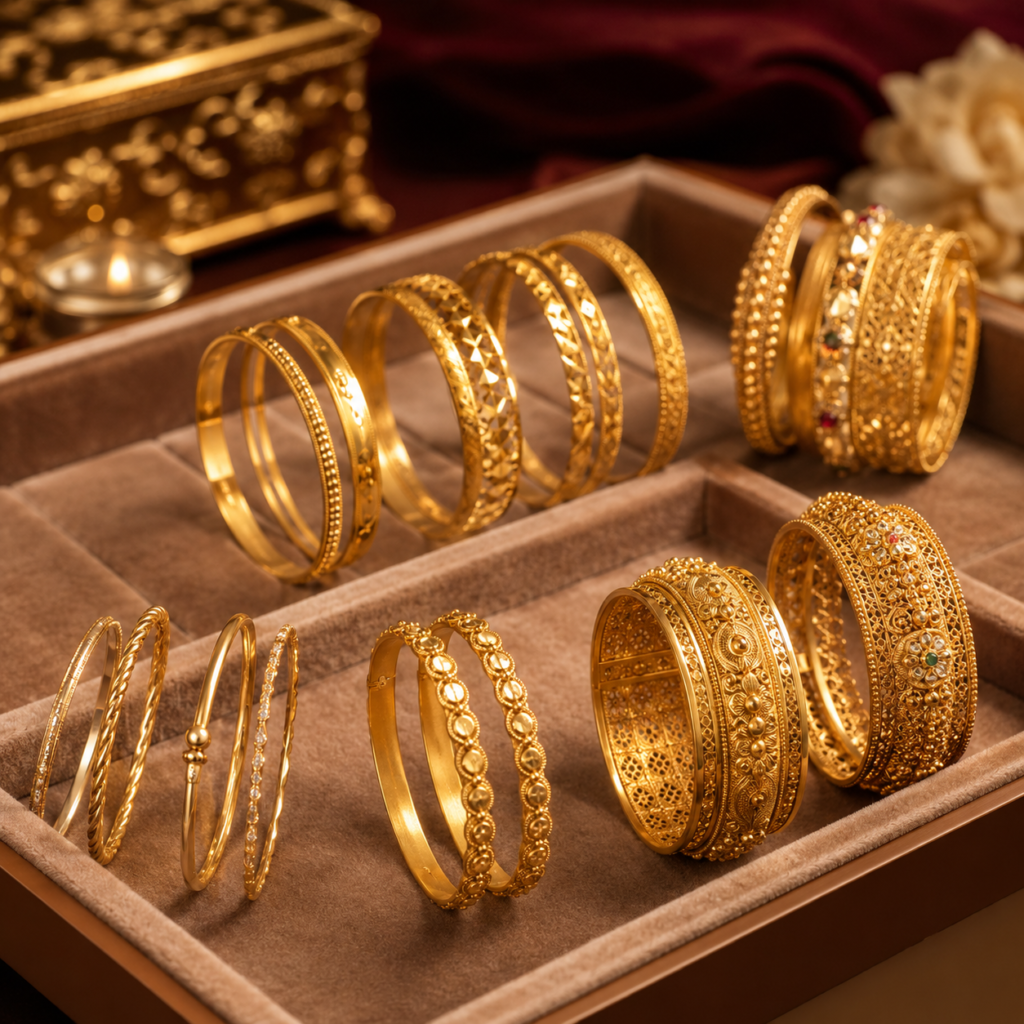
The solid vs hollow gold bangles decision is a trade-off between weight, price, presence and resistance to impact.
| Construction | Advantages | Limitations | Usually Better For |
| Solid gold bangle | Firm feel, generally easier to polish and often more resistant to ordinary dents | Heavier and usually more expensive at the same size | Frequent wear, heirloom purchases and classic designs |
| Hollow gold bangle | Larger visual size with less weight and lower gold content | Can dent or crush if struck; some damage is difficult to restore invisibly | Occasional wear and buyers prioritising a bold look at lower weight |
| Hinged bangle | Easier to put on and can fit closer to the wrist | Hinge and clasp become maintenance points | Daily wear when hand clearance is difficult |
| Open cuff | Quick to put on and visually modern | Repeated bending can weaken the metal; fit must be correct | Occasional or controlled wear |
| Stone-set bangle | Adds sparkle and formal detail | Settings need inspection and protection from impact | Events, gifts and carefully selected daily wear |
| Flexible bangle | Moves with the wrist and can feel comfortable | Internal links or joints may wear over time | Buyers who prefer bracelet-like movement |
A Practical Daily-Wear Test
Try the bangle while completing four ordinary movements:
- bend the wrist fully;
- put on a fitted sleeve;
- rest the hand on a desk;
- hold a phone or handbag.
Listen for repeated impact and check whether the bangle pinches, twists, catches or slides too far. An attractive design that interferes with normal movement will often remain unworn.
For diamond-accented options, compare settings and fastening styles on Anu Jewellers’ diamond bangles page before deciding whether the piece is practical for frequent use.
How Should You Choose a Gold Bangle as a Gift?
Choose a gift bangle by confirming size, lifestyle and design preference before considering symbolism or price. When hand measurements are unavailable, an openable or hinged design is safer than a closed bangle, but its internal wrist dimensions must still be checked.
A useful gold bangle gift guide starts with observation. Does the recipient wear one bold piece or several fine bangles? Do they favour yellow gold, rose gold, white metal, diamonds or plain designs? Is their jewellery modern, traditional or mixed?
Use an Existing Piece as Your Reference
Borrowing a comfortable bangle briefly is more reliable than estimating body size. Measure its internal diameter and photograph it beside a ruler. Do not measure the outer edge, because metal thickness can create a meaningful sizing error.
Match the Gift to the Recipient’s Routine
A parent caring for young children may prefer smooth edges and a secure fit. Someone who dresses formally for work may value a slim, quiet design. A recipient who attends cultural events may appreciate a traditional motif that coordinates with existing jewellery.
Confirm the Purchase Details
Before paying, ask:
- Can the bangle be exchanged if the size is wrong?
- Can this exact design be resized?
- Is the bangle solid, hollow, hinged or open?
- What is the stated purity and total weight?
- Are stones natural, laboratory-grown or simulated?
- Does the clasp have a safety feature?
- What repair or polishing support is available?
For broader occasion ideas, Anu Jewellers’ jewellery gifts page covers gold, diamond and custom options for birthdays, anniversaries, Mother’s Day and family milestones.
How Do You Choose Gold Bangles for Weddings?
Gold bangles for weddings should support the bridal outfit, ceremony and family traditions without making the wearer uncomfortable. Decide whether the wrist needs a coordinated stack, statement kada, diamond bangle or heirloom piece, then test the complete arrangement before the wedding.
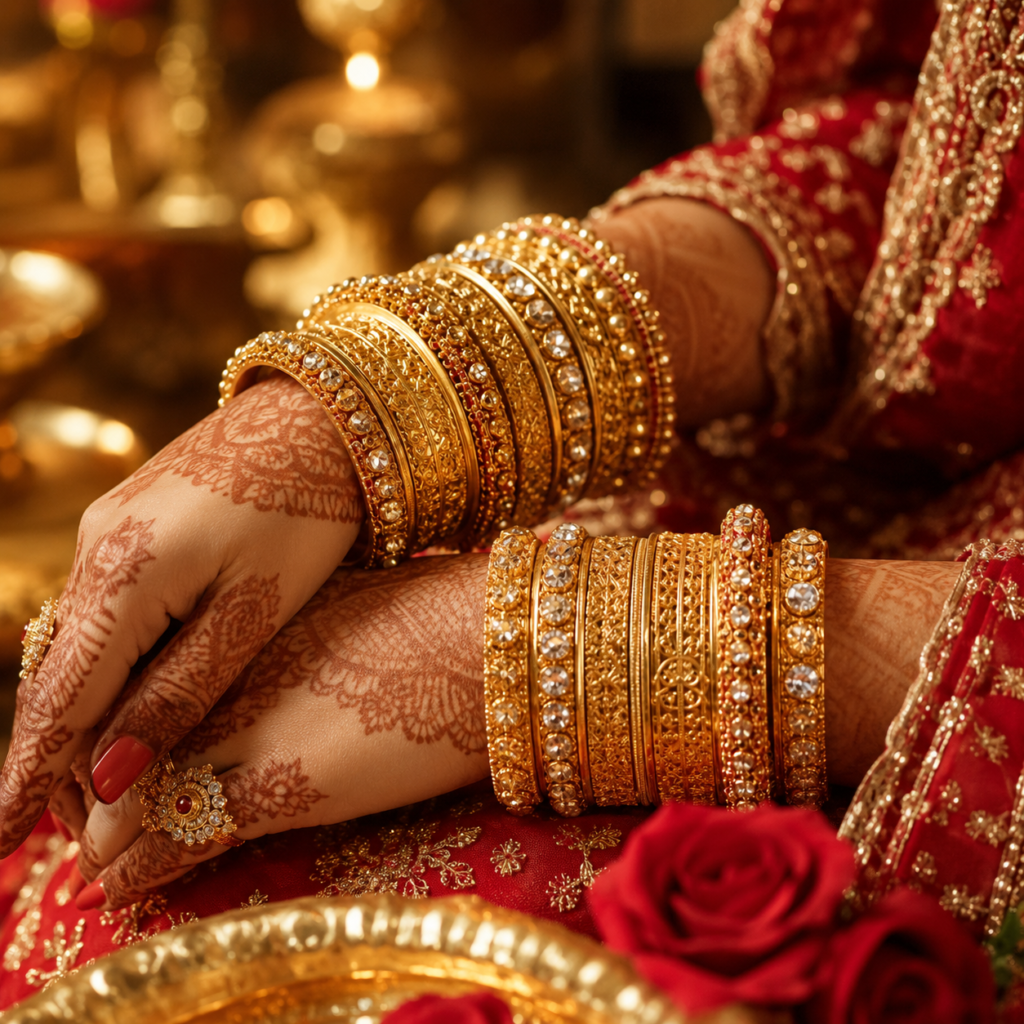
Indian and South Asian bridal wristwear varies between communities and families. Punjabi chura styling, South Indian gold stacks, Nepali bridal combinations and contemporary fusion looks do not follow one universal rule. Ask the bride and family what has personal or ceremonial importance before applying fashion advice.
Start With the Outfit, Not the Display Tray
Bring clear photos or fabric swatches from the saree, lehenga, salwar suit or reception outfit. Compare the bangle’s gold tone, motif scale and stone colours with the embroidery. A heavily worked sleeve may need a cleaner bangle profile, while a simple outfit can carry a more detailed statement piece.
Plan the Whole Wrist
Lay out the full combination in order. Consider:
- how many pieces sit on each wrist;
- whether a watch will be worn later;
- which bangle is the focal point;
- where heirloom or family pieces will sit;
- whether delicate stones will rub against heavier metal;
- whether the stack can be reduced for the reception.
A balanced stack often uses one visual anchor, such as a wider kada or diamond bangle, supported by narrower pieces. Giving every bangle equal visual weight can make the wrist look crowded and feel unnecessarily heavy.
Test for a Full Event, Not Five Minutes
Wear the planned arrangement for at least 30 minutes while moving, sitting and handling fabric. Check whether the stack catches embroidery, presses into the wrist or becomes tiring. A bridal piece can be beautiful and still need adjustment before a ten-hour celebration.
Buyers planning culturally specific wedding jewellery can explore Anu Jewellers’ Indian bridal jewellery in Melbourne and South Indian jewellery collections, along with Punjabi jewellery options, for coordinated styling ideas.
How Much Should You Budget for Gold Bangles in Australia?
Budget for the complete bangle, not only the gold rate. The final Australian-dollar price can reflect purity, net gold weight, workmanship, hollow or solid construction, stones, custom sizing and retailer services. Ask for a clear item description before comparing prices.
According to the Jewellers Association of Australia’s gold calculation guide, gold value depends on both purity and weight, while the spot price changes continually. A finished bangle also includes design and manufacturing factors that are not captured by raw metal value.
Use this comparison method:
| Price Component | What to Ask |
| Gold purity | Is it 22K/916, 18K/750, 14K/585 or another stated fineness? |
| Gold weight | What is the total item weight, and is any non-gold component included? |
| Construction | Is the bangle solid, hollow, hinged, flexible or stone-set? |
| Workmanship | Are making or customisation charges included in the displayed price? |
| Stones | What type, quantity and quality of stones are included? |
| Aftercare | Does the purchase include inspection, cleaning, resizing or repair support? |
| Documentation | Will the invoice record purity, weight and relevant stone details? |
Consider an illustrative comparison. A plain bangle priced at A$2,500 and an ornate bangle priced at A$4,500 cannot be judged by appearance alone. The difference may come from gold weight, purity, handwork, stones, construction or custom fitting. Compare the written specifications, not only the total.
For gifts, set a maximum budget before entering the showroom and decide whether the recipient would value greater gold weight, detailed workmanship or a more wearable design. For bridal purchases, budget across the entire jewellery set so one wrist piece does not reduce flexibility elsewhere.
What Quality Checks Should You Make Before Buying?
Before buying, inspect the bangle’s purity information, weight, surface, joins, symmetry, clasp and stone settings. Then confirm what is written on the invoice and what aftercare is available. A careful two-minute inspection can reveal practical issues hidden by showroom lighting.
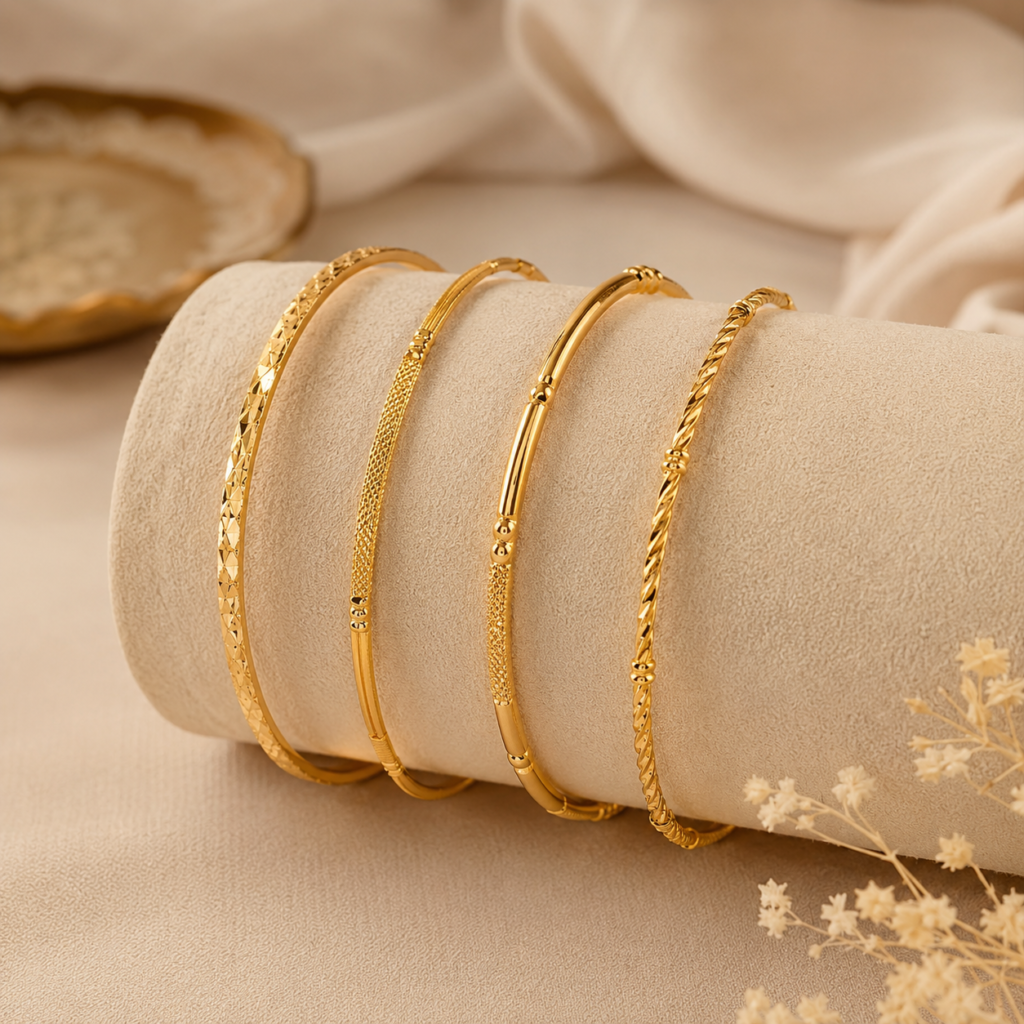
Check the Surface and Shape
View the bangle from several angles. A round bangle should look even unless the design is intentionally oval or asymmetric. Look for flat spots, waviness, visible solder lines, sharp engraving, rough inner edges or uneven polishing.
Check Hinges and Clasps
Open and close the mechanism several times. It should operate smoothly and finish with a clear, secure engagement. A safety catch should sit flat rather than protruding into clothing. Ask how often a frequently worn hinge should be inspected.
Check Stone Settings
Run the piece lightly over a soft cloth supplied by the jeweller. Catching may indicate a raised prong or rough edge. Do not shake or scrape the jewellery aggressively. Ask the jeweller to inspect any stone that moves, clicks or appears uneven.
Confirm the Description in Writing
The invoice or product documentation should clearly identify the item you are purchasing. Ask for the stated purity, weight, stone information where relevant and any agreed custom work. Photographing verbal promises is not a substitute for clear written details.
Understand Testing and Marks
A stamp is useful, but it should be considered with the seller’s documentation and testing process. According to the GIA’s gold-testing guidance, X-ray fluorescence is a non-destructive method used to assess karat gold purity, although proper equipment and procedures are required. Ask the jeweller what method is used and what the result represents.
When Should You Ask a Jeweller for Help?
Ask a jeweller when size is uncertain, the bangle is valuable, a hinge feels loose, stones move or an heirloom needs alteration. Professional assessment matters because some hollow, patterned, enamelled, hinged or stone-set bangles cannot be resized without affecting their structure.
The best time to discuss repair is before the purchase. Ask whether the design can be:
- increased or reduced in size;
- reshaped if bent;
- polished without removing important detail;
- repaired if a hinge or clasp fails;
- restored if hollow sections dent;
- modified without disturbing stones or engraving.
If a bangle becomes misshapen, do not press it back into shape at home. Localised bending can create cracks, weaken soldered areas or damage hidden joints. A jeweller can assess whether reshaping is safe and whether reinforcement is required.
For routine maintenance, follow Anu Jewellers’ guide on how to clean gold jewellery at home. For loose stones, damaged clasps, resizing or restoration, use a professional jewellery repairs in Melbourne service rather than experimenting with household tools.
What Should You Check Immediately Before Buying?
Before buying, confirm the bangle suits its intended use, fits correctly and has clear purity, weight and construction details. You should also understand the invoice, sizing options, repair limits and aftercare so the purchase remains practical beyond the showroom.
Use this checklist immediately before purchase:
| Final Check | Confirmed? |
| The bangle suits the intended frequency and occasion | ☐ |
| The purity and total weight are clearly stated | ☐ |
| The construction is understood: solid, hollow, hinged, open or stone-set | ☐ |
| The internal diameter or wrist fit has been tested | ☐ |
| Edges, joins and settings feel smooth and secure | ☐ |
| The design works with the recipient’s clothing and routine | ☐ |
| The invoice will record the important specifications | ☐ |
| Resizing, exchange, repair and aftercare options are understood | ☐ |
Learning how to choose gold bangles is ultimately about matching beauty with use. The right daily bangle should be comfortable enough to reach for often, the right gift should fit the recipient’s life, and the right bridal piece should feel meaningful long after the wedding.
Visit Anu Jewellers in Craigieburn or contact the team for personalised help comparing size, purity, construction and styling for daily wear, gifting or weddings.