

Written by Anu Jewellers Team
Reviewed by Anu & Henry, Anu Jewellers
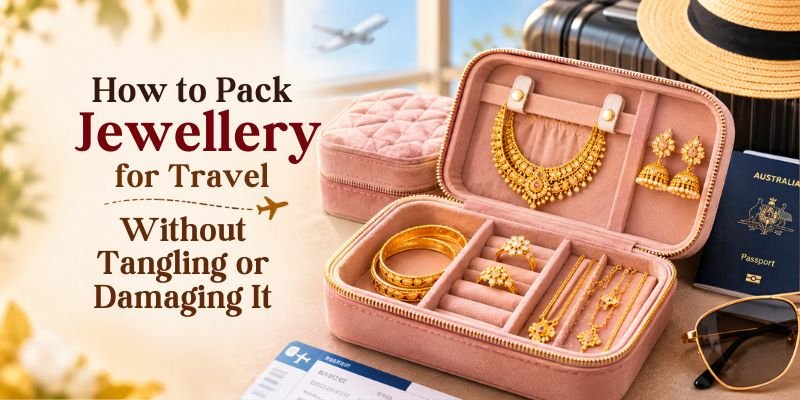
How to pack jewellery for travel safely starts with separating each piece, fastening delicate chains, padding gemstones and keeping valuable items in your hand luggage. Use a compact organiser with secure compartments, and check clasps and settings before leaving home.
Opening a travel pouch to find two gold chains knotted together is frustrating. Finding a bent earring post or loose stone just before a wedding is worse. A little organisation before departure can prevent both problems without adding much luggage. This guide explains how to pack jewellery for travel safely, whatever the occasion.
Whether you are travelling from Melbourne for a weekend, visiting family overseas or carrying jewellery for an Indian wedding, the packing method should suit the piece. A fine chain, a heavy bridal haar and a diamond ring cannot all be protected in the same way.
How to Pack Jewellery for Travel: What Should You Do First?
Begin by choosing only the jewellery you will genuinely wear, then inspect, clean and sort it by construction. Keep fragile, heavy and sentimental pieces apart. A short packing plan reduces rubbing, misplacement and the temptation to take unnecessary valuables.
Sort Pieces by Risk, Not Just by Outfit
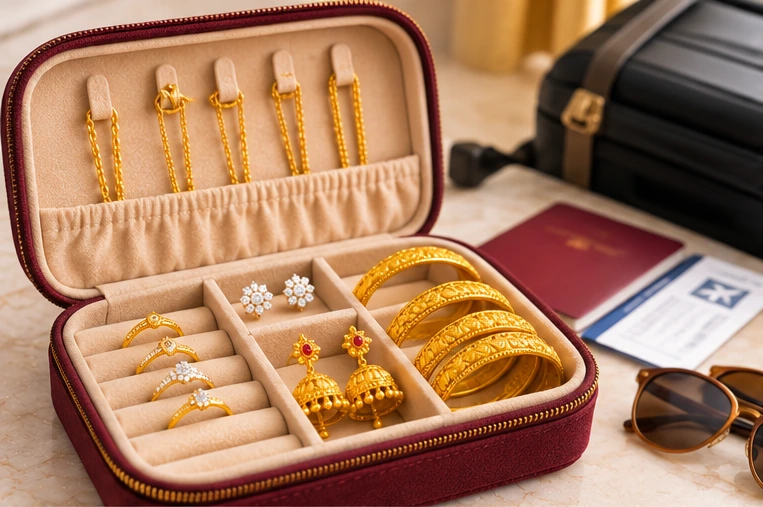
Place the jewellery you intend to take on a clean, soft cloth. Group pieces that could damage one another: thin chains, textured gold, raised gemstones, pearl jewellery and rigid bangles. Avoid packing a ring with exposed prongs beside a polished gold pendant, even if both fit in the same pocket.
Use the Separate–Secure–Cushion–Carry framework. Separate items by type, secure loose parts, cushion pieces that could bend and carry valuables in a bag you control. For example, a simple gold chain can share a travel case with stud earrings only if they are in different enclosed sections.
| Jewellery Type | Main Travel Risk | Packing Method | Avoid |
| Fine gold chain | Knots, stretched links | One secured necklace channel or sleeve | Several chains loose together |
| Long necklace or haar | Kinks, pendant pressure | Long padded roll or flat case | Tight folding |
| Diamond ring | Bent prongs, abrasion | Padded ring slot or small rigid box | Contact with other stones |
| Hollow gold bangle | Dents under pressure | Individual padded rigid compartment | Compression beneath luggage |
| Stud earrings | Missing backs, bent posts | Earring card or dedicated panel | Loose pouch without fastened backs |
| Bridal set | Tangling and component loss | Separate labelled sections for each piece | One large mixed bag |
A second decision is whether a piece needs to travel at all. If a family heirloom is not essential for the event, leaving it securely stored at home may be the lower-risk choice. Choose a few versatile items for everyday outfits and add occasion pieces only where the trip requires them.
How Can You Pack Necklaces Without Tangling When Travelling?
Stop necklaces tangling by fastening each clasp, keeping the chain extended and securing it in its own channel, sleeve or small bag. Separate pendants from neighbouring chains, and never compress fine links beneath a heavy jewellery box or bangle.
Six Steps for Tangle-Free Necklace Packing
- Lay one necklace flat on a soft cloth: check for existing knots before travelling, because a small twist can tighten into a difficult knot after repeated movement.
- Fasten the clasp before storage: close the chain securely so both ends cannot move freely and wind around other jewellery during the trip.
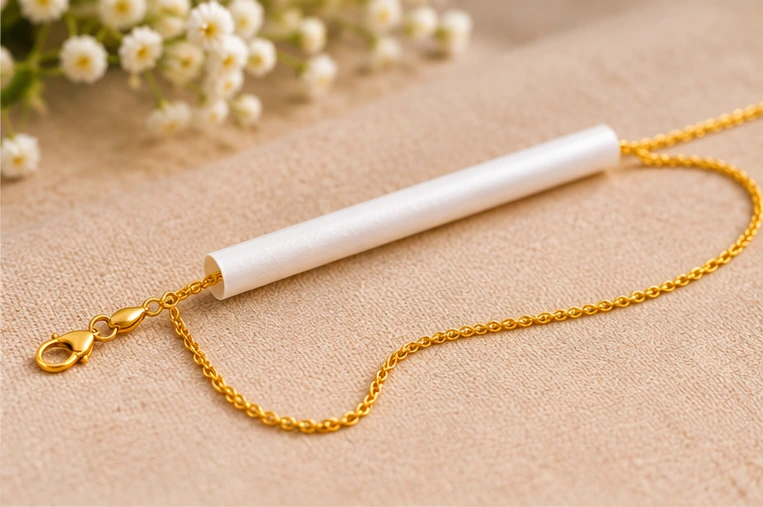
- Thread a suitable fine chain through a clean paper straw if needed: leave the clasp outside and refasten it, because the tube limits free movement; skip this method for thick, delicate or rigid chains that could kink.
- Place the secured chain in its own sleeve or necklace channel: keep the pendant cushioned and away from sharp edges, because metal-on-metal contact causes rubbing.
- Keep longer chains flat or gently rolled around a soft support: follow their natural curve instead of making tight bends, because heavy links and stiff necklaces may deform under pressure.
- Close the organiser and perform a gentle shake test: check that chains cannot cross into another compartment before placing the case inside hand luggage.
What About Packing Gold Necklaces?
Packing gold necklaces calls for attention to weight and link construction. A fine cable chain needs protection from knots, whereas a heavier patterned chain needs enough room not to flatten or twist. If a necklace includes a pendant, cushion the pendant separately within the same compartment so its edges do not scrape the chain.
Buyers comparing everyday gold chains Melbourne styles and traditional gold necklaces Melbourne designs can also ask about clasp strength, link movement and suitable storage before a long trip.
If you find a knot on arrival, do not pull both ends sharply. Lay the chain on a stable cloth and gently loosen the knot; stop if the links look distorted or a soldered connection is under tension.
Which Travel Jewellery Organiser Works Best for Different Pieces?
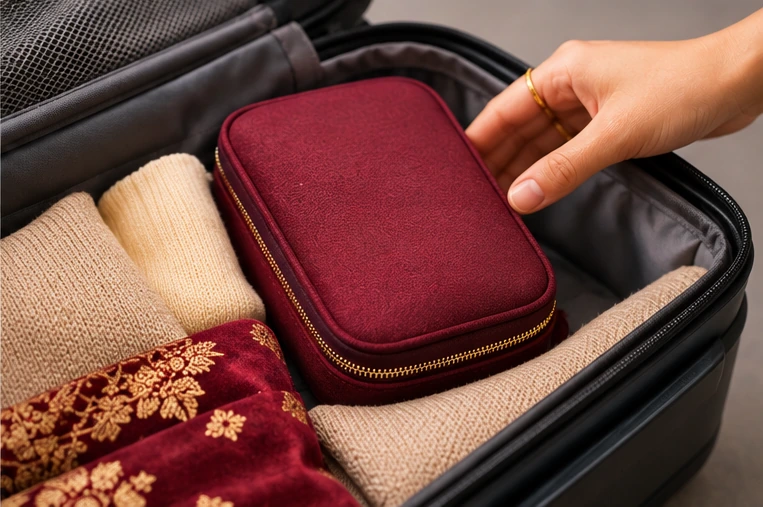
A good travel jewellery organiser keeps chains anchored, rings cushioned and earrings paired without letting compartments spill into one another. Choose by the jewellery you own rather than appearance alone: a soft roll suits some pieces, while rigid cases protect delicate settings.
Compare Common Travel Storage Options
| Storage Option | Best For | Main Advantage | Limitation |
| Zipped padded case | Mixed everyday jewellery | Divided sections in a compact format | Poor designs allow items to migrate between sections |
| Necklace roll with tabs | Several fine chains | Keeps chains extended and separated | May not support heavy pendant pieces |
| Rigid small box | Rings, stones, hollow bangles | Better resistance to crushing | Bulkier for short trips |
| Individual soft pouches | Single durable pieces | Lightweight and inexpensive | Does not stop tangles if items share one pouch |
| Small resealable bags | Temporary chain separation | Easy to label and inspect | Little impact protection; edges and clasps need care |
| Earring card or panel | Studs and small pairs | Keeps pairs and backs together | Large or heavy earrings need extra padding |
How to Choose a Case Before You Travel
Open the organiser and check the actual closures. Necklace hooks should have a retaining tab. Ring rolls should hold pieces without forcing the band. Zipped pockets should have a lining that will not snag fine prongs, and the outer case should resist normal bag pressure.
For jewellery travel storage, a large empty organiser is not automatically safer. When unused compartments are too roomy, pieces can slide around. Add a soft divider if the manufacturer allows it, or use a more compact case that keeps jewellery in place.
An inexpensive individual pouch can work for a plain, sturdy ring on a weekend trip. A diamond set or several family pieces deserves better separation and cushioning. Prioritise functional protection before decorative packaging.
How Should You Pack Gold, Diamond and Indian Bridal Jewellery?
Pack gold, diamond and bridal jewellery according to the weakest part of each design. Fine links can knot, hollow gold can dent, gemstone settings can catch and ornate bridal pieces can bend. Protect each component separately and avoid tightly folding ceremonial necklaces.
Gold Chains and Bracelets
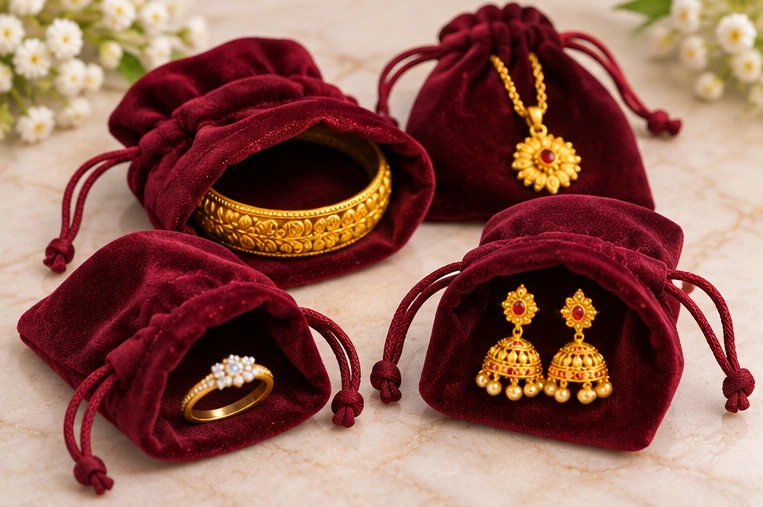
Gold purity alone does not tell you how well a piece will travel. A solid chain with secure joins may tolerate ordinary movement better than a delicate hollow link, while an old chain can be vulnerable around worn solder points. Wrap and anchor gold pieces separately, especially when travelling with 22K traditional designs.
Diamond and Gemstone Jewellery
Set rings in separate padded slots and protect raised stones from other metal surfaces. For diamond jewellery, check whether claws or prongs feel loose before departure. Softer or treated gemstones may need manufacturer-specific care, and pearl jewellery should not be pressed against metal clasps or abrasive surfaces.
Indian Bridal Sets and Heavy Necklaces
For Indian and South Asian families travelling to weddings, one jewellery bag may contain a choker, long haar, jhumkas, bangles, hair ornaments and detachable pendants. Packing these as a single bundle risks crushed settings and missing components.
Use an illustrative wedding example: a Craigieburn bride travelling to India has a long gold necklace, matching earrings and two bangles for several events. The necklace stays flat in a padded sleeve, earrings sit in an enclosed panel and each bangle has its own protective section. A simple inventory identifies which event each set belongs to.
For complex Indian bridal jewellery in Melbourne, ask about detachable sections, support chains and how the particular construction should be transported. Keep any traditional or religious piece, including a mangalsutra, in a dedicated compartment that respects its shape and avoids pulling on its beads or thread.
How Can You Protect Rings, Earrings, Bangles and Pendants?
Protect smaller jewellery by securing every removable part and separating surfaces that could rub. Rings need padded slots, earrings need paired backs, bangles need room around their edges and pendants need cushioning so stones or sharp corners cannot strike nearby pieces.
Rings and Wedding Bands
Place each ring in a snug ring bar or miniature rigid box. Do not crowd several stone-set rings together: diamond edges may scratch softer metals or gemstones. If the case is too loose, a ring can bounce against the lid even though it appears properly stored.
Studs, Hoops and Jhumkas
Fasten stud backs before putting earrings on a card. Place heavy jhumkas in individual padded compartments, with their hanging elements supported rather than compressed. A separate small pouch for spare backs helps, but the pouch itself should close securely so tiny components cannot escape.
Bangles and Kadas
Keep rigid bangles from resting against one another. For hollow bangles, a crush-resistant case matters more than an extra layer of thin tissue. When choosing gold bangles for a trip, consider whether a simple design is easier to protect than a wide piece with projecting decorative features.
Pendants and Lockets
Lockets and pendant chains often have two different risk points: the chain can tangle and the pendant can open or catch. Secure the locket, pad its front and back, and avoid resting another ring or bangle directly against it. Do not force bulky pendants through a straw.
Should Jewellery Go in Carry-On or Checked Luggage?
Valuable jewellery is generally better kept in a secure, accessible carry-on bag than in checked luggage, where handling and delays are harder to control. Follow the airline’s baggage policy, keep the case discreet and be ready for airport security instructions.
According to the Australian Department of Home Affairs, security screening procedures vary between airports and loose personal items are placed in trays or carry-on baggage. Melbourne Airport also instructs passengers to remove bulky jewellery where required during screening.
Plan for the actual screening process. Put loose necklaces and rings away before entering the queue rather than removing them hurriedly at the conveyor belt. Keep your organiser zipped inside a bag compartment you can identify immediately. If an officer requests additional screening, follow their instructions; do not make assumptions based on what happened on a previous flight.
For travellers asking how to travel with jewellery, the safest practical approach is to minimise handling at security, maintain control of the hand luggage and avoid advertising an expensive collection. Do not use wearing every item as a substitute for careful packing.
How Do You Keep Jewellery Safe at Hotels and During Activities?
Keep jewellery in its organiser between wears and return it to a secure place rather than leaving it on bathroom counters or bedside tables. Reduce handling during outfit changes, and avoid carrying valuable pieces on activities where they could snag or disappear.
Make a Small Arrival Routine
Unpack the jewellery organiser once, check that each compartment is closed, and store it where you can find it privately. Use an available hotel safe only after understanding its operation and limitations; a room safe is not a guarantee against theft, and your insurance terms still apply.
Separate Daily and Occasion Jewellery
For a short Melbourne-to-Sydney trip, you might take one chain, studs and a ring. For an interstate Indian wedding or overseas ceremony, reserve ceremonial sets for the specific functions. This cuts down unnecessary daily opening, swapping and re-packing.
Manage Moisture and Cosmetics
Protecting jewellery when travelling includes keeping it away from perfume sprays, lotions, damp towels and cleaning products. Allow jewellery to dry before returning it to a closed pouch. Sea air, humid rooms or perspiration can affect particular metals and finishes, so follow care guidance for the specific material.
If jewellery looks dirty after a trip, follow product-appropriate care rather than automatically soaking every piece. Anu Jewellers’ guide to cleaning gold jewellery at home is a useful starting point for suitable gold designs, while fragile stones or specialist finishes should be assessed individually.
What Should Australian Travellers Check About Insurance and Customs?
Check jewellery cover and border requirements before international travel. Insurance policies can limit payment for single valuable items, checked luggage or unattended property, while customs rules vary between countries and between belongings you already own and purchases made overseas.
According to the Smartraveller travel-insurance buying guide, cover for valuables differs between policies and checked-baggage valuables may be excluded. Read the item’s limit, worldwide coverage, excess, exclusions and any requirement for a valuation or purchase evidence.
According to the Australian Border Force, jewellery is included among general goods relevant to duty-free concessions, and goods brought back after a Tourist Refund Scheme claim must be declared. Rules for overseas purchases, temporary imports and travel to another country can differ, so check the relevant border agencies before departure.
Keep a Simple Ownership and Travel Record
For high-value items, keep accessible purchase documents, applicable valuations and a written inventory in a secure digital location separate from the jewellery itself. This may help with insurance claims or questions about ownership, but documentation does not guarantee duty-free entry or an accepted insurance claim.
For a family travelling from Melbourne to India with wedding jewellery, confirm the current Indian customs requirements as well as Australian re-entry rules. Do not rely on an old social-media post or assume all jewellery is exempt because it will be worn at a family event.
How Much Should You Budget for Protection?
Instead of guessing one universal insurance price, ask for a policy quote based on the actual jewellery value in Australian dollars. Compare the extra premium and excess with the item’s replacement cost. A cheap policy with a low per-item limit may be poor protection for a valuable necklace.
When Should You Get Jewellery Inspected or Repaired Around a Trip?
Arrange a jewellery inspection before departure when a clasp sticks, a chain looks stretched, a stone moves or an earring backing feels unreliable. A small fault can worsen during travel, and temporary glue or bending may cause additional damage.
A sensible pre-travel check takes only a few minutes. Run a fingertip gently around each clasp and joint, look for loose settings and test whether the chain fastens completely. If the item catches fabric or makes a new clicking sound, stop wearing it until a jeweller has inspected it.
After travel, inspect the pieces again. If a chain has developed a tight knot, do not pull hard enough to stretch its links. If a bangle is bent or a gemstone moves, do not try to reshape or secure it with household tools. These repairs need a decision based on construction and condition.
For assessment, resizing or damaged clasps, Anu Jewellers provides jewellery repairs Melbourne services. Craigieburn customers can contact Anu Jewellers to discuss a repair before travelling or after returning.
What Is the Final Travel Jewellery Packing Checklist?
Before leaving, confirm every item has a purpose, secure fastening, suitable padding and its own storage position. Keep valuables under your control, save relevant documents and perform a final inventory at each accommodation change so nothing remains behind.
Check at Each Stage of the Journey
| When | What to Check | Why It Helps |
| Several days before departure | Select pieces, check clasps, confirm insurance and destination rules | Allows time for repairs and decisions |
| On packing day | Separate chains, secure earring backs, cushion rings and bangles | Reduces knots and impact damage |
| Before airport security | Zip the organiser inside a known carry-on compartment | Reduces rushed handling of small valuables |
| At accommodation | Check inventory, use a suitable secure location, separate daily pieces | Reduces misplacement during the stay |
| Before each checkout | Check safe, drawer, bathroom and jewellery case against inventory | Prevents leaving items behind |
| After arriving home | Recount, inspect, clean only as appropriate and store separately | Identifies damage before it worsens |
Knowing how to pack jewellery for travel makes a difference when a special piece has to arrive ready to wear. Separate, secure and cushion each item; choose a case that suits its construction; and check insurance and airport requirements before departure.
If you are choosing travel-friendly jewellery, preparing a bridal set or concerned about a clasp, visit Anu Jewellers in Craigieburn for product guidance and repair enquiries.