
Written by Anu Jewellers Team
Reviewed by Anu & Henry, Anu Jewellers
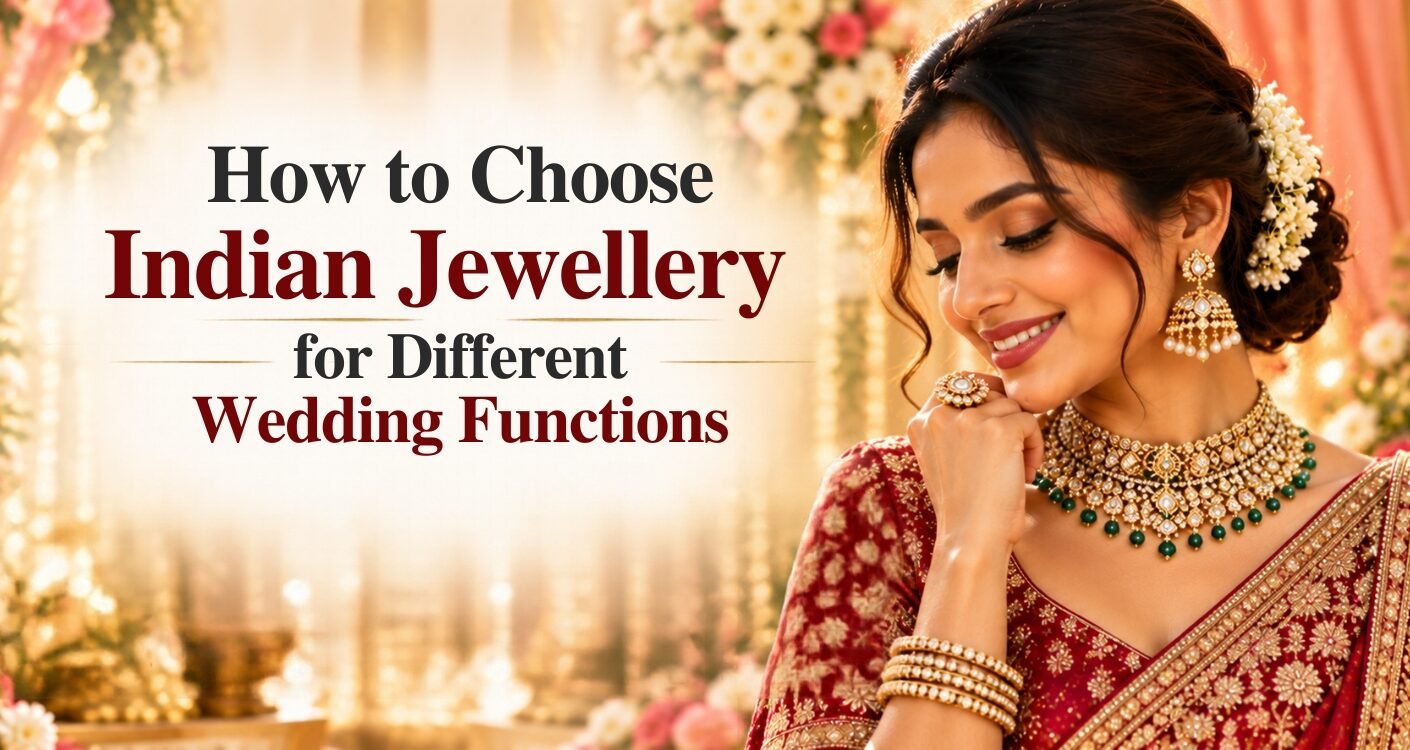
How to choose Indian jewellery for wedding functions starts with the ceremony, outfit, family tradition and comfort. Choose lighter, practical pieces for daytime events, a balanced statement for evening celebrations, and your most traditional coordinated pieces for the main wedding ceremony.
Indian weddings often involve several events, and each one can call for a different level of jewellery. For brides comparing wedding jewellery for Indian brides, the same principle applies: build each look around the function rather than forcing one set across the entire celebration.
A piece that looks perfect for the main ceremony may be too heavy for Mehendi or too formal for an engagement.
This Indian wedding jewellery guide focuses on the practical decisions that make each function easier to plan: what should lead the look, what can be reused, what needs special care, and how to avoid buying pieces that spend most of their life in a jewellery box.
How to choose Indian jewellery for wedding functions without overbuying
Start with the function, then match jewellery to the outfit, neckline, time of day, family tradition and expected wear time. A successful look usually has one focal piece, supporting jewellery, and enough comfort to last through rituals, photographs and celebrations.
The Function-to-Focus Framework
| Wedding Function | Jewellery Direction | Best Focal Point | Keep in Mind |
| Engagement | Elegant and polished | Choker, necklace or earrings | Keep the look distinct from the main bridal set |
| Haldi | Light and practical | Earrings or floral jewellery | Avoid pieces that may be affected by turmeric or messy rituals |
| Mehendi | Colourful and comfortable | Earrings or head jewellery | Keep hands clear during mehendi application |
| Sangeet/Cocktail | Glamorous and expressive | Statement earrings or necklace | Choose pieces that move well while dancing |
| Main Wedding | Traditional and ceremonial | Bridal necklace set | Coordinate necklace, earrings and head jewellery |
| Reception | Refined and contemporary | Diamond/gemstone necklace or earrings | Choose something you can reuse after the wedding |
Start With the Outfit
Confirm the outfit first: the neckline, embroidery, colour and fabric determine how much visual weight the jewellery can carry.
A heavily embroidered lehenga may already provide a strong focal point. A simpler silk saree can give a detailed necklace or temple-inspired set more room to stand out.
Choose One Focal Point
Select one lead piece: make the necklace, earrings, headpiece or bangles the main visual focus for each function.
For example, if the main necklace is large and layered, the earrings can be detailed without being equally oversized. If statement chandbalis are doing the work, a simpler necklace may create a cleaner result.
Account for Your Family Tradition
Confirm the required cultural pieces early: ask family members which jewellery has ceremonial or regional significance before buying a complete new set.
A Punjabi bride may have chooda and kaleere expectations, while a South Indian bride may prioritise temple-inspired gold jewellery, long harams or a vaddanam. Other communities may have entirely different traditions. There is no single universal Indian bridal jewellery formula.
Anu Jewellers’ Indian bridal jewellery collection can be used as a starting point when comparing bridal necklaces, bangles, earrings and traditional wedding pieces.
What jewellery works best for an engagement function?
To choose Indian jewellery for wedding functions, treat the engagement as its own look. Choose polished jewellery with moderate visual weight: a choker, medium necklace, elegant earrings or refined ring can create occasion presence without using the full bridal set.
Engagement jewellery should feel special without making the wedding-day collection look repetitive. This is also a good opportunity to choose a piece that will remain useful for anniversaries, dinners and formal family occasions.
Match the Neckline
Use the neckline as your starting point: pair an open neckline with a visible necklace, while a heavily detailed or high neckline may work better with statement earrings.
A sweetheart or V-neck can give a pendant or necklace a clear visual path. A high-neck blouse may leave little room for a large necklace, making earrings the stronger choice.
Keep the Weight Moderate
Choose a piece you can wear for several hours: engagement functions often include photographs, greetings and long periods of standing or sitting, so comfort matters even when the event is shorter than the wedding day.
A medium-sized gold or diamond piece can create enough occasion presence without using the heaviest jewellery you own.
Plan for Reuse
Prioritise a versatile design: if the engagement necklace can also work with a saree, dinner outfit or anniversary look, it gives the purchase more long-term value.
This is particularly useful for Melbourne families building a wedding jewellery collection around several events rather than buying one large set for a single day.
What should you wear for a Haldi ceremony?
For Haldi, prioritise lightweight, secure jewellery that can tolerate an active daytime setting. Floral accessories, simple gold pieces or small earrings can work well, while valuable stone-set or delicate pieces are better kept away from turmeric and messy rituals.
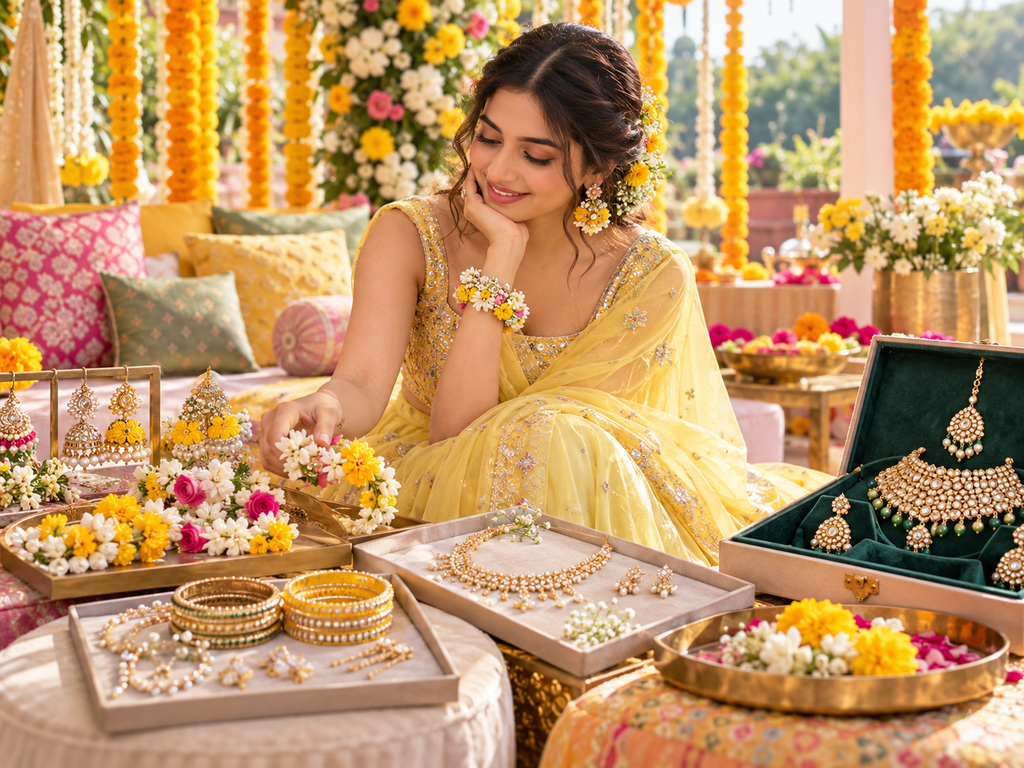
Haldi is one of the functions where practicality should lead styling. The ceremony can involve turmeric paste, flowers, movement and close interaction with family members, so the jewellery plan should allow you to participate comfortably.
Keep Valuable Pieces Away From the Mess
Choose simpler jewellery for the main ritual: turmeric and other products used during the ceremony can get onto jewellery, clothing and hair.
If you want real gold, a simple pair of earrings or a plain bangle can be easier to manage than an elaborate stone-set necklace with multiple delicate settings.
Consider Floral Jewellery
Use fresh or lightweight floral pieces when they suit the ceremony: they create a festive look without requiring the same level of protection as valuable heirloom jewellery.
A floral maang tikka, earrings or bracelet can also work with yellow, orange, green or pastel outfits without competing with the ceremony itself.
Think About Photography
Keep one face-framing piece visible: earrings or a simple headpiece can maintain a dressed-up look even when the rest of the jewellery is deliberately minimal.
A bride can therefore look fully styled without wearing the same amount of jewellery planned for the main wedding.
What jewellery suits a Mehendi function?
For Mehendi, choose jewellery that keeps your hands and arms practical while drawing attention to the face. Statement earrings, lightweight necklaces and carefully timed bangles can work, but hand jewellery should wait until the mehendi application is complete.
Mehendi is different from Haldi because the hands themselves become part of the visual focus. A practical bridal jewellery for Mehendi plan therefore puts comfort and hand freedom ahead of maximum jewellery weight.
Keep Hands Clear During Application
Leave rings, hathphool and most bangles off during mehendi application: the jewellery can interfere with the artist and may become coated with wet paste.
After the mehendi has dried sufficiently, you can add selected hand jewellery for photographs and the later part of the celebration.
Let Earrings Lead
Choose statement earrings when the neckline is covered: jhumkas, chandbalis or colourful drops can create impact without filling the space around the hands.
If the outfit already has a detailed dupatta or heavily embroidered neckline, a strong earring can be enough.
Use Colour Strategically
Repeat one colour from the outfit or mehendi design: an emerald, ruby, pink, green or multicoloured accent can connect the jewellery with the overall styling without requiring a perfectly matched set.
The aim is coordination rather than making every element identical.
How should you choose jewellery for Sangeet or cocktail night?
For Sangeet and cocktail events, choose jewellery with movement and evening presence. Statement earrings, a layered necklace, polished bracelet or contemporary Kundan-inspired piece can suit dance-floor styling, provided the outfit and hairstyle leave enough visual space.
These evening functions usually allow more experimentation than the main ceremony. In an Indian wedding jewellery by function plan, Sangeet is often the place to introduce a more contemporary statement piece.
Choose Jewellery That Moves Well
Test the jewellery while moving your head and arms: secure earrings, bracelets and necklaces should stay comfortable during dancing, photographs and greetings.
If an earring swings heavily or a necklace catches on the outfit during a five-minute trial, it may become uncomfortable during a full evening.
Coordinate With the Outfit
Balance the outfit’s visual weight: a heavily sequinned or embroidered outfit may need one strong jewellery feature, while a clean gown or simple lehenga can support a more elaborate necklace.
Avoid creating three competing focal points with a heavy necklace, oversized earrings and an elaborate headpiece.
Consider Modern Reuse
Choose a piece that can leave the wedding wardrobe: a diamond-style bracelet, refined necklace or versatile earrings may become part of your regular occasion jewellery after the wedding.
For families in Melbourne, this can make a premium purchase feel more useful than a highly specialised piece worn once. If an existing family piece needs alteration or you want a coordinated custom design, Anu Jewellers also offers custom jewellery in Melbourne for wedding-led pieces.
What should you wear for the main wedding ceremony?
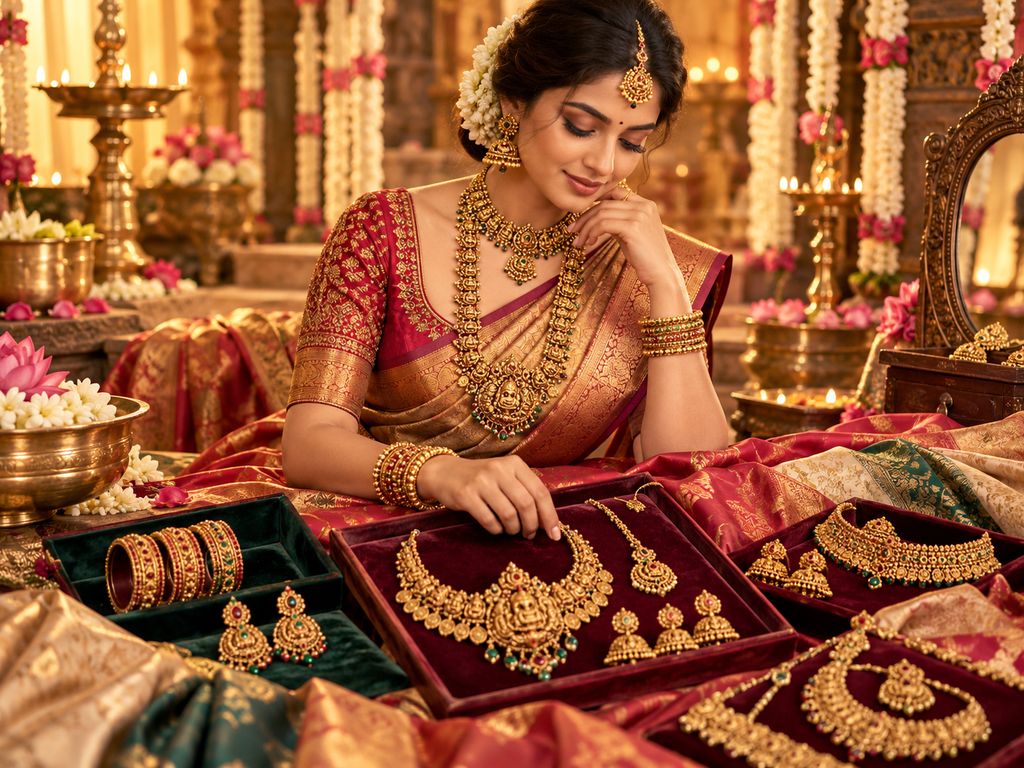
For the main wedding ceremony, choose the most culturally meaningful and visually coordinated jewellery, then control the total weight. A bridal necklace, earrings, maang tikka, bangles and selected ceremonial pieces should work together rather than compete for attention.
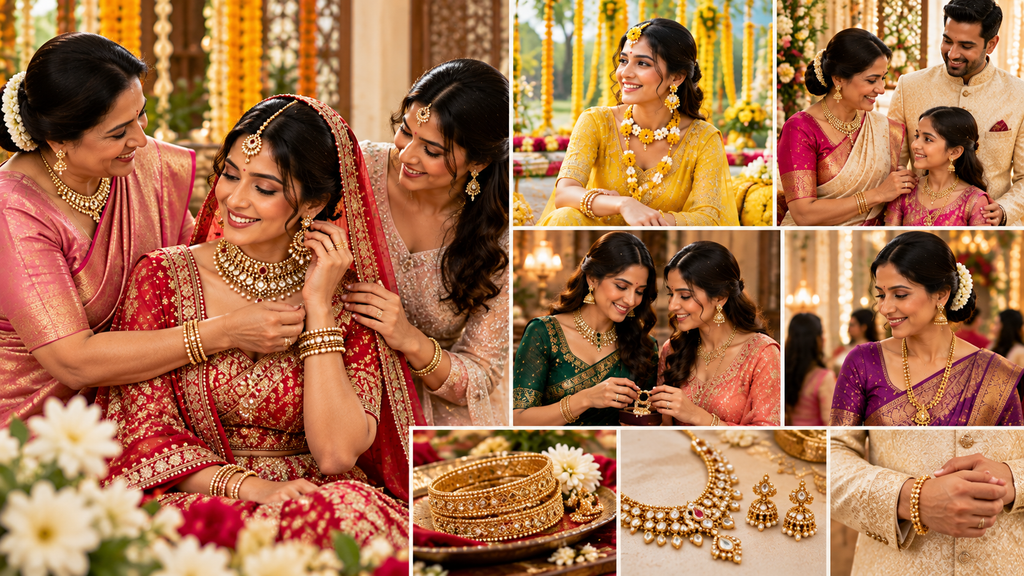
This is where your wedding jewellery plan can become more traditional, but “more” should not automatically mean “better”. The goal is to create a complete bridal look that respects the ceremony and still feels comfortable after hours of wear.
Build From the Neck Up
Choose the main necklace first: it establishes the scale and visual language for earrings, maang tikka, nath and other face-framing pieces.
A choker can create a strong upper-neck focal point. A longer haar or Rani Haar adds vertical length. If you are comparing necklace proportions, Anu Jewellers’ gold necklace Australia guide covers length, purity and occasion considerations. Layering can work beautifully when the lengths are deliberately spaced rather than crowded.
Balance Earrings With the Necklace
Reduce earring scale when the necklace is already dominant: the face should remain visible instead of being surrounded by competing heavy pieces.
If the necklace is relatively simple, larger jhumkas or chandbalis can become the focal point instead.
Coordinate Regional Jewellery
Follow your family’s tradition before general fashion advice: jewellery can carry regional, religious and family meaning that is more important than a generic styling rule.
Anu Jewellers’ current Melbourne bridal offering includes traditional and contemporary bridal pieces for ceremonies, engagements and receptions, including choker sets, Rani Haar, mangalsutra, bangles and earrings. Anu Jewellers
For families considering 22K gold bridal jewellery, compare purity, weight and construction with the outfit and ceremony rather than choosing by colour alone.
Test the Complete Set
Wear the full jewellery combination for at least 30 minutes before the wedding: sit, stand, turn your head, move your arms and handle your dupatta or veil to find pressure points and catching.
This is especially important for a Melbourne wedding where the same bridal outfit may move between indoor venues, outdoor photographs and long reception periods.
For a head-to-toe list, use Anu Jewellers’ Indian bridal jewellery checklist rather than trying to make the function-by-function guide cover every possible ornament. The same principle helps when comparing Indian bridal jewellery sets: choose only the pieces that have a clear role in your wedding wardrobe.
How do you choose reception jewellery?
For the reception, shift towards refined pieces that suit the second outfit and can be worn again. A diamond or gemstone necklace, statement earrings, bracelet or lighter layered combination can create a modern finish without repeating the exact wedding-day look.
The reception is often the best place to show a different side of your style. If the ceremony is traditional and heavily layered, the reception can be cleaner and more contemporary.
Change the Visual Language
Choose a noticeably different focal piece: move from a traditional layered necklace to statement earrings, a sleek diamond necklace or a refined bracelet.
The difference does not need to be dramatic. A lighter necklace with larger earrings can create a fresh look without requiring an entirely new jewellery wardrobe.
Choose Rewearable Pieces
Prioritise jewellery that works beyond the reception: a pair of diamond or gold earrings, a versatile bracelet or a refined necklace can become part of your future festive wardrobe.
This approach also makes sense when the wedding budget is shared across several functions.
Match the Reception Outfit
Check the neckline and fabric again: do not assume the wedding-day necklace will automatically suit a reception gown, saree or contemporary lehenga.
The new neckline may call for a different necklace length or no necklace at all.
How do you build one coordinated jewellery plan for all functions?
If you are deciding how to choose Indian jewellery for wedding functions, plan it as a coordinated wardrobe. Start with the outfits, assign one focal point to each function, reuse versatile pieces where practical, and reserve spending for jewellery with long-term value.
The Five-Step Wedding Jewellery Planning Method
- List every function and outfit: write down the engagement, Haldi, Mehendi, Sangeet, wedding and reception, then record the outfit, neckline, hairstyle and expected wear time for each.
- Assign one focal piece per function: decide whether the necklace, earrings, headpiece or bangles lead each look so you do not accidentally create six versions of the same heavy combination.
- Mark reusable pieces: identify jewellery that can move between functions without looking repetitive, such as versatile earrings, a simple bangle or a refined bracelet.
- Separate investment pieces from occasion-only pieces: spend more carefully on real gold, diamonds or heirloom-quality jewellery that will remain useful after the wedding.
- Schedule a complete trial: bring the actual outfit, dupatta, footwear and hairstyle reference to the jewellery appointment so proportions can be checked before the event.
In practice, we often see proportion problems only when a bride tries the necklace with the actual blouse and dupatta together. A piece that looks perfect in a display case can sit too high, disappear under embroidery or compete with the neckline once the complete outfit is worn.
Your Wedding Jewellery Wardrobe
| Jewellery Category | Engagement | Haldi | Mehendi | Sangeet | Wedding | Reception |
| Statement necklace | ◐ | – | ◐ | ● | ● | ● |
| Choker | ● | – | ◐ | ● | ● | ● |
| Long necklace/Rani Haar | – | – | – | ◐ | ● | ◐ |
| Earrings | ● | ● | ● | ● | ● | ● |
| Bangles/Kadas | ◐ | ◐ | ◐ | ● | ● | ● |
| Maang tikka/Matha patti | ◐ | ◐ | ◐ | ◐ | ● | ◐ |
| Nath | – | – | – | ◐ | ● | – |
| Hathphool | – | – | ◐ | ◐ | ● | – |
| Kamarbandh/Vaddanam | – | – | – | – | ● | ◐ |
| Diamond/gemstone statement piece | ● | – | ◐ | ● | ◐ | ● |
Legend: ● strong fit; ◐ optional depending on outfit, tradition and personal preference; – usually unnecessary.
Melbourne Wedding Planning Tip
Trial the jewellery against your actual event conditions: if your wedding includes outdoor photographs, long travel between venues or extended standing, test the full set before the day rather than relying on a short showroom fitting.
For brides shopping locally, an appointment with Indian jewellers Craigieburn can make it easier to compare pieces in person, check proportions and discuss custom requirements. If an heirloom needs resizing, polishing or restoration before the wedding, jewellery repairs Melbourne support can also be discussed during the appointment.
Families searching for Indian jewellers Melbourne can also use the Craigieburn showroom to compare traditional and contemporary designs for multiple wedding functions.
How much should you budget for wedding jewellery in Australia?
When learning how to choose Indian jewellery for wedding functions, set the jewellery budget before choosing pieces. Divide it by function and long-term value, then compare purity, weight, stones, workmanship and construction rather than allocating the budget to the largest-looking set.
Illustrative Planning Bands
These are planning examples, not current market-price claims. Actual prices vary with gold rates, weight, purity, stones, design and workmanship.
| Illustrative Budget | Planning Focus |
| A500–A1,500 | Smaller gold pieces, selected earrings, simple bracelets or lighter occasion jewellery |
| A1,500–A5,000 | Medium-weight gold jewellery, coordinated pieces or selected diamond/gemstone designs |
| A5,000–A15,000 | Larger bridal pieces, substantial gold sets or more detailed diamond jewellery |
| A$15,000+ | High-weight gold, larger diamond pieces, bespoke sets or significant heirloom purchases |
Allocate by Importance
Protect the main ceremony budget first: allocate enough for the culturally significant pieces that the family expects the bride to wear, then build the lighter functions around them.
A smaller Haldi and Mehendi jewellery budget can be sensible when those looks do not require high-value pieces.
Compare Like for Like
Ask for itemised specifications: compare purity, net gold weight, stone information and making or workmanship components before deciding that one quote is cheaper.
According to the Jewellers Association of Australia, karat indicates gold purity and precious-metal alloys are distinct from plated or other jewellery categories. JAA
Understand Your Australian Consumer Rights
Keep your invoice and written product details: according to the Australian Competition and Consumer Commission consumer-rights guide, consumer guarantees apply automatically to goods, including expectations around acceptable quality, durability and matching their description. ACCC
If a retailer offers a separate warranty or exchange policy, read its conditions as well. According to the Australian Competition and Consumer Commission warranty guide, consumer guarantees and voluntary warranties are not the same thing. ACCC
For buyers comparing purity, the Gemological Institute of America gold-testing guide notes that karat is used to describe gold purity and that scientific methods such as X-ray fluorescence can be used for non-destructive testing. gia Anu Jewellers’ 22K vs 18K gold jewellery guide can help you compare the two purities before making a bridal or family purchase.
Conclusion
The best way to choose Indian jewellery for wedding functions is to plan the jewellery around the event, outfit, family tradition and comfort rather than buying one oversized set for every occasion. Use lighter pieces for active daytime functions, stronger statements for evening events, and your most meaningful coordinated jewellery for the main ceremony.
If you are planning an Indian wedding in Melbourne, Anu Jewellers’ Craigieburn showroom can help you compare bridal, traditional, gold and diamond jewellery across your functions and build a coordinated collection that remains useful after the wedding.